AI in Accounting: How Artificial Intelligence Is Transforming Financial Management
The accounting industry is experiencing one of its biggest transformations with the adoption of Artificial Intelligence (AI). Businesses of all sizes are increasingly using AI-powered accounting software to automate financial processes, reduce manual errors, and improve overall efficiency. Rather than replacing accountants, AI is helping finance professionals focus on strategic planning, financial analysis, and business growth.
Why AI Is Becoming Essential in Accounting
Traditional accounting involves repetitive tasks such as bookkeeping, invoice processing, bank reconciliation, payroll management, and financial reporting. These activities consume significant time and increase the possibility of human error.
AI automates these routine operations, allowing accountants to spend more time analyzing financial data and advising management.
Key Benefits of AI in Accounting
1. Automated Bookkeeping
AI automatically records financial transactions, categorizes expenses, and maintains accurate ledgers with minimal human intervention.
2. Faster Invoice Processing
Modern AI tools can extract information from invoices, match purchase orders, and process payments automatically.
3. Smart Bank Reconciliation
AI compares bank statements with accounting records and quickly identifies mismatched or missing transactions.
4. Fraud Detection
Machine learning algorithms monitor unusual financial activities and alert businesses about suspicious transactions before they become major problems.
5. Real-Time Financial Reporting
Instead of waiting until month-end, businesses can access live dashboards showing revenue, expenses, cash flow, and profitability.
6. Improved Tax Compliance
AI helps businesses calculate taxes accurately, monitor compliance deadlines, and prepare tax reports more efficiently.
Popular AI Features in Modern Accounting Software
Automated expense categorization
Intelligent invoice scanning
Cash flow forecasting
Predictive financial analytics
AI-powered audit trails
Payroll automation
GST and tax compliance support
Financial risk analysis
Challenges Businesses Should Consider
Although AI offers many advantages, businesses should also focus on:
Data security and privacy
Employee training
System integration
Regulatory compliance
Regular software updates
AI works best when combined with professional accounting expertise rather than replacing it.
Future of Accounting
Over the next few years, AI is expected to become a standard feature in accounting software. Businesses adopting AI early can benefit from better financial visibility, faster decision-making, reduced operational costs, and improved compliance.
Accountants will increasingly take on advisory and strategic roles while AI handles routine processing tasks.
Conclusion
Artificial Intelligence is transforming accounting into a faster, smarter, and more accurate business function. Organizations that embrace AI-powered accounting solutions can improve productivity, strengthen financial controls, reduce risks, and make better business decisions. As technology continues to evolve, AI will become an essential part of every modern finance department.
AI in Accounting: How Artificial Intelligence Is Transforming Financial Management

Manjeet saini
@ Mnjeet_saini
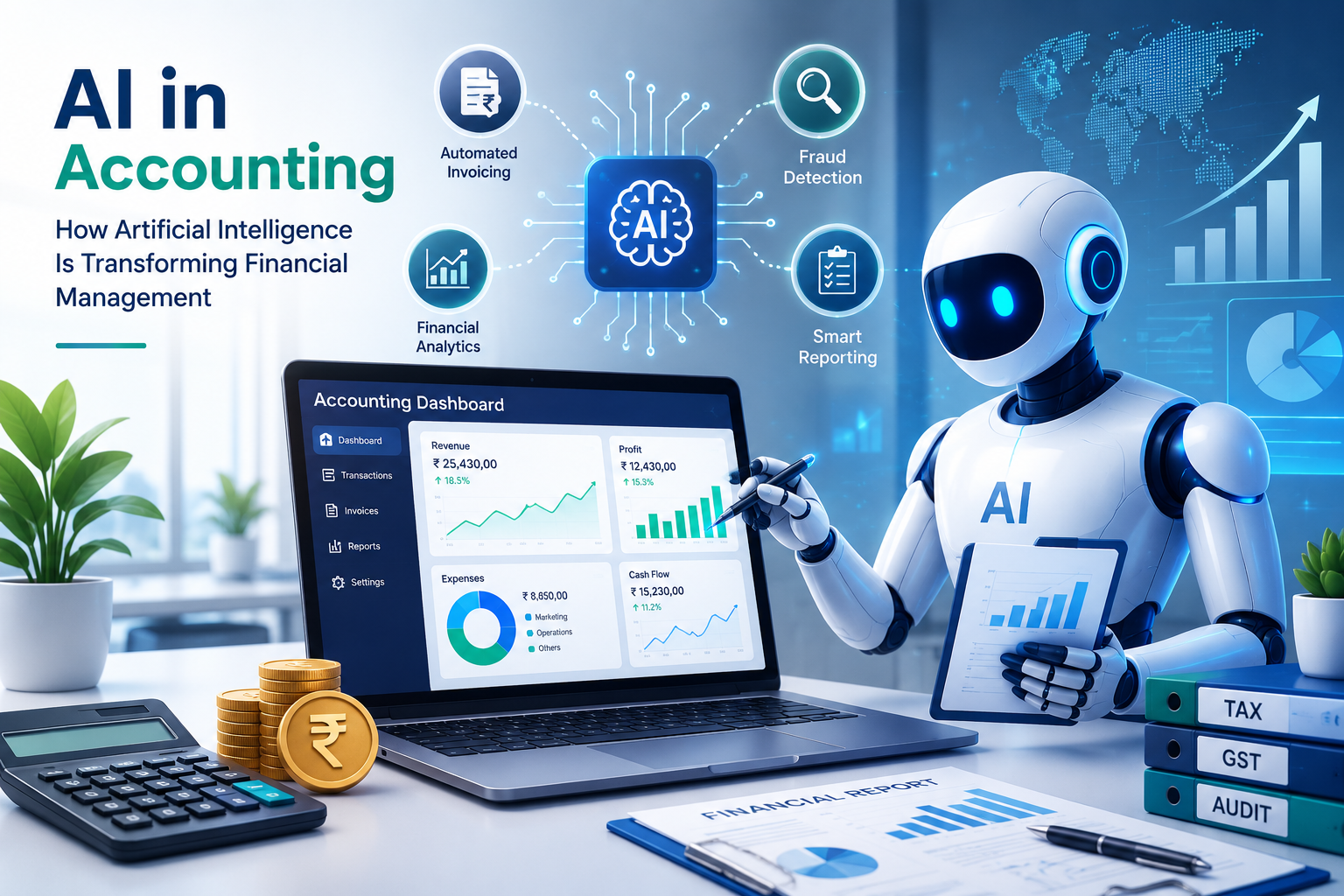
Artificial Intelligence (AI) is reshaping the accounting industry by automating repetitive tasks, improving financial accuracy, detecting fraud, and enabling faster business decisions. This article explores how AI is transforming modern accounting and what businesses should know.



Comments (0)
Please login to comment.