Cloud Accounting: The Future of Business Finance
Businesses today are moving away from traditional desktop accounting software and embracing cloud accounting solutions. With the increasing need for remote work, real-time financial insights, and secure data management, cloud accounting has become an essential tool for companies of all sizes.
Cloud accounting allows businesses to access their financial records anytime and from anywhere using an internet connection. This flexibility helps business owners, accountants, and finance teams collaborate more efficiently while ensuring that financial information remains accurate and up to date.
What Is Cloud Accounting?
Cloud accounting is an online accounting system where financial data is stored on secure cloud servers instead of a local computer. Users can log in through a web browser or mobile application to manage bookkeeping, invoicing, payroll, taxes, expenses, and financial reporting.
Unlike traditional accounting software, cloud accounting automatically saves data, performs regular backups, and provides software updates without requiring manual installation.
Benefits of Cloud Accounting
1. Real-Time Financial Data
Business owners can monitor income, expenses, cash flow, and profits instantly, helping them make faster and more informed decisions.
2. Access from Anywhere
Cloud accounting enables users to manage business finances from the office, home, or while traveling using any internet-connected device.
3. Automatic Data Backup
Financial records are securely backed up in the cloud, reducing the risk of data loss caused by hardware failures or accidental deletion.
4. Better Team Collaboration
Multiple users can access the system simultaneously with role-based permissions, making collaboration between accountants and business owners easier.
5. Enhanced Security
Most cloud accounting platforms use advanced encryption, multi-factor authentication, and secure data centers to protect sensitive financial information.
6. Automatic Software Updates
Users always have access to the latest features, security improvements, and compliance updates without manually updating the software.
Key Features of Cloud Accounting Software
Online bookkeeping
Invoice generation
Expense tracking
Bank reconciliation
Payroll management
Financial reporting
Tax calculation
GST compliance
Inventory management
Multi-user access
Mobile application support
Is Cloud Accounting Right for Your Business?
Cloud accounting is suitable for startups, small businesses, medium-sized enterprises, freelancers, and large organizations. It helps reduce paperwork, improve financial visibility, and streamline daily accounting operations.
Businesses handling remote teams or multiple locations benefit significantly from cloud-based accounting because financial information remains synchronized in real time.
Best Practices
To maximize the benefits of cloud accounting:
Use strong passwords and multi-factor authentication.
Regularly review user access permissions.
Reconcile bank accounts every month.
Keep financial records updated.
Generate monthly financial reports.
Train employees on the software.
Conclusion
Cloud accounting is changing the way businesses manage their finances by offering flexibility, automation, and real-time access to financial information. As digital transformation continues, adopting cloud accounting can improve efficiency, reduce manual work, and support smarter financial decision-making.
Cloud Accounting: The Future of Business Finance

Manjeet saini
@ Mnjeet_saini
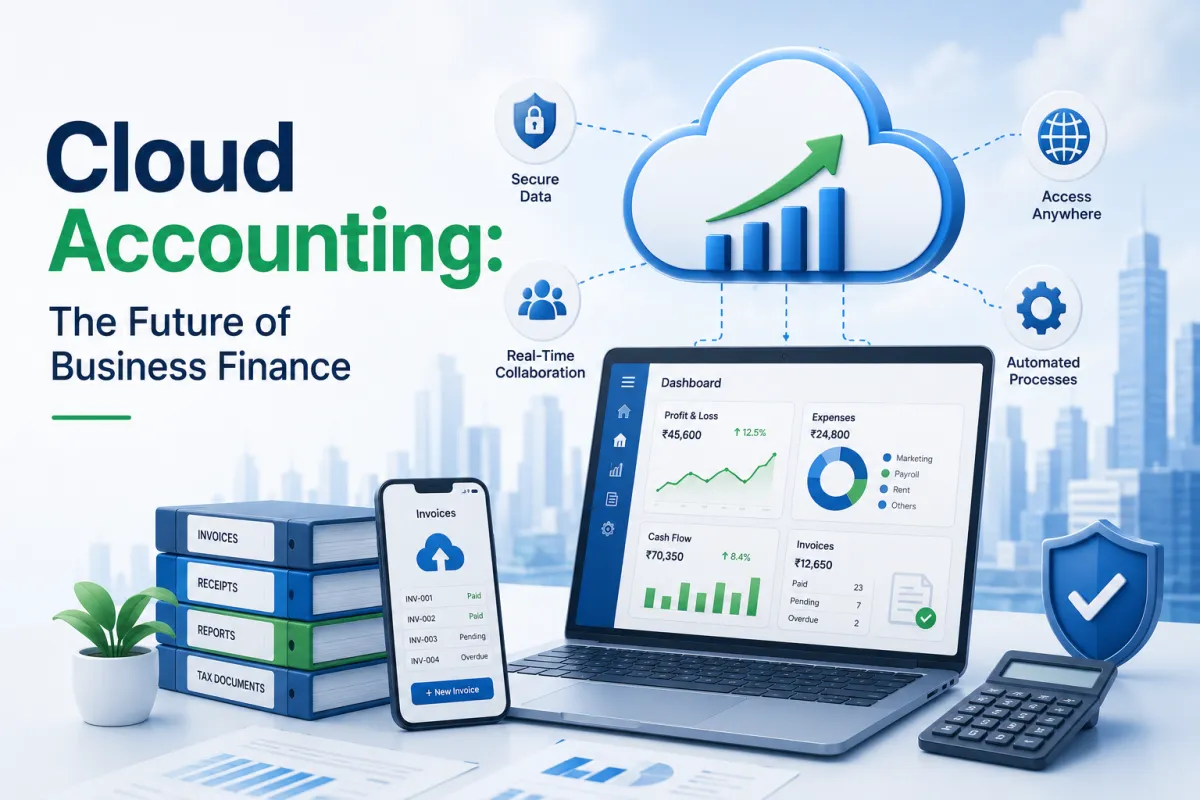
Cloud accounting is transforming how businesses manage their finances by providing real-time access to financial data, improved security, automated bookkeeping, and seamless collaboration. Discover why more businesses are switching to cloud-based accounting solutions.

Comments (0)
Please login to comment.