Payroll is one of the most important functions in any organization, as it directly affects employee compensation, statutory compliance, and financial reporting. Even minor payroll mistakes can result in delayed salaries, incorrect tax deductions, employee grievances, regulatory penalties, and reputational damage. By identifying common payroll errors and implementing effective payroll management practices, businesses can ensure accurate salary processing while maintaining compliance with applicable labour and tax laws.
One of the most common payroll errors is maintaining inaccurate employee records. Incorrect employee details such as bank account information, salary structure, attendance records, tax declarations, or joining and exit dates can lead to incorrect salary payments and payroll discrepancies. Regularly updating employee information helps prevent such errors.
Incorrect salary calculations are another frequent payroll issue. Errors in calculating basic salary, allowances, overtime, bonuses, incentives, leave deductions, reimbursements, or final settlement amounts may result in underpayment or overpayment of employees. Employers should verify payroll calculations carefully before processing salary payments.
Failure to deduct and deposit statutory contributions correctly is a significant compliance risk. Businesses must accurately calculate and deposit applicable deductions such as Tax Deducted at Source (TDS), Provident Fund (PF), Employees’ State Insurance (ESI), Professional Tax (PT), Labour Welfare Fund (LWF), and other statutory contributions within the prescribed timelines. Delays or incorrect deposits may attract interest, penalties, and legal consequences.
Another common mistake is missing statutory filing deadlines. Payroll-related returns, including TDS returns, PF returns, ESI returns, Professional Tax returns, and other regulatory filings, should be submitted within the applicable due dates. Timely filing demonstrates regulatory compliance and helps businesses avoid unnecessary penalties.
Many organizations also fail to maintain proper payroll documentation. Salary registers, attendance records, leave records, employee declarations, tax documents, payslips, statutory challans, reimbursement records, and payroll reports should be preserved systematically. Proper documentation supports audits, inspections, financial reporting, and statutory compliance.
Errors in leave management can also affect payroll accuracy. Incorrect leave balances, improper leave encashment calculations, or inaccurate leave deductions may result in salary disputes. Maintaining an integrated leave management system helps ensure accurate payroll processing and employee satisfaction.
Poor coordination between the Human Resources and Finance departments often leads to payroll inconsistencies. Employee promotions, resignations, salary revisions, transfers, attendance changes, and new employee onboarding should be communicated promptly between departments to avoid payroll errors.
Manual payroll processing increases the risk of calculation mistakes, duplicate entries, missed deductions, and compliance failures. Using modern payroll software significantly reduces manual intervention by automating salary calculations, attendance integration, statutory deductions, tax computations, payslip generation, and compliance reporting.
Regular internal payroll audits are an effective way to identify errors before they create larger compliance issues. Periodic payroll reviews help verify salary calculations, statutory deductions, accounting entries, employee records, and regulatory filings while strengthening internal financial controls.
Payroll regulations, labour laws, and tax provisions are updated periodically through government notifications and legislative amendments. Employers should stay informed about these changes and revise payroll processes accordingly. Seeking guidance from qualified Chartered Accountants, payroll consultants, or Human Resource professionals helps ensure ongoing compliance and minimizes the risk of payroll-related errors.
Avoiding common payroll errors is essential for maintaining employee confidence, protecting business finances, and ensuring statutory compliance. By maintaining accurate employee records, processing salaries correctly, meeting filing deadlines, preserving proper documentation, conducting regular payroll reviews, and using reliable payroll software, businesses can establish an efficient payroll system that supports organizational growth. A well-managed payroll process not only ensures legal compliance but also contributes to a positive employee experience and long-term business success.
Common Payroll Errors: Mistakes Every Business Should Avoid

Akshii
@ Manaksh
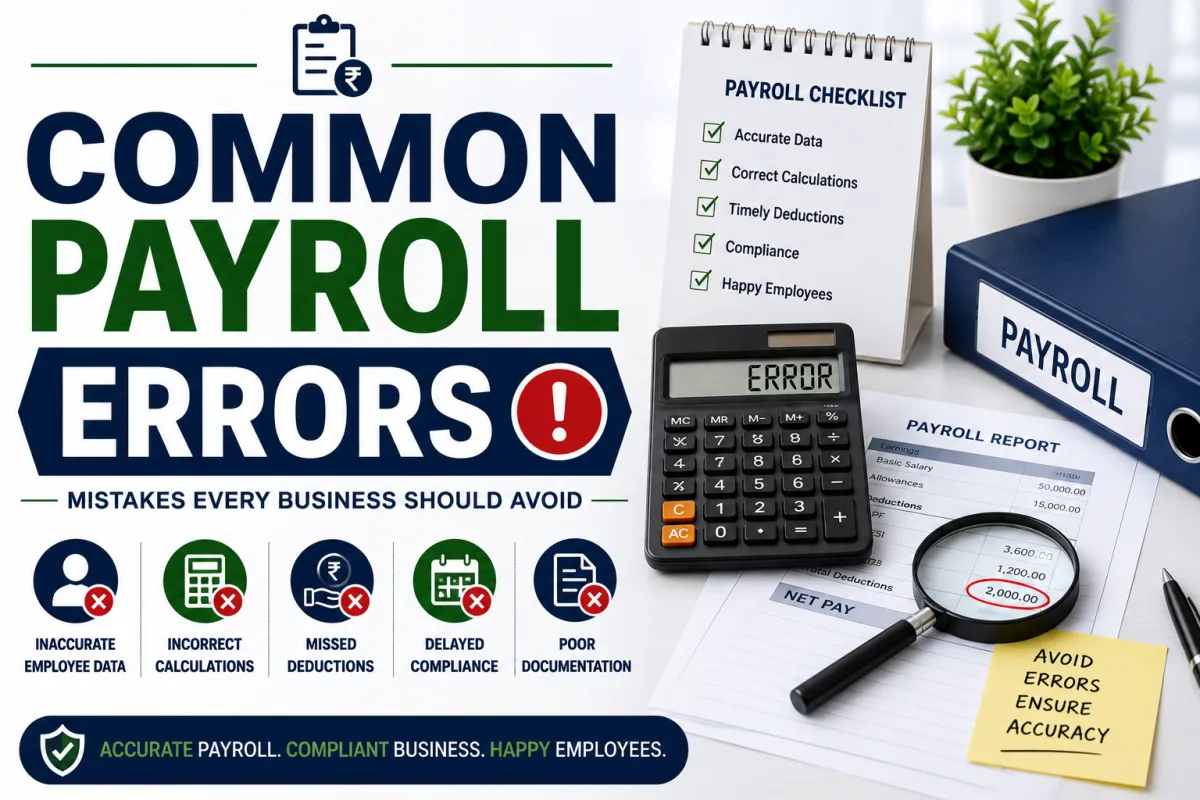
Payroll errors can lead to employee dissatisfaction, compliance issues, financial losses, and legal penalties. Understanding the most common payroll mistakes helps businesses improve payroll accuracy, maintain statutory compliance, and build employee trust.


Comments (0)
Please login to comment.