Tax Deducted at Source (TDS) is one of the most important compliance requirements under the Income Tax Act in India. Every deductor is responsible for deducting tax wherever applicable, depositing it with the government within the prescribed timelines, filing TDS returns accurately, and issuing TDS certificates to the concerned recipients. While the process may appear straightforward, many businesses commit avoidable mistakes that result in interest, penalties, compliance notices, and operational delays. Understanding these common mistakes enables organizations to strengthen their tax processes and maintain smooth statutory compliance.
One of the most frequent mistakes is failing to deduct TDS where it is legally applicable. Businesses sometimes overlook the relevant provisions, fail to identify eligible transactions, or incorrectly assume that TDS is not required. Such errors may result in financial liabilities, including interest and penalties. It is therefore essential to review every payment carefully and determine whether TDS provisions apply before releasing the payment.
Another common mistake is depositing TDS after the prescribed due date. Even if TDS has been deducted correctly, delayed payment to the government may attract interest and other legal consequences. Maintaining a compliance calendar, assigning responsibility for statutory payments, and using automated accounting software can significantly reduce the risk of missed deadlines.
Errors in TDS return filing are also common. Incorrect PAN, TAN, challan details, payment amounts, deduction dates, or section codes may lead to mismatches, rejection of returns, or notices from the Income Tax Department. Businesses should verify all information thoroughly before submitting quarterly TDS returns and reconcile records with accounting data to ensure accuracy.
Many organizations also fail to issue TDS certificates within the prescribed timelines. Delayed issuance of Form 16, Form 16A, or other applicable TDS certificates can create difficulties for employees, vendors, consultants, and other deductees while claiming tax credit or filing their Income Tax Returns. Timely issuance of certificates reflects strong compliance practices and improves business credibility.
Poor record management is another major compliance challenge. Businesses should maintain organized documentation including invoices, contracts, payment vouchers, challans, TDS calculations, return acknowledgements, certificates, and reconciliation reports. Proper documentation simplifies audits, supports tax assessments, and reduces the likelihood of disputes with tax authorities.
Failure to reconcile TDS records with Form 26AS, the Annual Information Statement (AIS), accounting books, and bank records can also result in discrepancies. Regular reconciliation helps identify errors early and allows businesses to make necessary corrections before statutory deadlines. This proactive approach minimizes notices and improves the accuracy of tax reporting.
Many businesses continue using outdated tax rates or remain unaware of amendments to TDS provisions. Since tax laws and compliance requirements may change from time to time, organizations should stay informed through official notifications and seek guidance from qualified Chartered Accountants or tax professionals whenever necessary. Regular employee training and periodic compliance reviews also contribute to better tax governance.
Avoiding common TDS compliance mistakes requires disciplined financial management, accurate accounting, timely filing, and continuous monitoring of statutory obligations. By implementing robust internal controls, maintaining complete documentation, using reliable accounting software, and staying updated with the latest tax regulations, businesses can ensure smooth compliance, avoid penalties, and strengthen their financial reputation. A proactive approach to TDS management not only fulfills legal obligations but also supports transparent and efficient business operations.
Common TDS Compliance Mistakes: Errors Every Business Should Avoid

Akshii
@ Manaksh
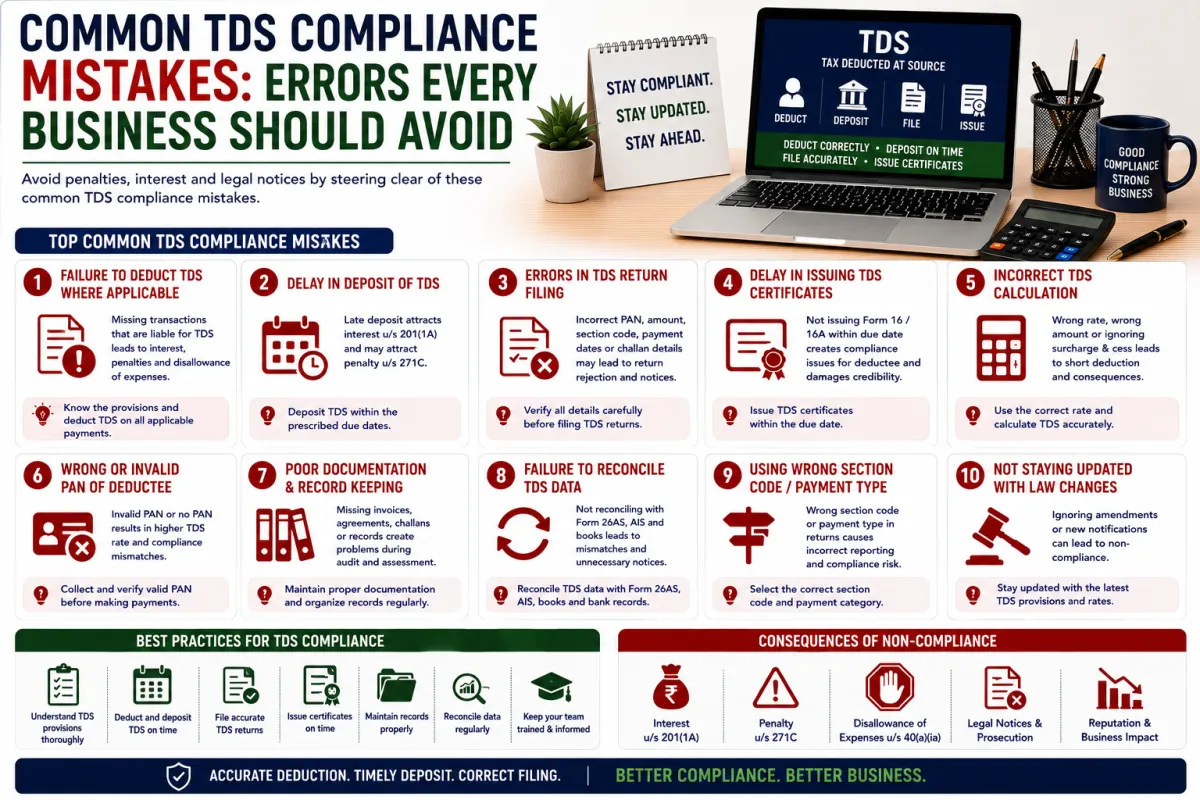
TDS compliance is an essential responsibility for businesses, employers, and other deductors. Even small errors in deduction, deposit, return filing, or documentation can lead to interest, penalties, and legal notices. Understanding common TDS compliance mistakes helps organizations maintain accurate tax compliance and avoid unnecessary financial risks.



Comments (0)
Please login to comment.