Employee reimbursement is a common business practice where employees are repaid for legitimate expenses incurred while performing official duties. These expenses may include travel, accommodation, meals, office supplies, client meetings, training programs, transportation, communication costs, and other approved business-related expenditures. Proper accounting for employee reimbursements is essential for maintaining accurate financial records, ensuring tax compliance, and promoting transparency between employers and employees.
A well-defined reimbursement policy is the foundation of effective reimbursement accounting. Every organization should establish clear guidelines regarding eligible expenses, approval procedures, documentation requirements, reimbursement limits, submission timelines, and payment processes. A standardized policy minimizes confusion, reduces disputes, and ensures consistent treatment of all employee claims.
Accurate documentation is one of the most important aspects of reimbursement accounting. Employees should submit original bills, invoices, receipts, travel tickets, hotel invoices, payment proofs, and any other supporting documents required by the organization’s reimbursement policy. Proper documentation enables the finance department to verify the legitimacy of expenses before processing reimbursement claims.
Once reimbursement claims are received, the finance or accounts department should carefully review and verify each expense. The verification process includes confirming that the expense was incurred for official business purposes, checking supporting documents, ensuring compliance with company policies, and obtaining necessary approvals from authorized personnel before reimbursement is processed.
Proper accounting treatment is essential when recording employee reimbursements. Approved expenses should be classified under the appropriate expense heads in the books of accounts, such as travel expenses, conveyance expenses, office expenses, marketing expenses, or other relevant categories. Accurate classification improves financial reporting and helps management analyze business expenditures effectively.
Timely reimbursement is equally important for maintaining employee satisfaction and organizational trust. Delays in reimbursement may create financial inconvenience for employees and negatively impact workplace morale. Establishing defined processing timelines and automated approval workflows helps organizations reimburse employees promptly while maintaining proper financial controls.
Businesses should also ensure that reimbursement practices comply with applicable tax laws and accounting standards. Certain reimbursements may have specific tax implications depending on the nature of the expense and prevailing legal provisions. Maintaining complete documentation and proper accounting records supports compliance during tax assessments, audits, and financial reviews.
Using modern accounting and expense management software can significantly improve reimbursement accounting. Digital systems allow employees to submit expense claims electronically, upload supporting documents, track approval status, and receive timely reimbursements. Automation also helps finance teams verify expenses, record transactions accurately, generate reports, and reduce manual errors.
Regular internal reviews of reimbursement records strengthen financial control and reduce the risk of duplicate claims, unauthorized expenses, or policy violations. Periodic audits help organizations identify process improvements, strengthen compliance, and ensure that reimbursement policies are consistently followed across all departments.
As accounting standards, tax regulations, and business policies evolve over time, organizations should periodically review and update their reimbursement procedures. Consulting qualified Chartered Accountants or finance professionals can help businesses establish effective reimbursement systems that comply with legal requirements and support efficient financial management.
Employee reimbursement accounting is an essential component of sound financial administration. By implementing clear reimbursement policies, maintaining accurate documentation, verifying expenses carefully, recording transactions correctly, and using reliable accounting software, businesses can improve financial transparency, strengthen compliance, and enhance employee satisfaction. An efficient reimbursement process not only ensures accurate accounting but also contributes to better financial control and long-term organizational success.
Employee Reimbursement Accounting: Best Practices for Accurate Expense Management

Akshii
@ Manaksh
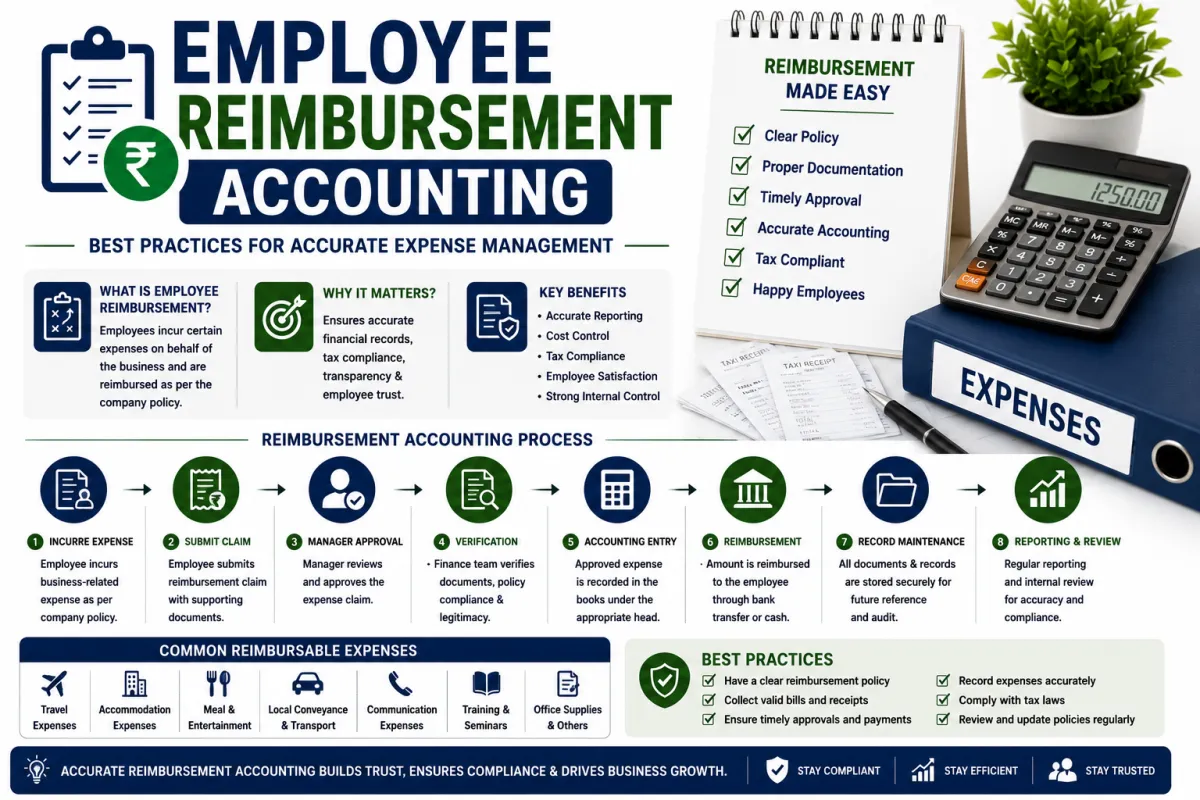
Employee reimbursement accounting is the process of recording and managing expenses incurred by employees on behalf of the business. A well-structured reimbursement system ensures accurate financial records, timely payments, tax compliance, and greater transparency within the organization.



Comments (0)
Please login to comment.