Introduction
The accounting industry has changed dramatically over the past few years. Traditional accounting firms relied heavily on face-to-face meetings, paperwork, and local clients. Today, technology has removed those barriers. Businesses are increasingly comfortable working with accountants remotely, sharing financial records securely through cloud-based platforms, and receiving real-time financial advice online.
This shift has created an incredible opportunity for professionals who want to start an online accounting business. Instead of renting expensive office space or hiring a large team from the beginning, you can launch a professional accounting practice from your home with minimal investment.
The demand for online accounting services continues to grow because every business—whether a startup, freelancer, e-commerce store, or established company—needs accurate bookkeeping, tax compliance, payroll management, financial reporting, and strategic financial advice.
Starting an online accounting business is not only cost-effective but also highly scalable. With the right systems and digital tools, you can serve clients across different cities and even internationally.
This guide explains everything you need to know to build a profitable online accounting business from scratch.
Why Start an Online Accounting Business?
The financial services industry is experiencing rapid digital transformation. Businesses are moving toward cloud accounting, automated bookkeeping, and virtual financial consulting.
Some of the biggest advantages include:
Low startup costs
Flexible working hours
Global client opportunities
High demand for accounting services
Recurring monthly income
Easy scalability
Ability to work from anywhere
Increased use of cloud technology
Unlike many businesses that require large investments, an accounting business primarily depends on your expertise, reputation, and client relationships.
Step 1: Identify Your Niche
One of the biggest mistakes new accounting entrepreneurs make is trying to serve everyone.
Instead, specialize in a niche where you can become an expert.
Popular accounting niches include:
Small Business Accounting
E-commerce Accounting
Startup Accounting
Freelancers and Consultants
Real Estate Accounting
Healthcare Accounting
Restaurant Accounting
Manufacturing Accounting
Nonprofit Organizations
International Businesses
A niche allows you to build authority, charge premium prices, and attract your ideal clients.
Step 2: Choose Your Business Structure
Before accepting clients, register your business according to your country's legal requirements.
Common business structures include:
Sole Proprietorship
Partnership
Limited Liability Company (LLC)
Private Limited Company
Choose a structure that suits your financial goals, tax obligations, and liability preferences.
You should also obtain any necessary accounting licenses or certifications required in your region.
Step 3: Create a Business Plan
Every successful business begins with a clear strategy.
Your accounting business plan should include:
Business goals
Target audience
Services offered
Pricing model
Marketing strategy
Revenue projections
Operational expenses
Growth plan
A written business plan helps you stay focused and measure progress.
Step 4: Define Your Services
Offer services that solve real business problems.
Common online accounting services include:
Bookkeeping
GST/VAT Compliance
Tax Preparation
Payroll Processing
Bank Reconciliation
Financial Statements
Budget Planning
Cash Flow Management
Business Advisory
Financial Forecasting
Virtual CFO Services
Accounting Software Setup
Start with a few core services and expand as your business grows.
Step 5: Invest in the Right Technology
Technology is the backbone of an online accounting business.
Essential tools include:
Cloud Accounting Software
Secure File Storage
Video Meeting Software
Electronic Signature Tools
Password Management Software
Project Management Platform
CRM System
Online Payment Gateway
Time Tracking Software
Using modern technology improves productivity and creates a professional client experience.
Step 6: Build a Professional Website
Your website acts as your digital office.
It should include:
Home Page
About Us
Services
Pricing
Testimonials
Blog
Contact Form
Online Appointment Booking
A professional website builds trust and helps potential clients find you through search engines.
Step 7: Build Your Personal Brand
People hire accountants they trust.
Build authority by sharing valuable financial content online.
Publish:
Accounting blogs
GST updates
Tax-saving tips
LinkedIn articles
Educational videos
Case studies
Client success stories
Consistent content marketing establishes you as an industry expert.
Step 8: Set Competitive Pricing
Pricing is one of the most important business decisions.
Popular pricing models include:
Hourly Pricing
Clients pay based on the hours worked.
Fixed Monthly Packages
Ideal for bookkeeping and recurring accounting services.
Project-Based Pricing
Suitable for tax filing, audits, or software implementation.
Value-Based Pricing
Charge based on the value delivered rather than time spent.
Monthly service packages often generate stable recurring income.
Step 9: Find Your First Clients
Client acquisition is the biggest challenge for new accounting businesses.
Effective strategies include:
LinkedIn networking
Google Business Profile
SEO blogging
Facebook business groups
Freelancing platforms
Referral programs
Email marketing
Local business networking
YouTube educational content
Webinars
Your first satisfied clients often become your strongest marketing asset through referrals.
Step 10: Deliver Exceptional Customer Service
Client retention is more profitable than constantly acquiring new clients.
Focus on:
Quick response times
Accurate financial reports
Clear communication
Meeting deadlines
Transparent pricing
Personalized financial advice
Happy clients stay longer and recommend your services to others.
Common Mistakes to Avoid
Many new accounting entrepreneurs struggle because they:
Charge too little
Ignore marketing
Lack a niche
Depend on one client
Skip contracts
Fail to automate repetitive tasks
Neglect cybersecurity
Avoid continuous learning
Learning from these mistakes early can save time and money.
How AI Is Changing Online Accounting Businesses
Artificial Intelligence is making accounting businesses more efficient than ever.
AI can automate:
Invoice processing
Expense categorization
Data entry
Bank reconciliation
Financial reporting
Fraud detection
Cash flow forecasting
Instead of replacing accountants, AI enables them to focus on consulting and strategic decision-making.
How Much Can You Earn?
Your income depends on your expertise, niche, pricing, and client base.
For example:
Freelance bookkeepers can earn consistent monthly retainers.
Specialized accountants serving startups or e-commerce businesses can command premium fees.
Virtual CFOs and business advisors often earn significantly more by providing strategic financial guidance.
As your reputation grows, so does your ability to attract higher-value clients and increase recurring revenue.
Future of Online Accounting Businesses
The future is bright for online accounting firms.
Emerging trends include:
AI-powered accounting
Cloud-first financial management
Paperless accounting
Blockchain integration
Automated tax filing
Real-time reporting
Digital audits
Virtual CFO services
Global remote accounting teams
Businesses increasingly prefer accountants who offer technology-driven solutions and proactive financial advice.
Conclusion
Starting an online accounting business in 2026 is one of the smartest opportunities for finance professionals. With low startup costs, growing demand, and access to powerful digital tools, it has never been easier to build a successful accounting practice from anywhere in the world.
Success, however, requires more than technical expertise. It depends on choosing the right niche, building a strong online presence, delivering exceptional client service, embracing automation, and continuously adapting to new technologies.
By focusing on quality, trust, and long-term client relationships, you can create a profitable business that generates recurring income and serves clients across industries and borders.
The future of accounting is online, and those who invest in digital skills and modern business practices today will be well-positioned to thrive in the years ahead.
How to Start an Accounting Business Online

Manjeet saini
@ Mnjeet_saini
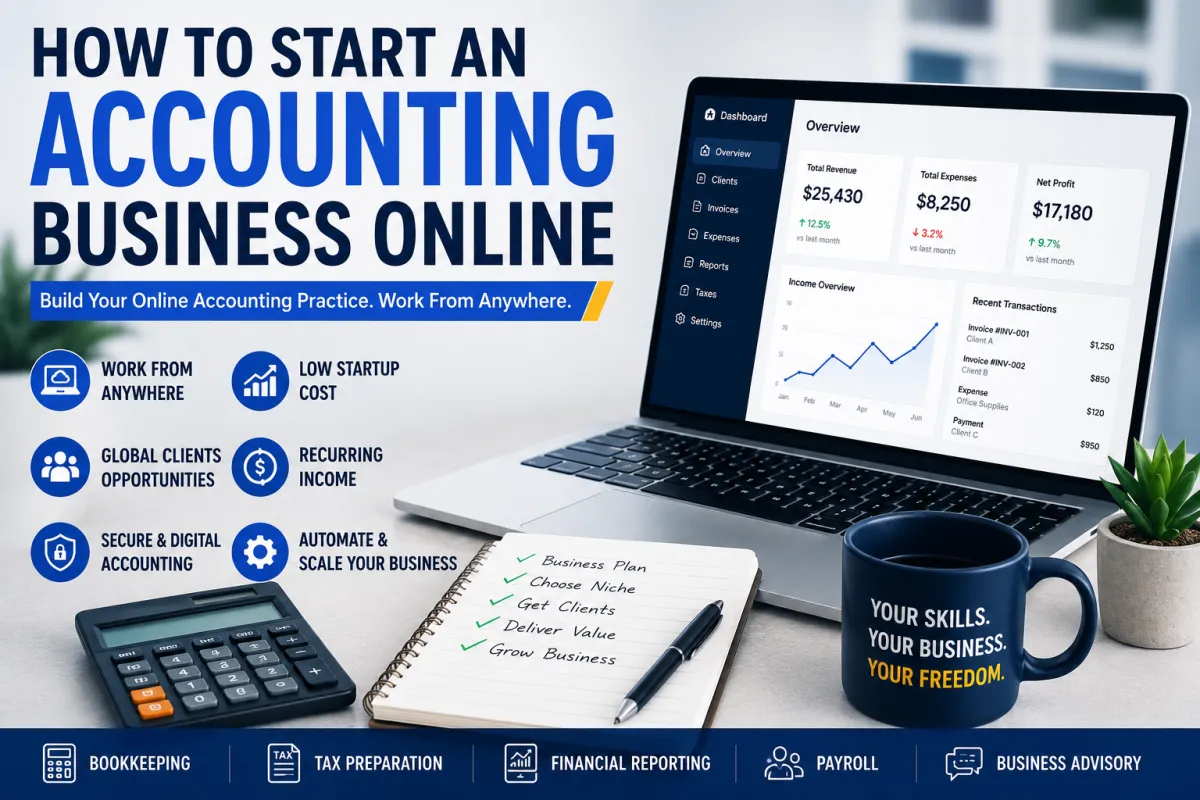
Starting an online accounting business has become one of the most profitable opportunities for finance professionals in 2026. Thanks to cloud accounting software, digital payment systems, AI-powered bookkeeping, and remote collaboration tools, accountants can now serve clients from anywhere in the world without opening a physical office.
Whether you're a certified accountant, bookkeeper, freelancer, or finance graduate, launching an online accounting business requires more than accounting knowledge. You need the right business model, legal setup, pricing strategy, digital tools, marketing plan, and client acquisition process. This comprehensive guide walks you through every step to build a successful and scalable online accounting business.
Whether you're a certified accountant, bookkeeper, freelancer, or finance graduate, launching an online accounting business requires more than accounting knowledge. You need the right business model, legal setup, pricing strategy, digital tools, marketing plan, and client acquisition process. This comprehensive guide walks you through every step to build a successful and scalable online accounting business.



Comments (0)
Please login to comment.