Leave encashment is a common employee benefit that allows employees to receive monetary compensation for unused earned leave accumulated during their period of service. Many organizations offer leave encashment either during employment, at retirement, or upon resignation, depending on their leave policy. Since leave encashment involves financial payments, understanding its tax treatment is essential for both employees and employers to ensure proper payroll processing and compliance with the Income-tax Act.
Leave encashment generally refers to the payment made by an employer in lieu of earned leave that an employee has accumulated but not utilized. Company leave policies determine the number of leave days that can be accumulated, carried forward, or encashed. Employees should review their organization’s leave policy to understand their eligibility and the conditions applicable to leave encashment.
The taxability of leave encashment depends on the circumstances under which the payment is received and the applicable provisions of the Income-tax Act. Different tax rules may apply to leave encashment received during employment and leave encashment received at the time of retirement or separation from service. In certain cases, eligible exemptions may be available subject to the conditions prescribed under tax laws.
For employers, proper payroll accounting of leave encashment is essential. Leave encashment payments should be accurately recorded in payroll records, reflected in salary computations where applicable, and considered while calculating Tax Deducted at Source (TDS) in accordance with prevailing tax provisions. Accurate payroll processing helps ensure correct tax reporting and minimizes compliance risks.
Employees should maintain proper documentation related to leave encashment, including salary slips, leave balance statements, employer certificates, settlement statements, and other relevant records. These documents may be useful while preparing Income Tax Returns or responding to any future tax queries.
Organizations should establish a clear leave encashment policy specifying eligibility criteria, leave accumulation limits, encashment conditions, approval procedures, and payment timelines. A transparent policy promotes consistency, reduces disputes, and helps employees understand their benefits clearly.
Accurate accounting treatment is equally important for businesses. Leave encashment expenses should be recorded appropriately in the books of accounts based on applicable accounting standards and organizational policies. Maintaining proper accounting records supports financial reporting, audits, and tax compliance.
Modern payroll software can simplify leave management and leave encashment calculations by automatically tracking leave balances, calculating eligible encashment amounts, processing payroll adjustments, generating reports, and maintaining employee records. Automation reduces manual errors and improves payroll efficiency.
As tax laws and exemption limits may be revised through Finance Acts and government notifications, both employers and employees should stay updated with the latest provisions relating to leave encashment. Consulting a qualified Chartered Accountant or tax professional helps ensure that leave encashment is accounted for correctly and taxed according to the applicable legal provisions.
Proper financial planning is also important when receiving leave encashment. Employees should understand the potential tax implications, review available exemptions wherever applicable, and maintain accurate records for future reference. Employers should ensure timely communication regarding leave policies and tax treatment to support employee awareness and compliance.
Leave encashment is an important employment benefit that rewards employees for unused earned leave while supporting workforce flexibility. Understanding the applicable tax rules, maintaining accurate payroll records, following organizational leave policies, and complying with Income-tax provisions help both employees and employers manage leave encashment efficiently. With proper documentation, accurate accounting, and professional guidance, organizations can ensure transparent payroll administration while employees can maximize compliance and make informed financial decisions.
Leave Encashment Tax Rules: A Complete Guide for Employees and Employers

Akshii
@ Manaksh
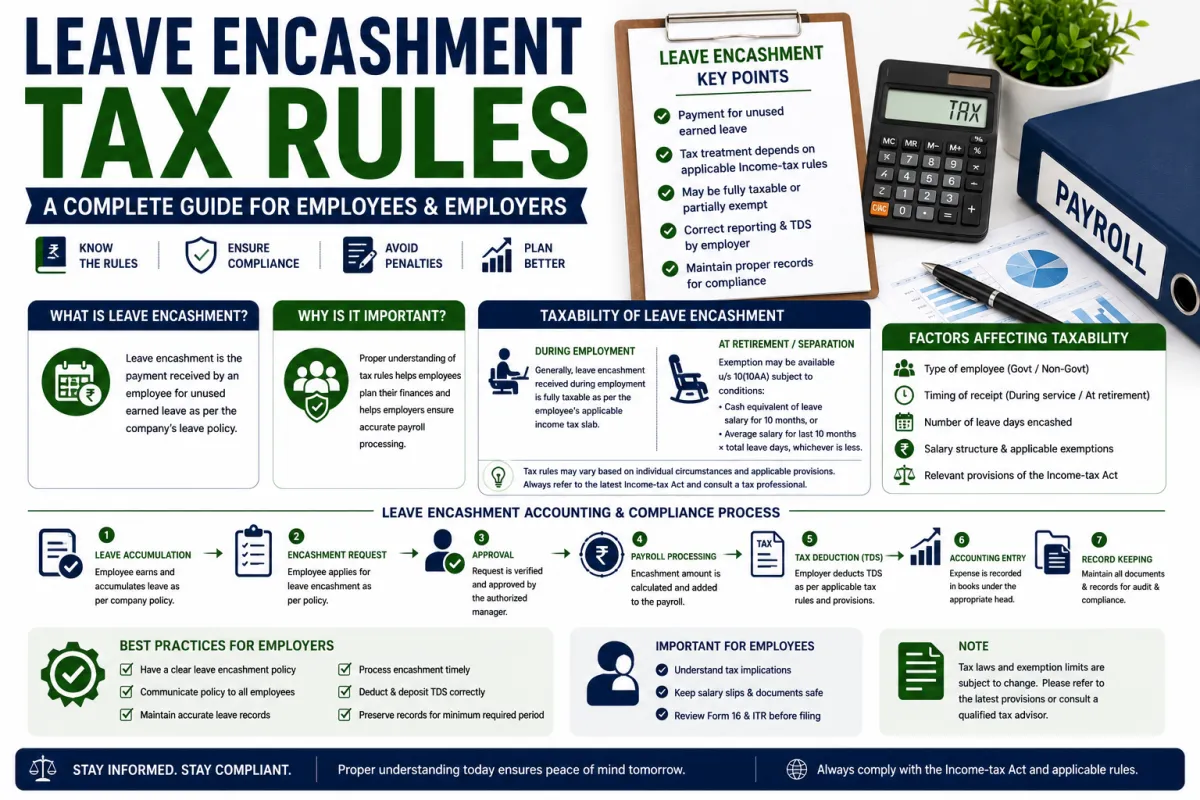
Leave encashment is the payment an employee receives for unused earned leave. The tax treatment of leave encashment depends on various factors, including the type of employee and the applicable provisions of the Income-tax Act. Understanding these rules helps employees and employers ensure accurate tax compliance.

Comments (0)
Please login to comment.