Leave encashment is a benefit provided by many employers that allows employees to convert their accumulated but unused earned leave into monetary compensation. This benefit not only rewards employees for unused leave but also forms an important part of payroll and tax planning. Since leave encashment has specific tax implications under the Income-tax Act, both employers and employees should understand the applicable rules to ensure accurate payroll processing, proper tax deduction, and statutory compliance.
Leave encashment generally refers to the amount paid by an employer in exchange for an employee’s accumulated earned leave. Depending on the organization’s leave policy, employees may receive leave encashment during their employment, at the time of retirement, resignation, or termination of service. The tax treatment of the amount received varies according to the applicable legal provisions and the circumstances under which it is paid.
The taxability of leave encashment depends on several factors, including the type of employee, the stage at which the payment is received, and the provisions of the Income-tax Act applicable at that time. Certain leave encashment payments may qualify for tax exemptions subject to prescribed conditions and limits, while others may be fully taxable. Employees should carefully review the applicable provisions before calculating their tax liability.
For employers, accurate payroll accounting is essential while processing leave encashment payments. The reimbursement should be correctly included in payroll records wherever applicable, appropriate Tax Deducted at Source (TDS) should be calculated, and the transaction should be reflected accurately in salary statements and tax reporting documents. Proper payroll management helps organizations remain compliant with statutory obligations.
Organizations should establish a transparent leave encashment policy that clearly specifies eligibility criteria, leave accumulation limits, encashment rules, approval procedures, documentation requirements, and payment timelines. A well-documented policy promotes consistency, reduces disputes, and ensures that employees understand the terms governing leave encashment.
Maintaining proper documentation is equally important. Employees should preserve salary slips, leave balance statements, employer certificates, settlement statements, and other supporting records related to leave encashment. Employers should maintain payroll records, approval documents, accounting entries, and tax deduction records for audit and compliance purposes.
Proper accounting treatment of leave encashment improves financial reporting accuracy. Businesses should record leave encashment expenses under the appropriate accounting heads in accordance with applicable accounting standards and company policies. Accurate financial records support statutory audits, tax assessments, and internal financial management.
Modern payroll software simplifies leave management and leave encashment calculations by automatically tracking leave balances, processing approvals, calculating eligible encashment amounts, generating payroll entries, deducting applicable taxes, and maintaining employee records. Automation reduces manual errors, saves time, and improves compliance efficiency.
Since tax provisions, exemption limits, and payroll regulations may change through Finance Acts and government notifications, employers and employees should remain updated with the latest legal requirements. Seeking guidance from a qualified Chartered Accountant or tax professional helps ensure that leave encashment is processed accurately and taxed in accordance with the prevailing provisions of law.
Effective tax planning also plays an important role in managing leave encashment benefits. Employees should understand the tax implications before opting for leave encashment, while employers should communicate payroll policies clearly and provide accurate tax-related information to employees whenever required.
Leave encashment is an important employee benefit that supports financial planning while rewarding employees for accumulated earned leave. Understanding the applicable tax rules, maintaining proper documentation, processing payroll accurately, and complying with the provisions of the Income-tax Act help both employers and employees avoid compliance issues and ensure transparent payroll administration. With organized financial records and professional guidance, leave encashment can be managed efficiently while supporting sound tax and payroll practices.
Leave Encashment Tax Rules: Everything Employees and Employers Should Know

Akshii
@ Manaksh
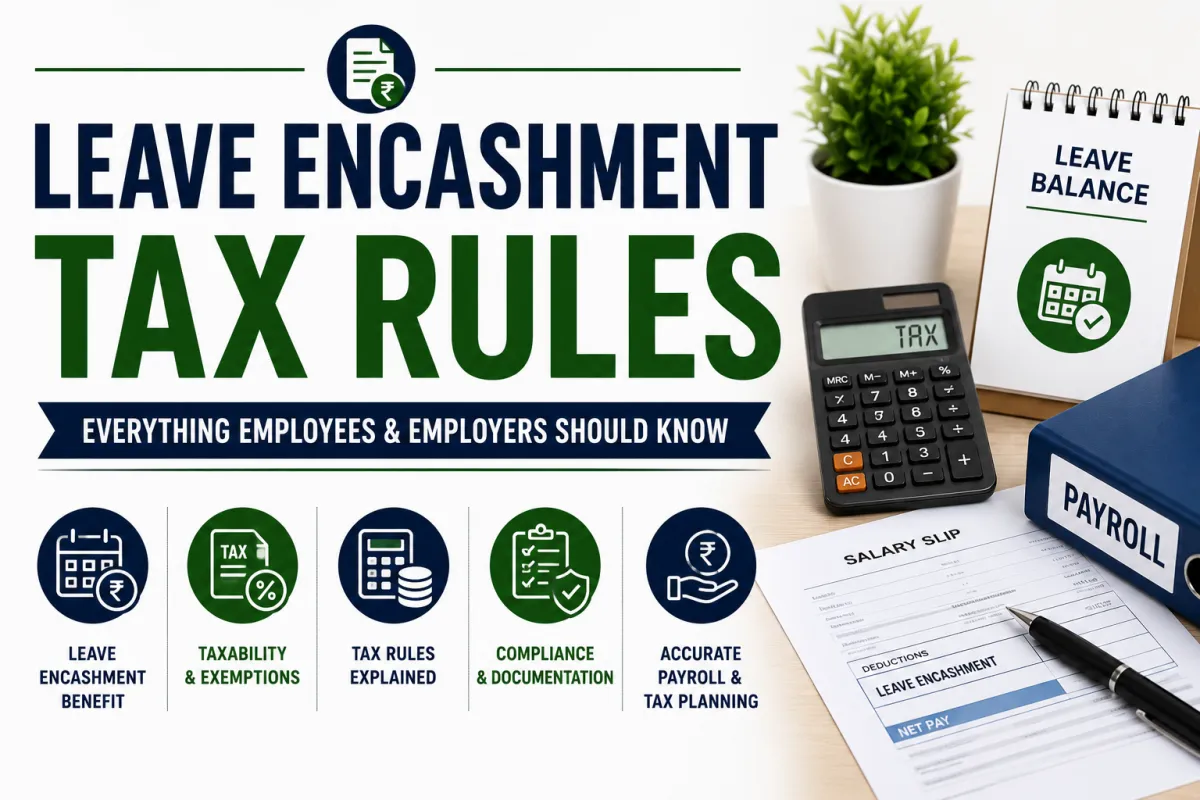
Leave encashment is a valuable employee benefit that allows employees to receive payment for their unused earned leave. However, its tax treatment depends on various factors, including the timing of the payment and the applicable provisions of the Income-tax Act. Understanding these rules helps both employers and employees ensure proper tax compliance and payroll accuracy.

Comments (0)
Please login to comment.