10 Common GST Filing Mistakes Businesses Make

Akshita tyagi
@ tyagiakshita78@gmail.com
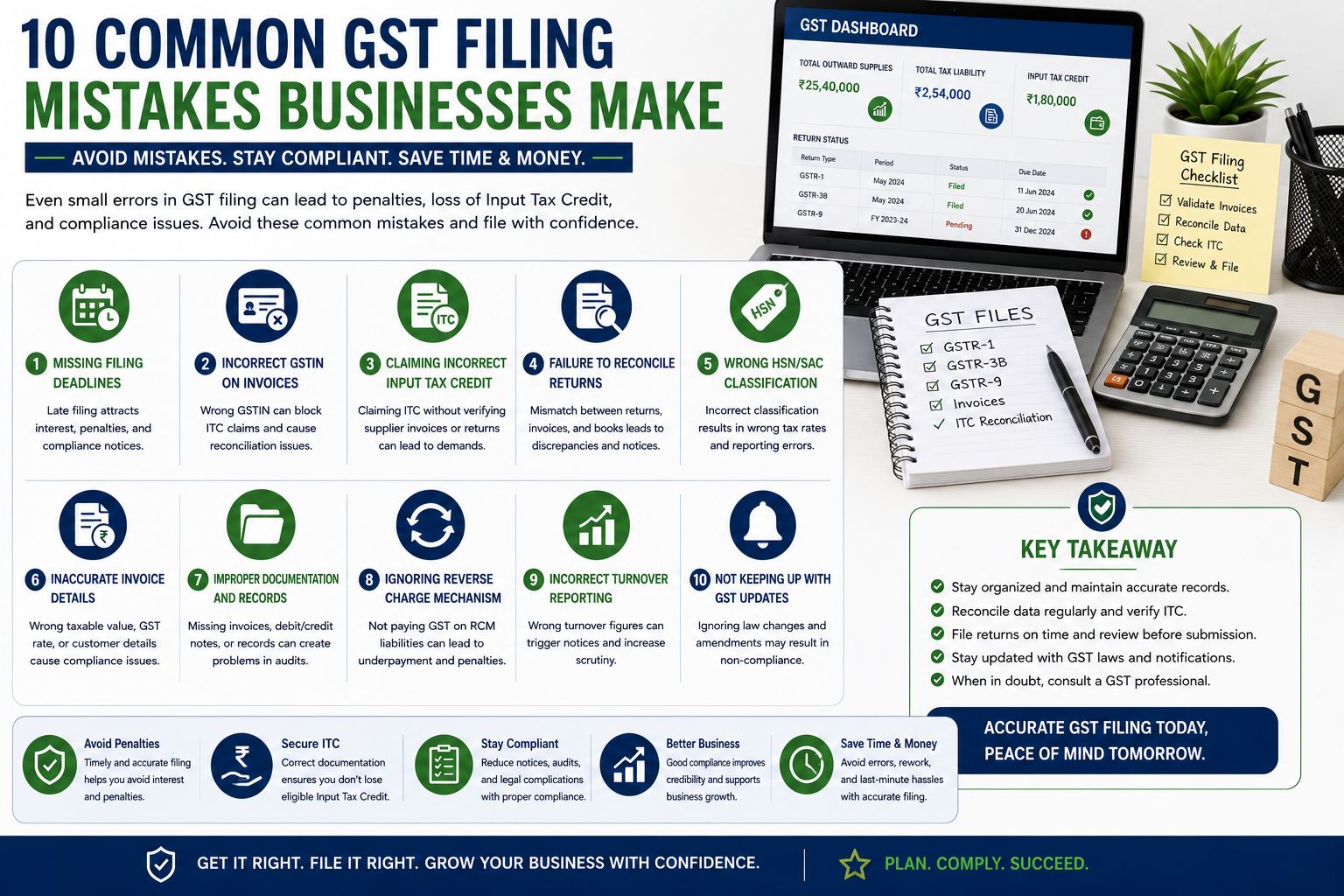
GST compliance is essential for businesses to avoid penalties and maintain smooth operations. Understanding and avoiding common GST filing mistakes can help businesses ensure accurate tax reporting and timely compliance.
Goods and Services Tax (GST) has simplified the indirect tax system in India, but many businesses still make filing mistakes that can result in penalties, notices, and compliance issues. Understanding these common errors can help businesses maintain accurate records and avoid unnecessary complications. One of the most frequent GST filing mistakes is missing filing deadlines. Late filing can attract interest charges, penalties, and compliance notices from tax authorities. Another common error is incorrect GSTIN entry on invoices, which can create reconciliation issues and prevent customers from claiming Input Tax Credit (ITC). Businesses also often claim incorrect Input Tax Credit without verifying supplier invoices or ensuring that the supplier has filed the required GST returns. Failure to reconcile GST returns with accounting records is another significant mistake that can lead to discrepancies and tax liabilities. Many businesses make errors in classifying goods and services under the wrong HSN or SAC codes, resulting in incorrect tax rates and reporting issues. Inaccurate invoice details, such as incorrect taxable values, GST rates, or customer information, can further create compliance challenges. Another common mistake is not maintaining proper documentation, including tax invoices, debit notes, credit notes, and supporting records. During audits or assessments, missing documentation can create difficulties in justifying tax claims and transactions. Businesses also sometimes overlook reverse charge mechanism (RCM) obligations, leading to underpayment of GST. Filing returns with incorrect turnover figures is another issue that can trigger notices and increase scrutiny from tax authorities. Additionally, many businesses fail to regularly monitor GST law updates and amendments, resulting in non-compliance with new regulations. Proper bookkeeping, regular reconciliations, and the use of reliable accounting software can significantly reduce these risks. Businesses should also conduct periodic GST reviews and ensure that employees handling tax compliance are adequately trained. Seeking professional guidance from qualified tax consultants can further help identify potential errors before returns are


Comments (0)
Please login to comment.