Author

Akshita tyagi

@ tyagiakshita78@gmail.com

Blog Author

Published Blogs

Blog

Business Credit Cards: Benefits, Features, and Smart Usage Tips for Business Growth

Business Credit Cards are financial tools designed specifically for businesses to manage operational expenses, improve cash flow, and simplify business spending. When used responsibly, they help build business credit, streamline expense management, and support business growth.

Read More →
Blog

PMEGP Scheme Explained: Complete Guide to Government Support for New Entrepreneurs in India

The Prime Minister’s Employment Generation Programme (PMEGP) is a government-backed credit-linked subsidy scheme that promotes self-employment and entrepreneurship by providing financial assistance for setting up new micro-enterprises in the manufacturing and service sectors.

Read More →
Blog

MSME Loan Schemes: Complete Guide to Business Financing for Small Enterprises in India

MSME loan schemes are designed to provide financial assistance to Micro, Small, and Medium Enterprises for business expansion, working capital, equipment purchases, and operational growth. Understanding these schemes helps entrepreneurs choose suitable financing options while strengthening their businesses.

Read More →
Blog

Udyam Registration Guide: Complete Process, Eligibility & Benefits for MSMEs in India

Udyam Registration is the official registration process for Micro, Small, and Medium Enterprises (MSMEs) in India. It enables eligible businesses to obtain government recognition and access various benefits, financial assistance, and business development opportunities offered under the MSME framework.

Read More →
Blog

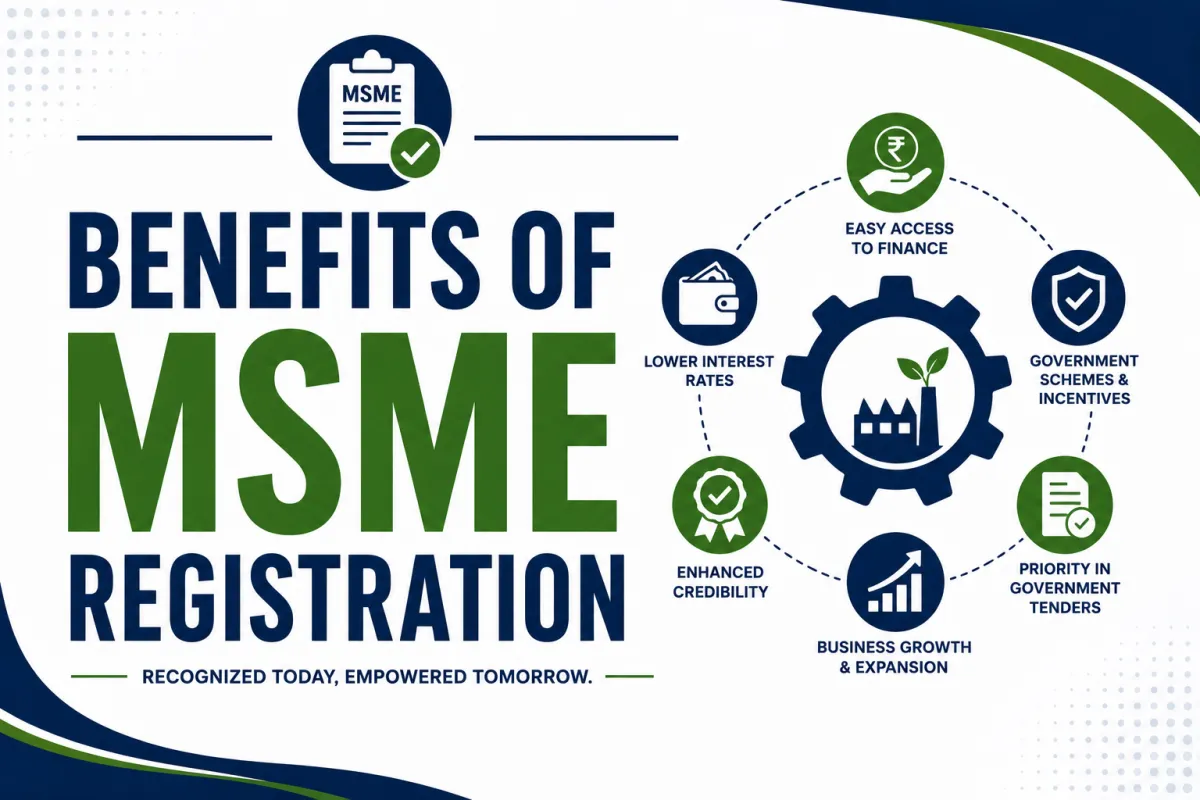
Benefits of MSME Registration: Why Every Small Business Should Register in India

MSME (Micro, Small, and Medium Enterprises) Registration provides businesses with various financial, legal, and operational benefits offered by the Government of India. Registering as an MSME enhances business credibility, improves access to government schemes, and supports long-term business growth.

Read More →
Blog

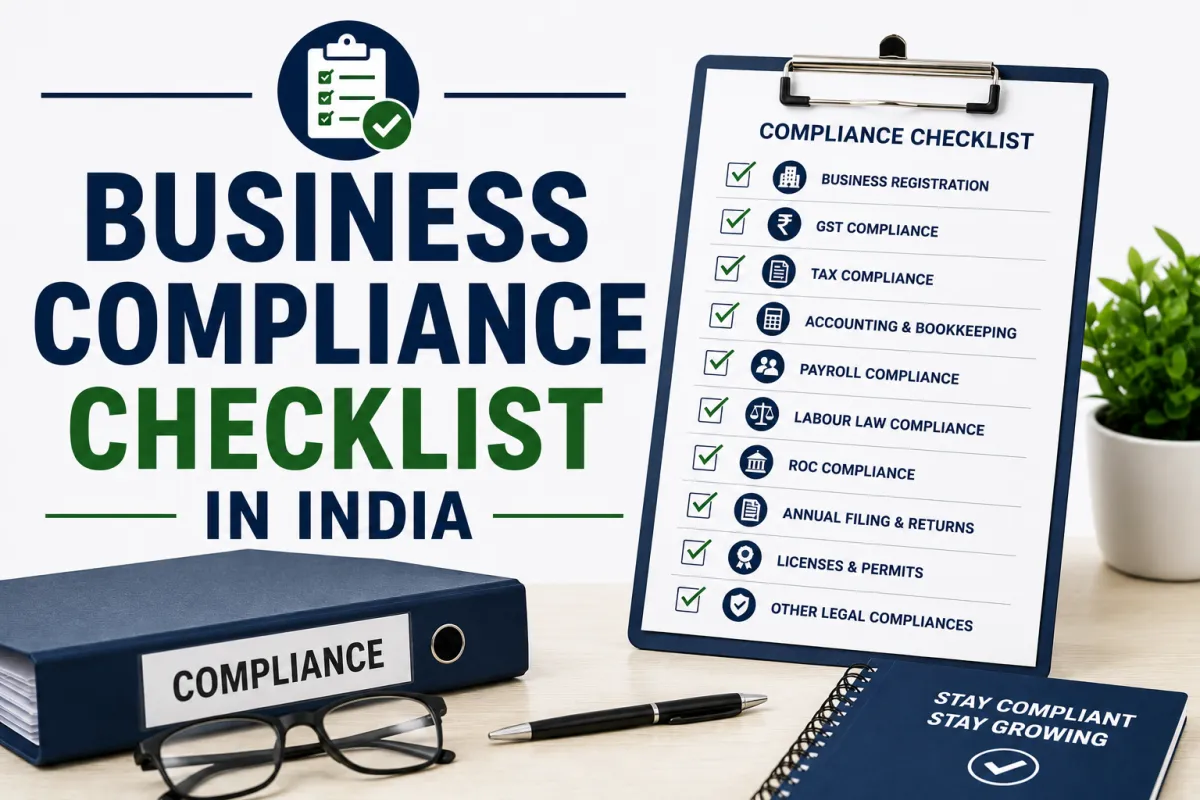
Business Compliance Checklist in India: Essential Requirements Every Business Should Follow

Business compliance is essential for every organization operating in India. Following statutory, tax, accounting, and regulatory requirements helps businesses avoid penalties, maintain legal credibility, and ensure smooth operations. A well-planned compliance checklist enables businesses to meet their obligations on time and support long-term growth.

Read More →
Blog

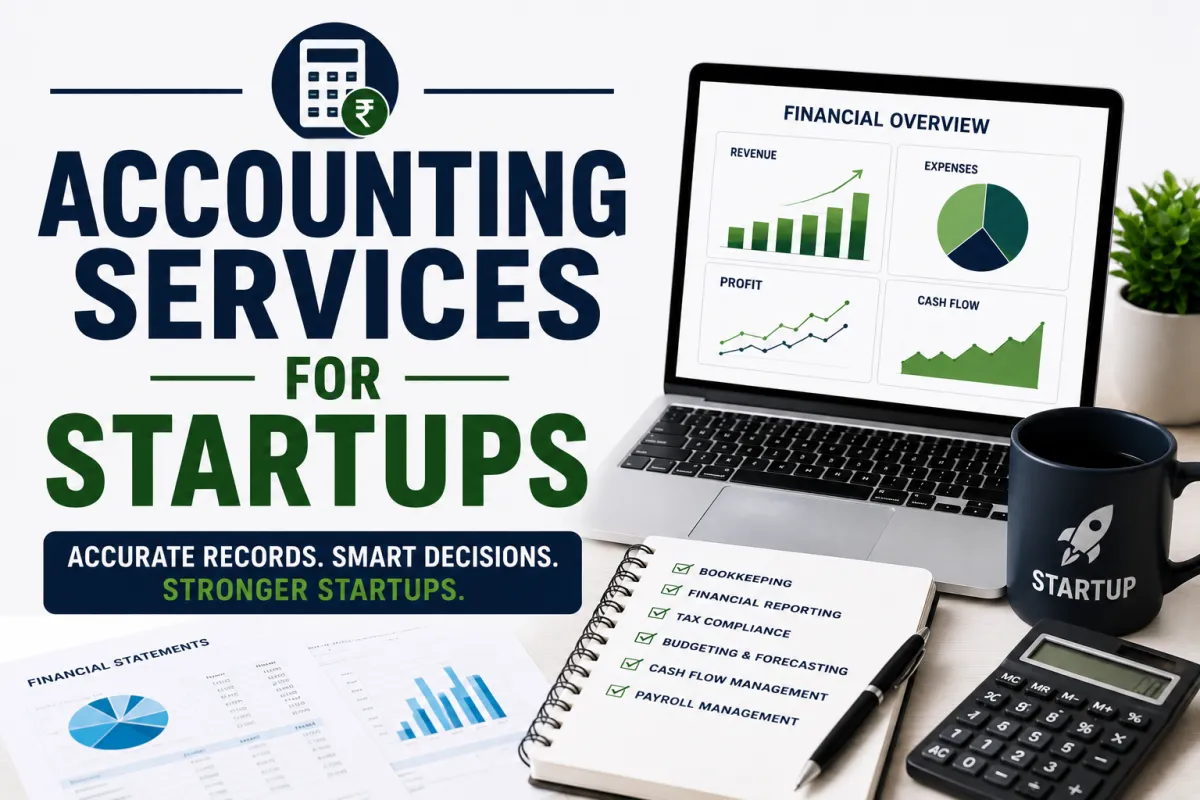
Accounting Services for Startups: Building a Strong Financial Foundation for Growth

Accounting is a critical function for every startup, helping entrepreneurs maintain accurate financial records, manage cash flow, comply with statutory requirements, and make informed business decisions. Professional accounting services provide the financial foundation needed for sustainable growth and long-term success.

Read More →
Blog

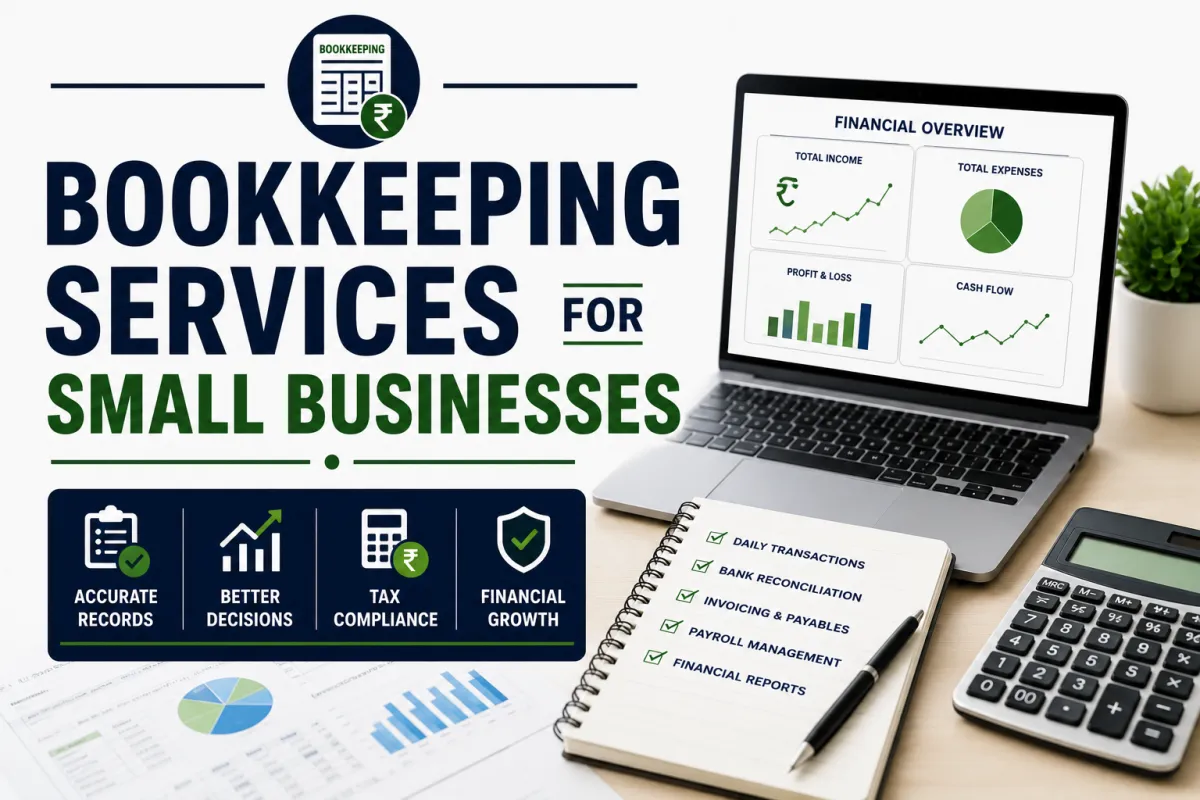
Bookkeeping Services for Small Businesses: Why Accurate Financial Records Matter

Bookkeeping is the foundation of effective financial management for every small business. Maintaining accurate financial records helps business owners monitor income and expenses, ensure statutory compliance, prepare financial statements, and make informed business decisions for sustainable growth.

Read More →
Blog

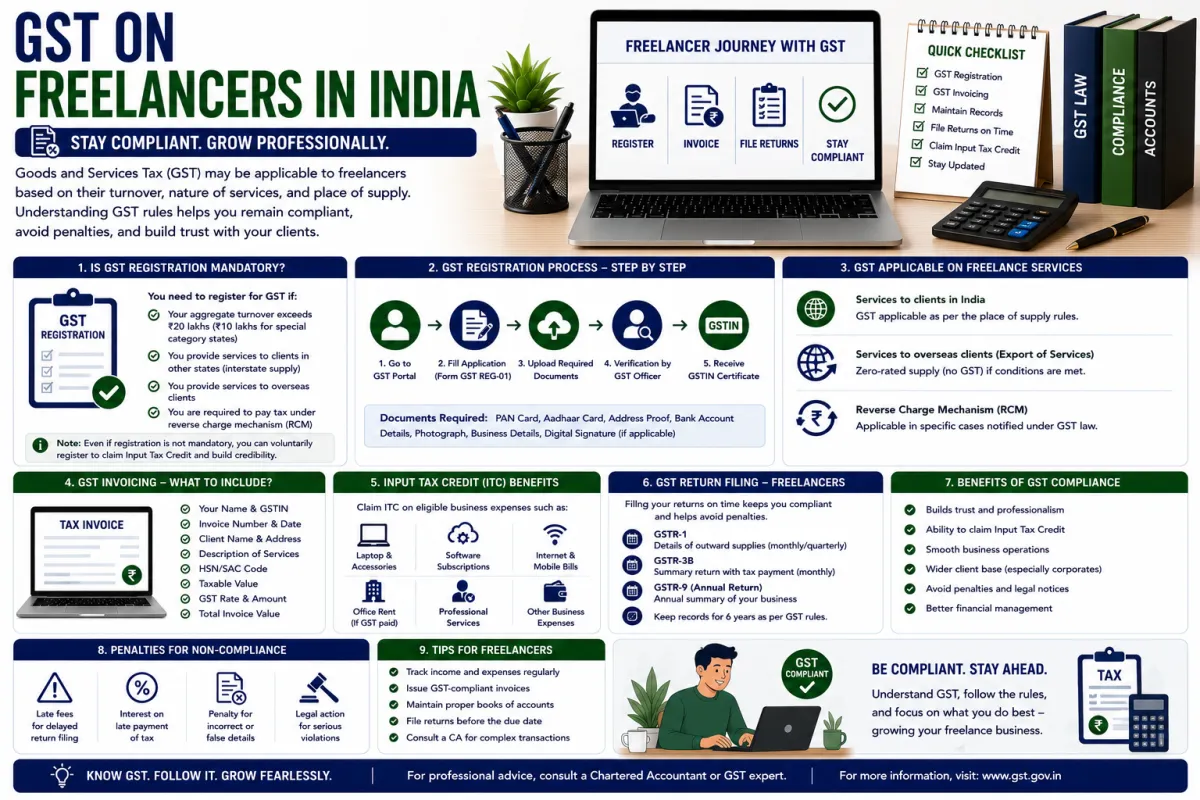
GST on Freelancers in India: A Complete Guide to Registration, Compliance, and GST Returns

Freelancers in India may be required to register under GST depending on the nature of their services, turnover, and place of supply. Understanding GST provisions helps freelancers remain compliant, issue proper invoices, claim eligible Input Tax Credit (ITC), and avoid penalties.

Read More →
Blog

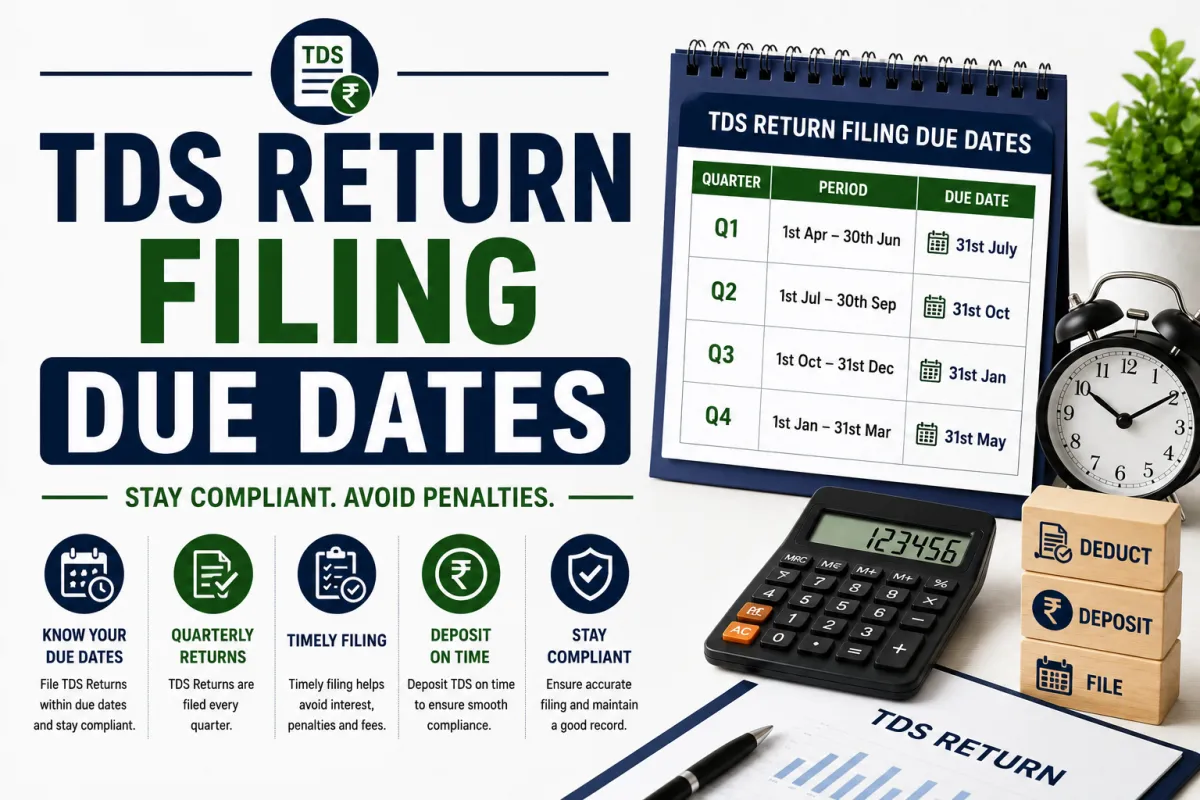
TDS Return Filing Due Dates: A Complete Guide for Timely Tax Compliance

Tax Deducted at Source (TDS) return filing is a mandatory compliance requirement for persons responsible for deducting tax at source. Filing TDS returns within the prescribed due dates helps businesses remain compliant, avoid penalties, and ensure proper credit of tax to deductees.

Read More →
Blog

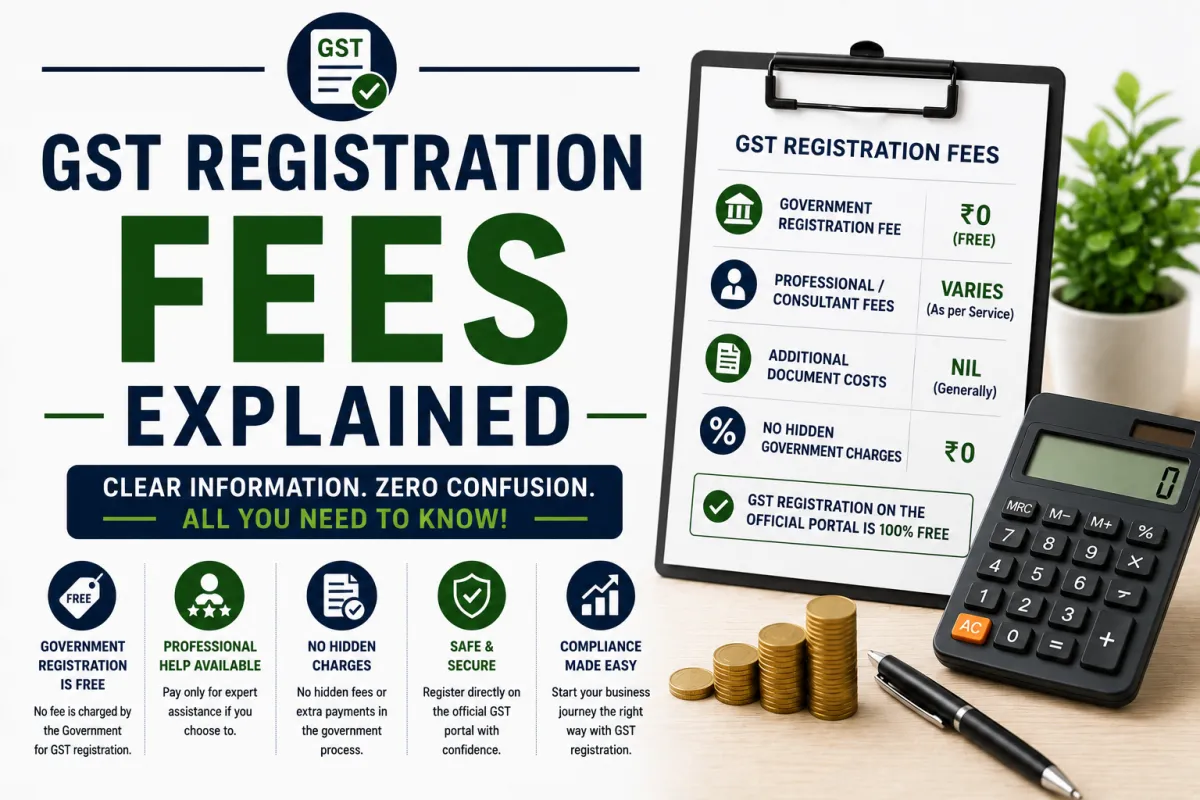
GST Registration Fees Explained: What Businesses Need to Know Before Applying

GST registration is an important legal requirement for eligible businesses in India. While the government does not charge any fee for obtaining GST registration through the official portal, businesses may incur professional service charges if they seek assistance from tax consultants or Chartered Accountants.

Read More →
Blog

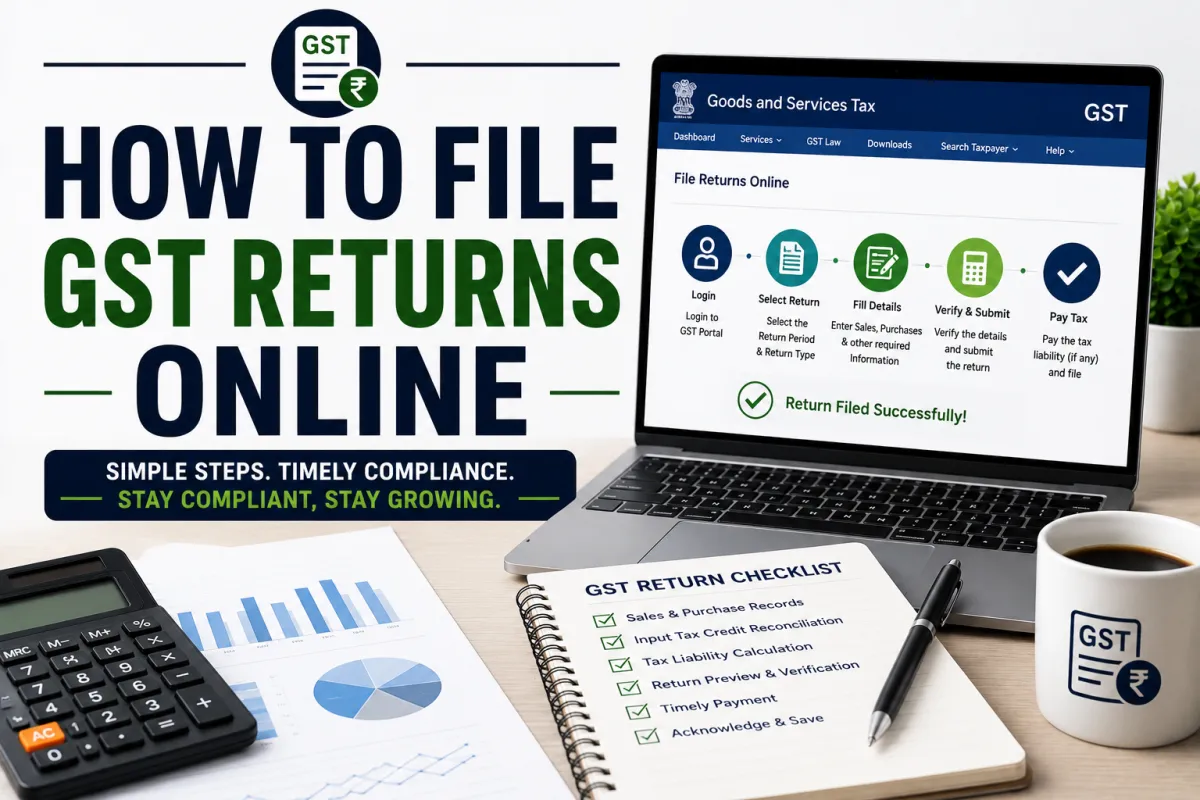
How to File GST Returns Online: A Complete Guide for Businesses in India

Filing GST returns online is a mandatory compliance requirement for registered businesses in India. Timely and accurate filing helps businesses remain compliant, claim Input Tax Credit (ITC), avoid penalties, and maintain a good compliance record under the Goods and Services Tax (GST) law.

Read More →
Blog

Financial Management Tips for Startups: Building a Strong Foundation for Business Success

Effective financial management is the backbone of every successful startup. Proper planning, budgeting, cash flow management, and regulatory compliance help startups control expenses, make informed decisions, and build a strong financial foundation for sustainable growth.

Read More →
Blog

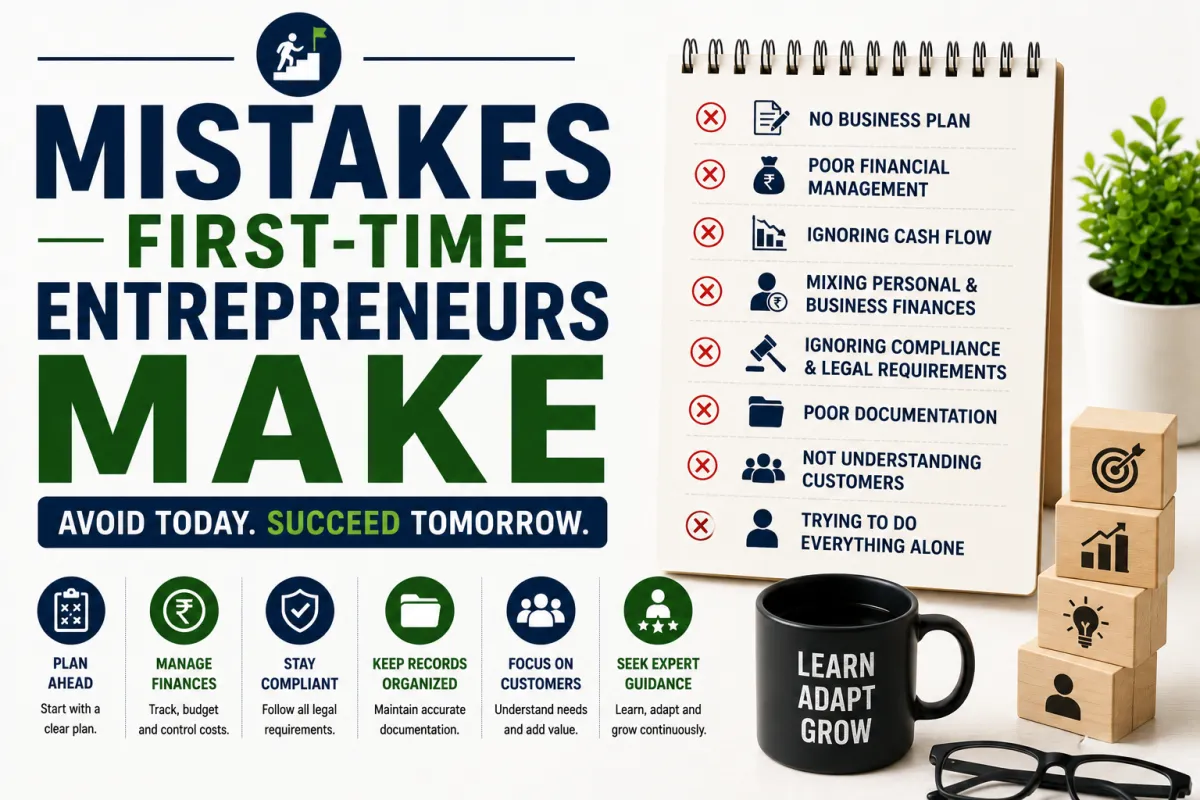
Mistakes First-Time Entrepreneurs Make: Common Errors to Avoid for Business Success

Starting a business is exciting, but many first-time entrepreneurs make avoidable mistakes that can slow growth or create financial and operational challenges. Understanding these common mistakes helps business owners make informed decisions, reduce risks, and build a strong foundation for long-term success.

Read More →
Blog

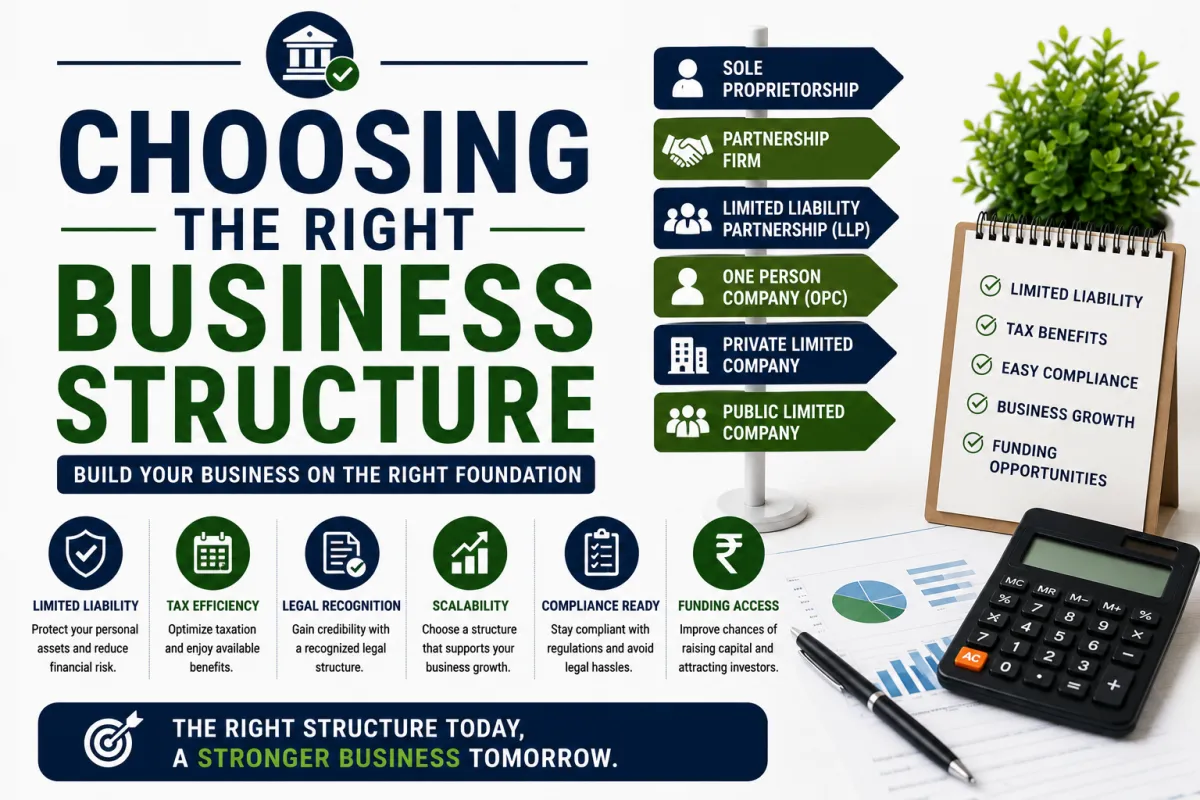
Choosing the Right Business Structure: A Complete Guide for New Entrepreneurs

Choosing the right business structure is one of the most important decisions for any entrepreneur. The legal structure of a business affects taxation, liability, compliance requirements, ownership, fundraising opportunities, and long-term growth. Selecting the appropriate structure helps businesses operate efficiently while meeting legal and financial obligations.

Read More →
Blog

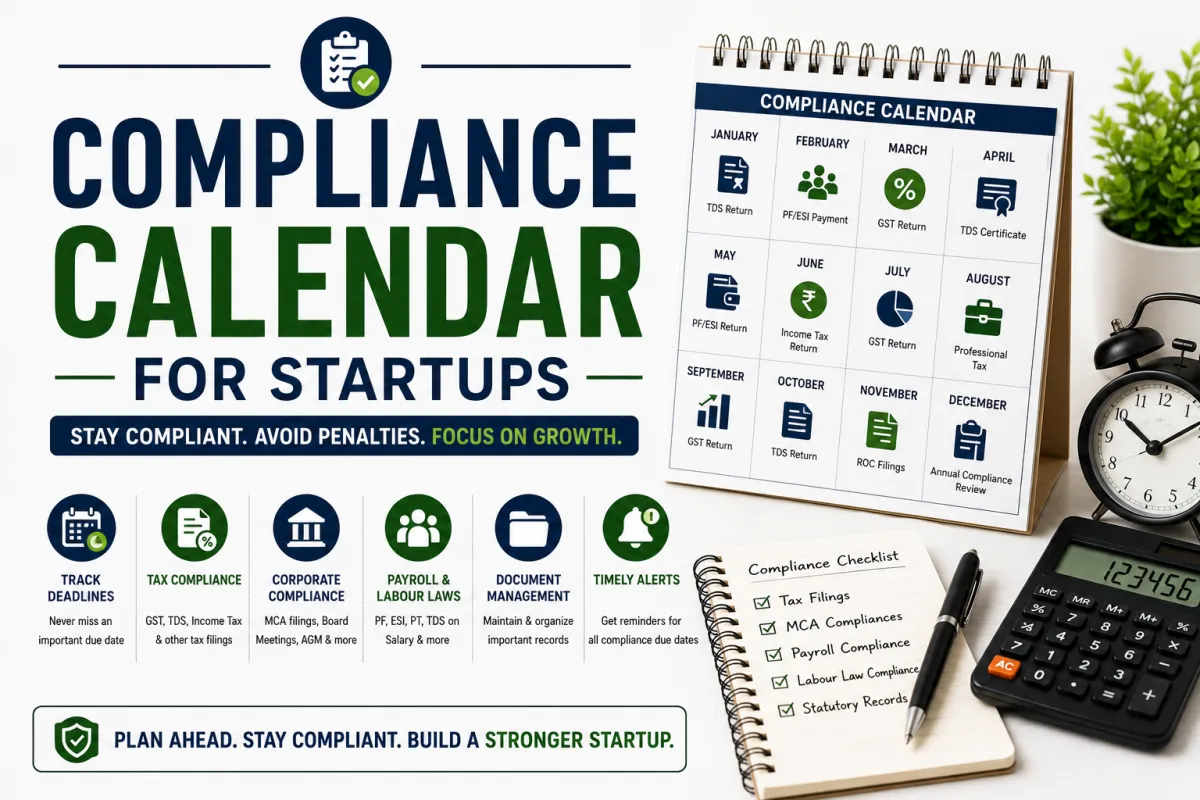
Compliance Calendar for Startups: Essential Deadlines Every New Business Should Track

A compliance calendar helps startups track important statutory deadlines, regulatory filings, tax obligations, and legal requirements throughout the year. Maintaining a well-organized compliance calendar ensures timely filings, avoids penalties, and supports smooth business operations.

Read More →
Blog

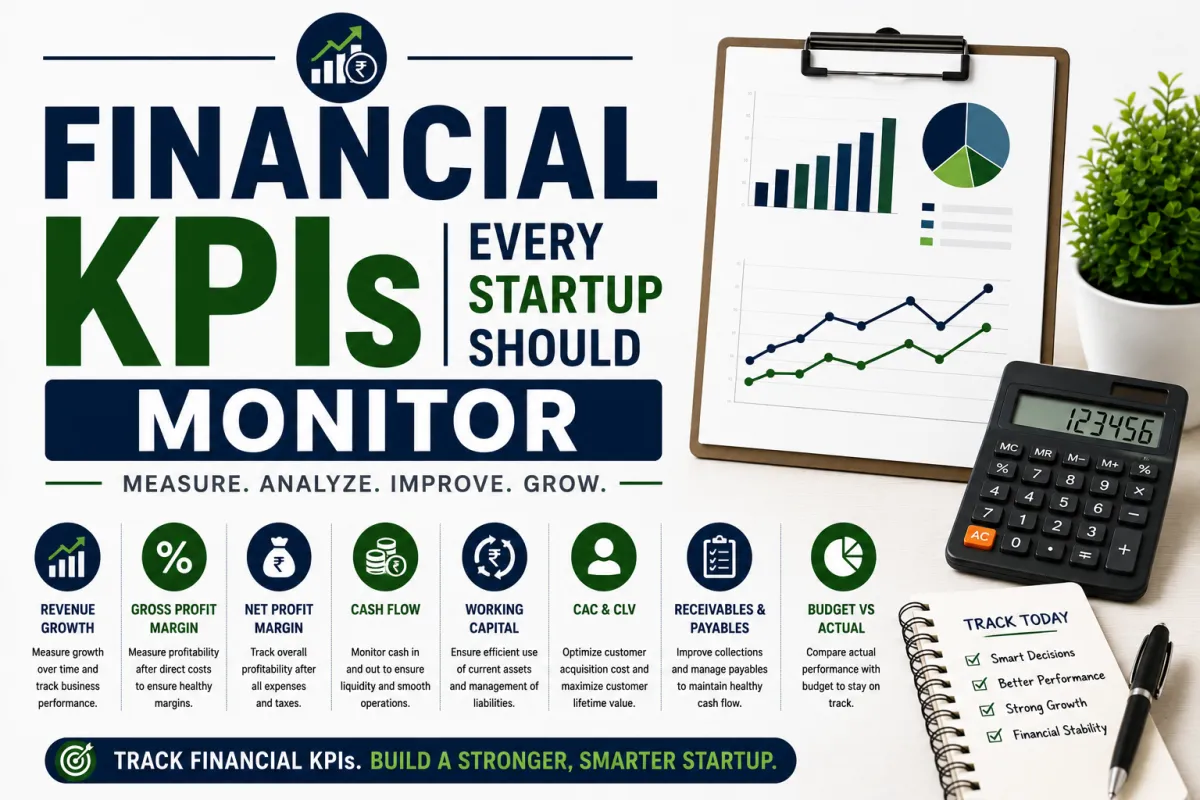
Financial KPIs Every Startup Should Monitor: Essential Metrics for Sustainable Business Growth

Financial Key Performance Indicators (KPIs) help startups measure business performance, monitor financial health, and make informed decisions. Tracking the right KPIs enables entrepreneurs to identify growth opportunities, manage risks, improve profitability, and build a financially sustainable business.

Read More →
Blog

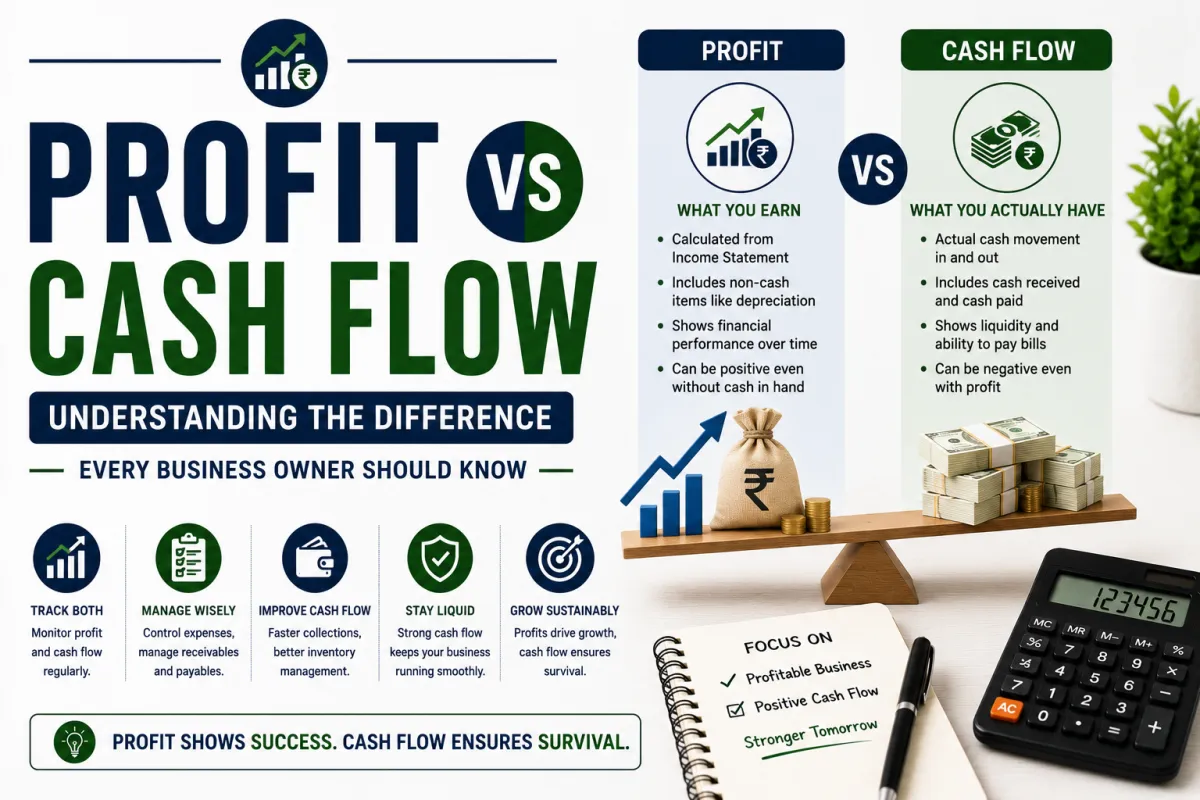
Profit vs Cash Flow: Understanding the Difference Every Business Owner Should Know

Profit and cash flow are two essential financial concepts that every business owner should understand. While profit measures the financial gain earned after deducting expenses from revenue, cash flow reflects the actual movement of money into and out of the business. Understanding the difference helps businesses make better financial decisions and maintain long-term stability.

Read More →
Blog

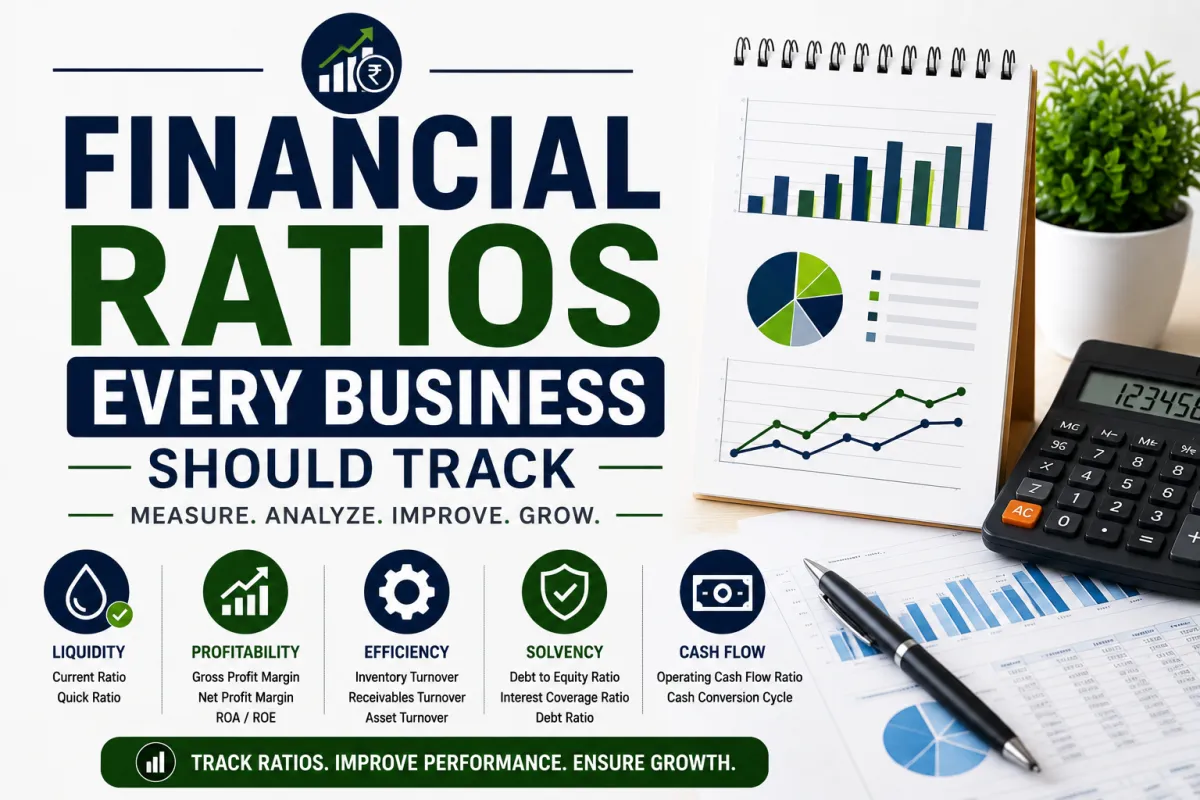
Financial Ratios Every Business Should Track: Key Metrics for Better Financial Performance

Financial ratios are essential tools that help businesses evaluate profitability, liquidity, efficiency, and overall financial performance. Regularly monitoring key financial ratios enables business owners to make informed decisions, identify potential risks, and improve long-term financial stability.

Read More →
Blog

Debt vs Equity Financing: Which Funding Option Is Right for Your Business?

Debt and equity financing are two of the most common ways businesses raise capital. While debt financing involves borrowing money that must be repaid with interest, equity financing involves raising funds by offering ownership in the business. Understanding the differences helps entrepreneurs choose the most suitable financing option for their business goals.

Read More →
Blog

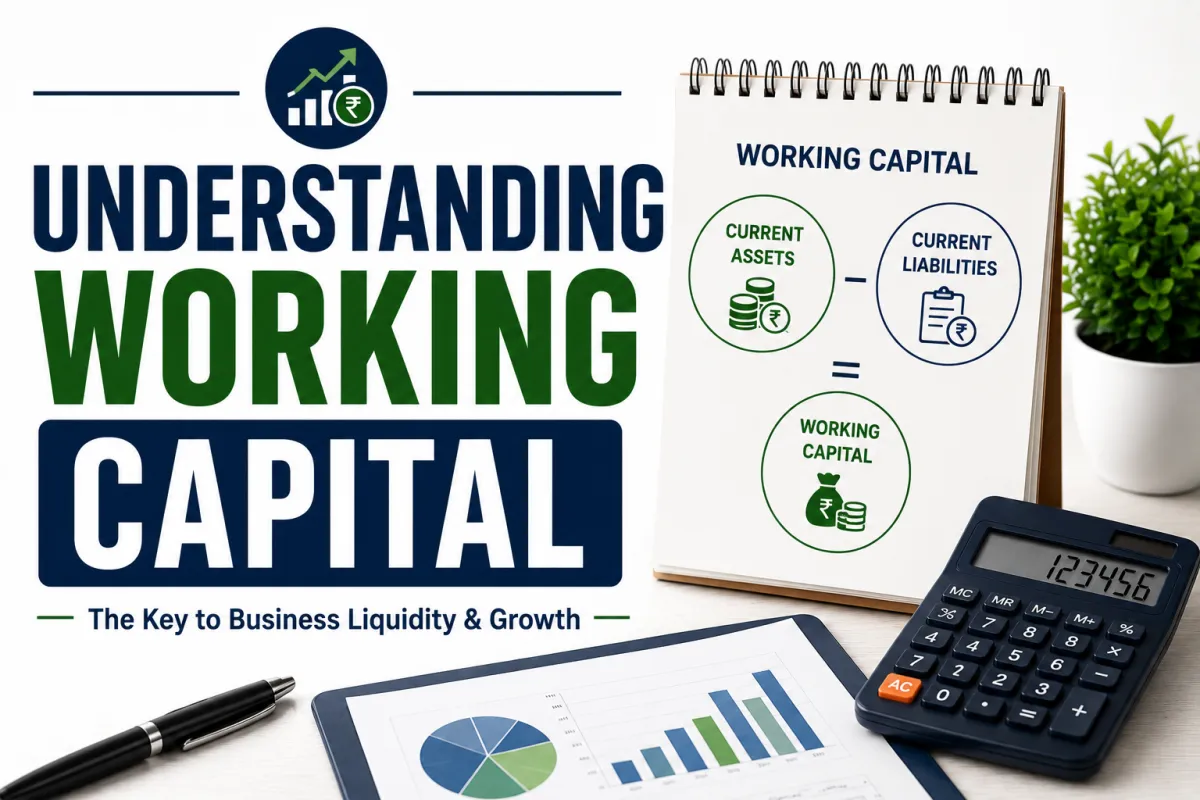
Understanding Working Capital: A Complete Guide to Managing Business Liquidity

Working capital is the difference between a business’s current assets and current liabilities. It represents the funds available to manage day-to-day operations and is a key indicator of a company’s short-term financial health and operational efficiency.

Read More →
Blog

Budgeting Tips for Entrepreneurs: Smart Financial Planning for Business Success

Budgeting is a fundamental part of successful business management. A well-planned budget helps entrepreneurs control expenses, manage cash flow, allocate resources efficiently, and achieve long-term financial goals while minimizing financial risks.

Read More →
Blog

Financial Planning for Small Businesses: A Complete Guide to Long-Term Financial Success

Financial planning is essential for the success and long-term sustainability of every small business. A well-structured financial plan helps business owners manage cash flow, control expenses, achieve growth objectives, and make informed financial decisions while ensuring regulatory compliance.

Read More →
Blog

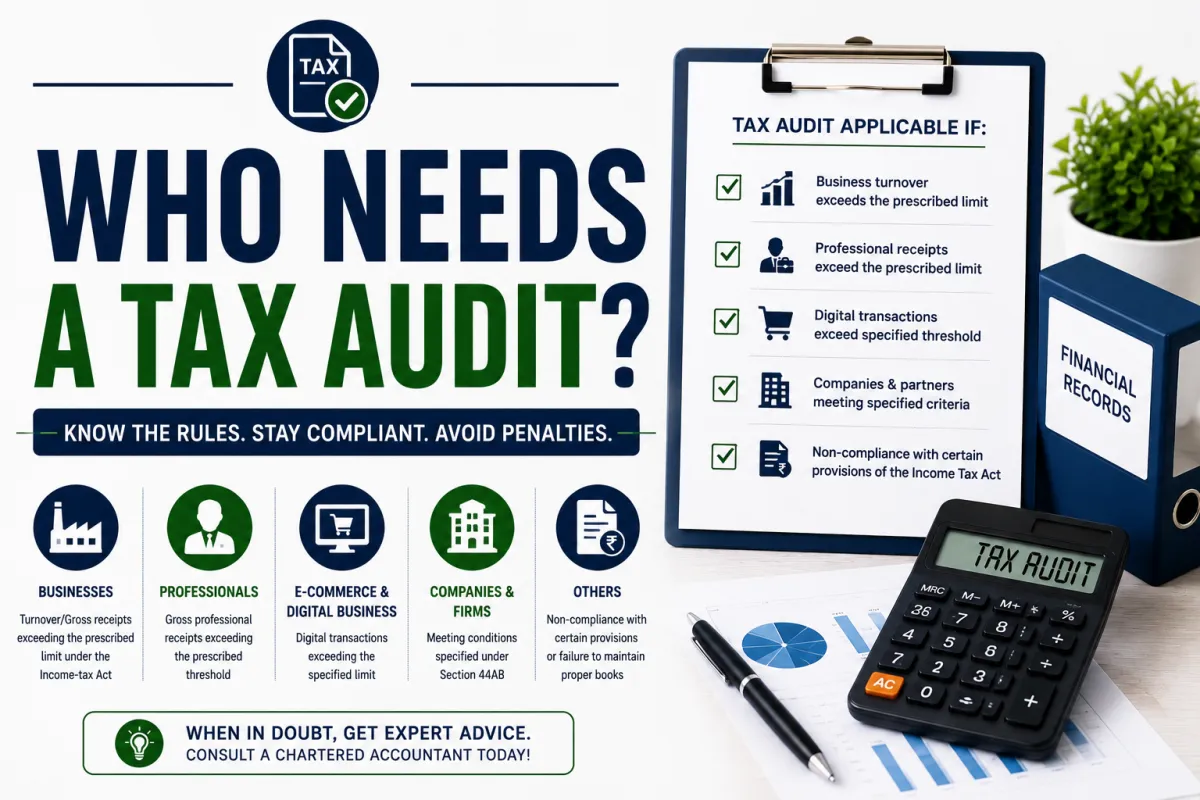
Who Needs a Tax Audit? A Complete Guide for Businesses and Professionals

A tax audit is conducted to verify whether a taxpayer has maintained proper books of accounts and complied with the provisions of the Income-tax Act. Businesses and professionals meeting specified criteria under the law may be required to undergo a tax audit. Understanding these requirements helps ensure timely compliance and avoid penalties.

Read More →
Blog

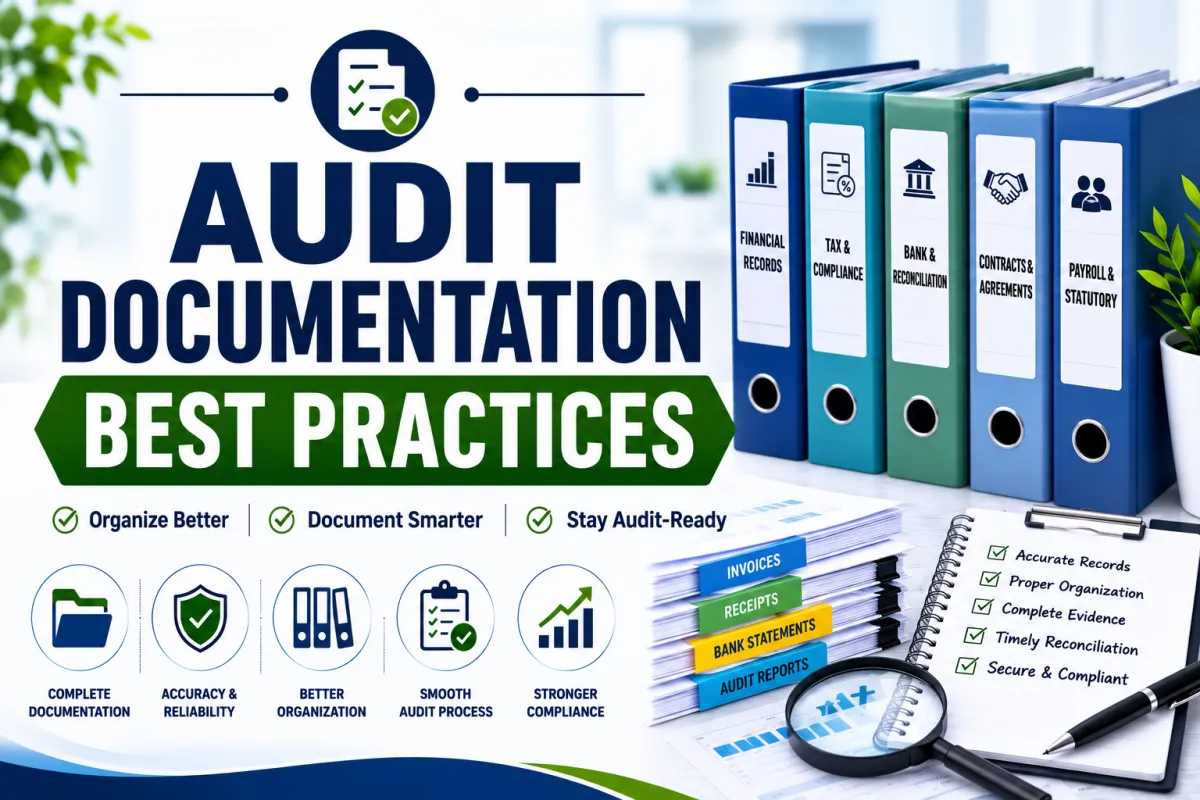
Audit Documentation Best Practices: A Complete Guide for Better Compliance and Audit Readiness

Proper audit documentation is essential for ensuring a smooth audit process, supporting financial accuracy, and demonstrating compliance with legal and regulatory requirements. Well-organized records help businesses improve transparency, reduce audit observations, and strengthen internal controls.

Read More →
Blog

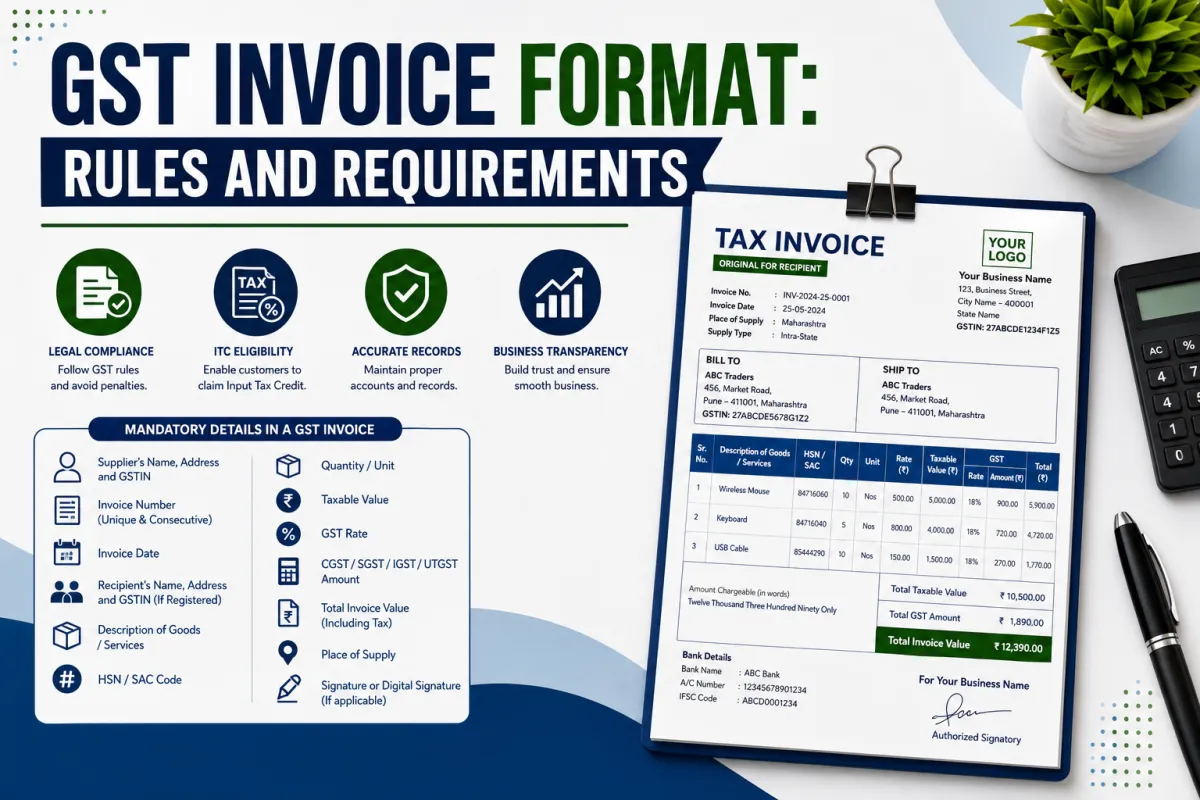
GST Invoice Format: Rules and Requirements Every Business Should Know

A GST invoice is an essential document for every GST-registered business in India. Issuing invoices in the prescribed format ensures legal compliance, facilitates Input Tax Credit (ITC) claims, and helps maintain accurate financial records while avoiding penalties and disputes.

Read More →
Blog

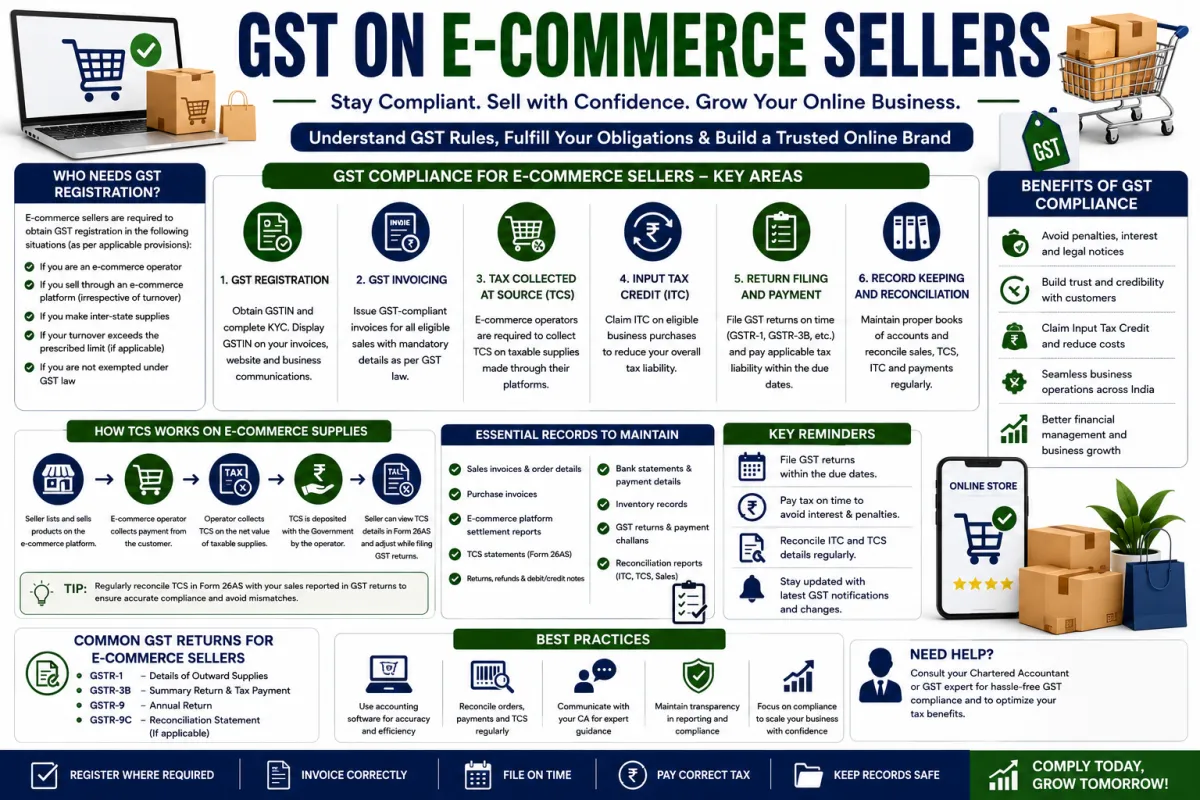
GST on E-commerce Sellers: A Complete Guide to GST Compliance for Online Businesses

GST plays a significant role in the operations of e-commerce sellers in India. Understanding GST registration requirements, tax collection, return filing, and compliance obligations helps online sellers operate legally, avoid penalties, and grow their businesses efficiently.

Read More →
Blog

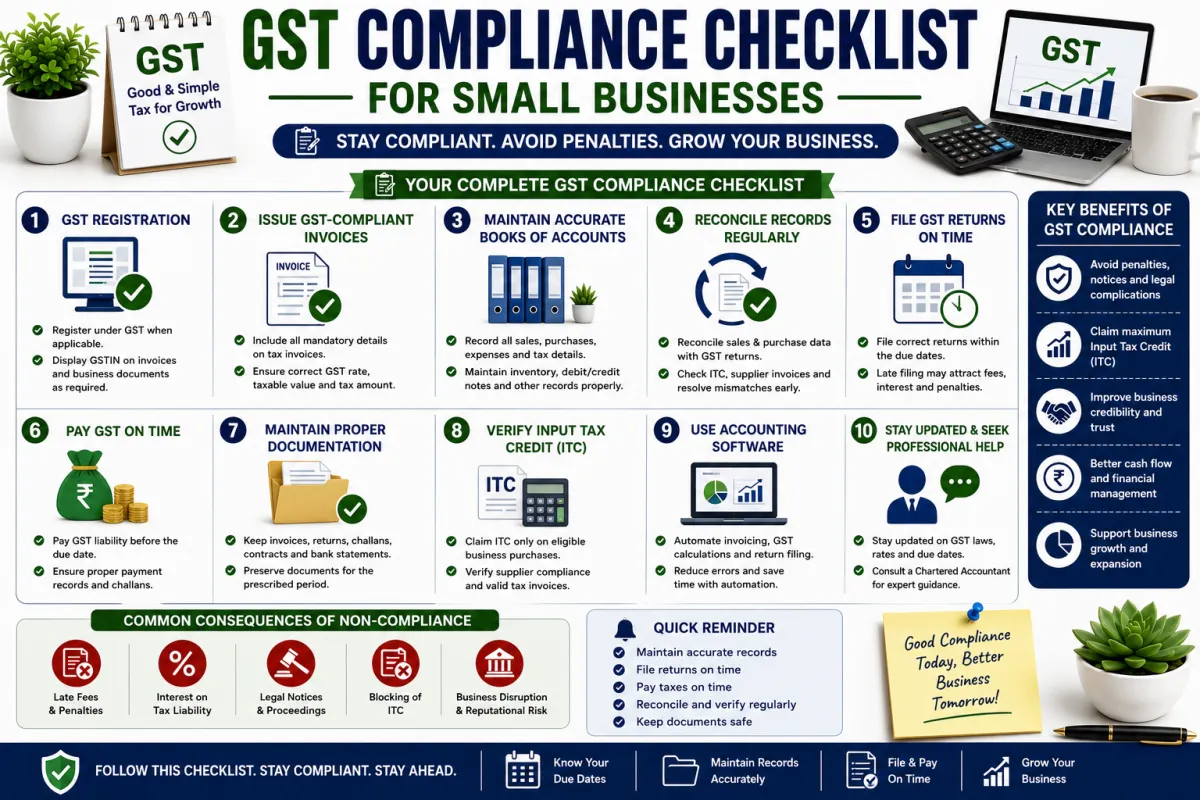
GST Compliance Checklist for Small Businesses: Essential Steps to Stay Compliant

GST compliance is essential for every registered small business to avoid penalties, maintain legal compliance, and ensure smooth business operations. Following a structured GST compliance checklist helps businesses manage tax obligations efficiently while improving financial transparency and credibility.

Read More →
Blog

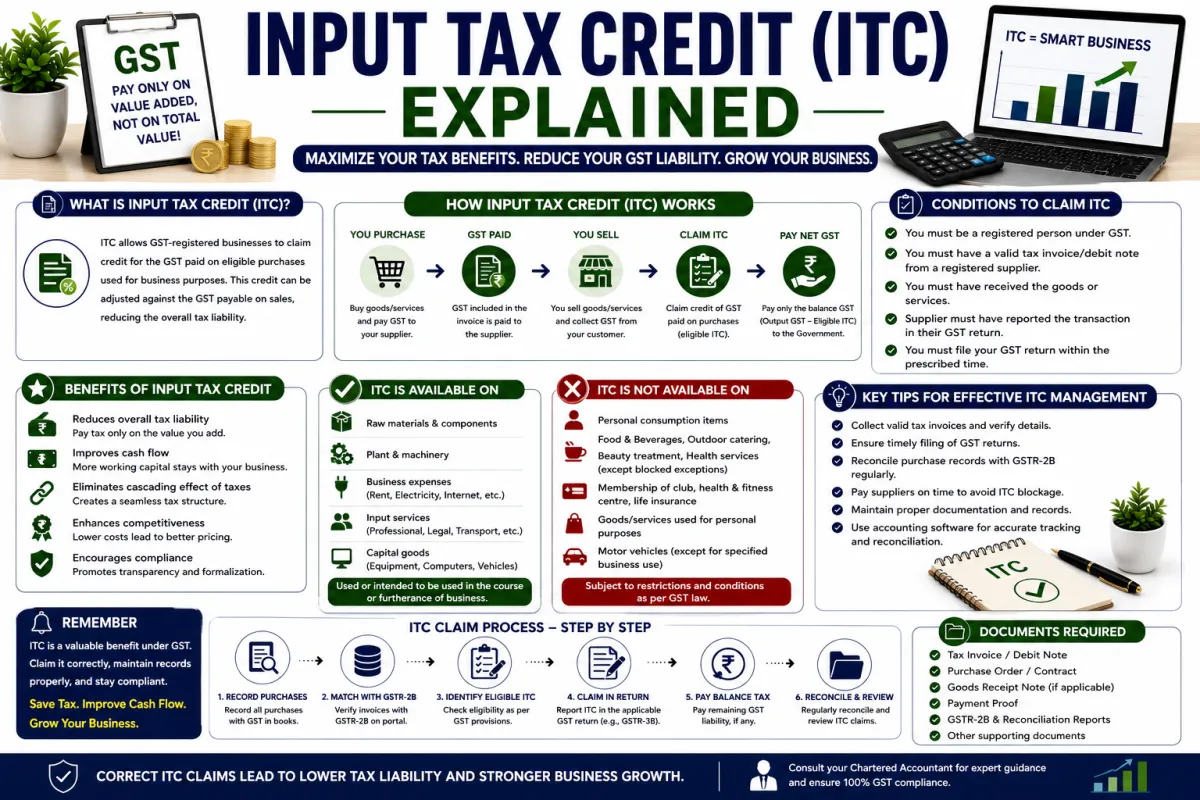
Input Tax Credit (ITC) Explained: Everything Businesses Need to Know Under GST

Input Tax Credit (ITC) is one of the most significant benefits available under the Goods and Services Tax (GST) system in India. It allows registered businesses to reduce their tax liability by claiming credit for the GST paid on eligible business purchases, helping lower costs and improve cash flow.

Read More →
Blog

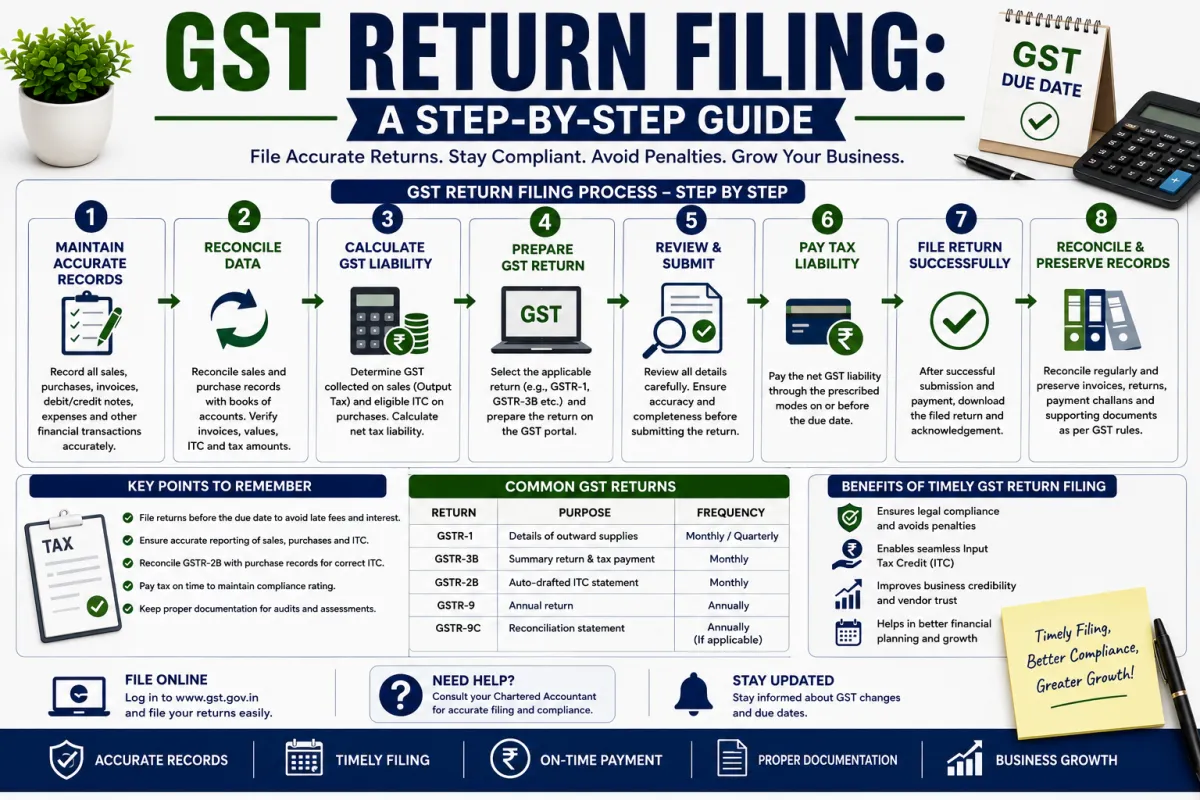
GST Return Filing: A Step-by-Step Guide for Businesses in India

GST return filing is an essential compliance requirement for registered businesses in India. Filing accurate and timely GST returns helps businesses report their sales, purchases, tax liabilities, and Input Tax Credit (ITC), ensuring compliance with GST laws while avoiding penalties and interest.

Read More →
Blog

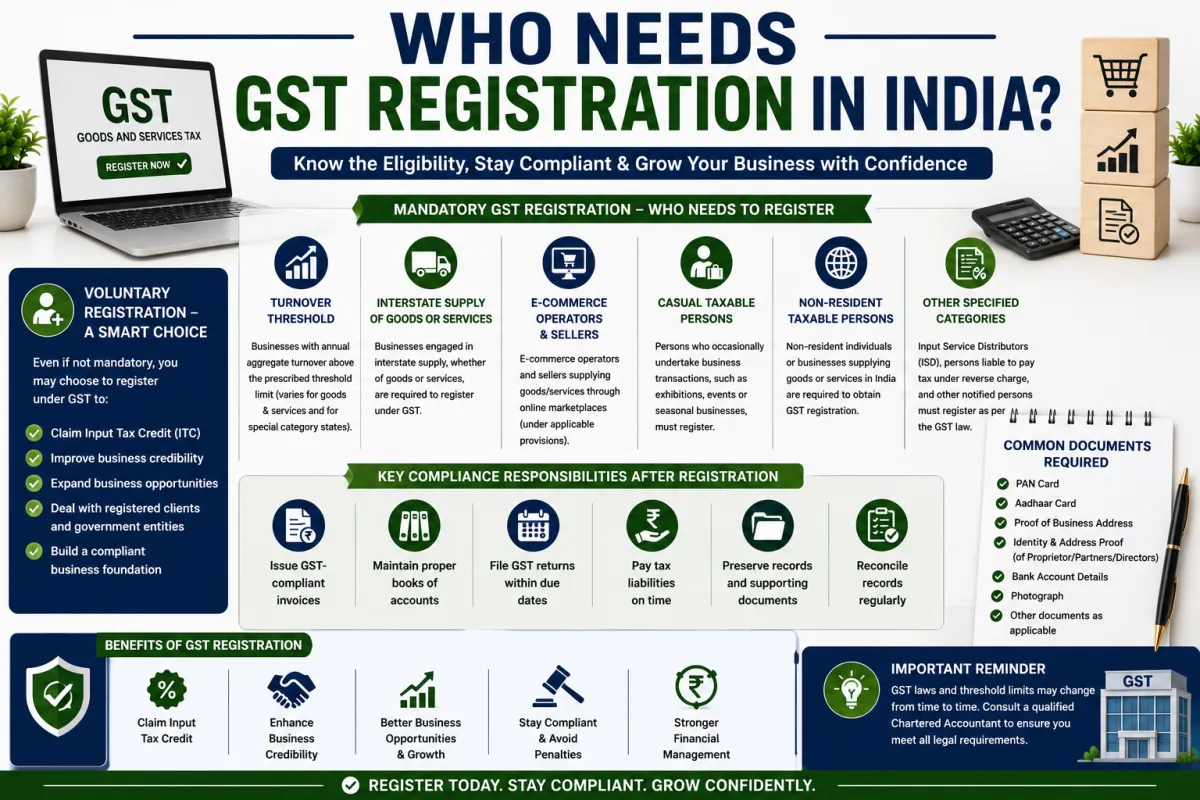
Who Needs GST Registration in India? A Complete Guide for Businesses and Entrepreneurs

GST registration is mandatory for certain businesses and individuals based on their turnover, business activities, and the nature of supplies made. Understanding who is required to register under GST helps businesses remain legally compliant, avoid penalties, and enjoy the benefits of operating within India’s GST framework.

Read More →
Blog

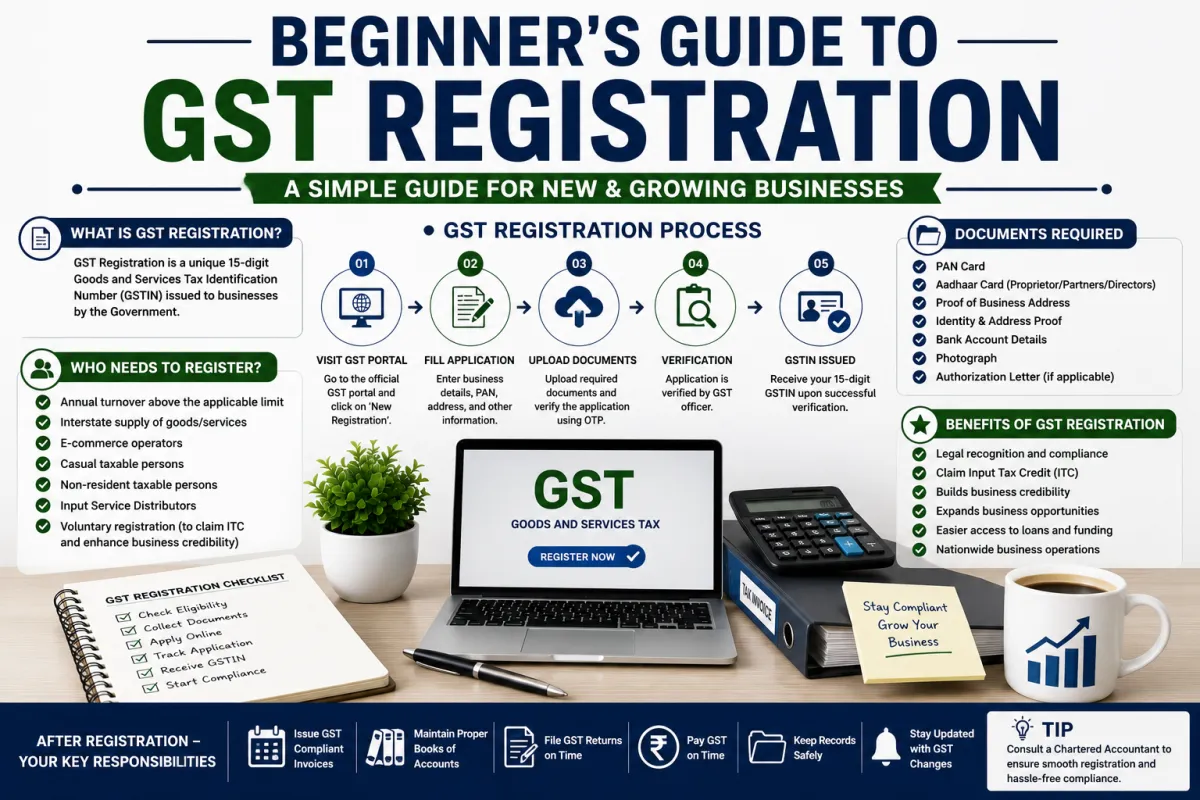
Beginner’s Guide to GST Registration: Everything You Need to Know Before Applying

GST registration is one of the first and most important legal requirements for many businesses in India. Understanding the registration process, eligibility, and benefits helps entrepreneurs remain compliant, claim input tax credit, and operate their businesses smoothly under the Goods and Services Tax (GST) regime.

Read More →
Blog

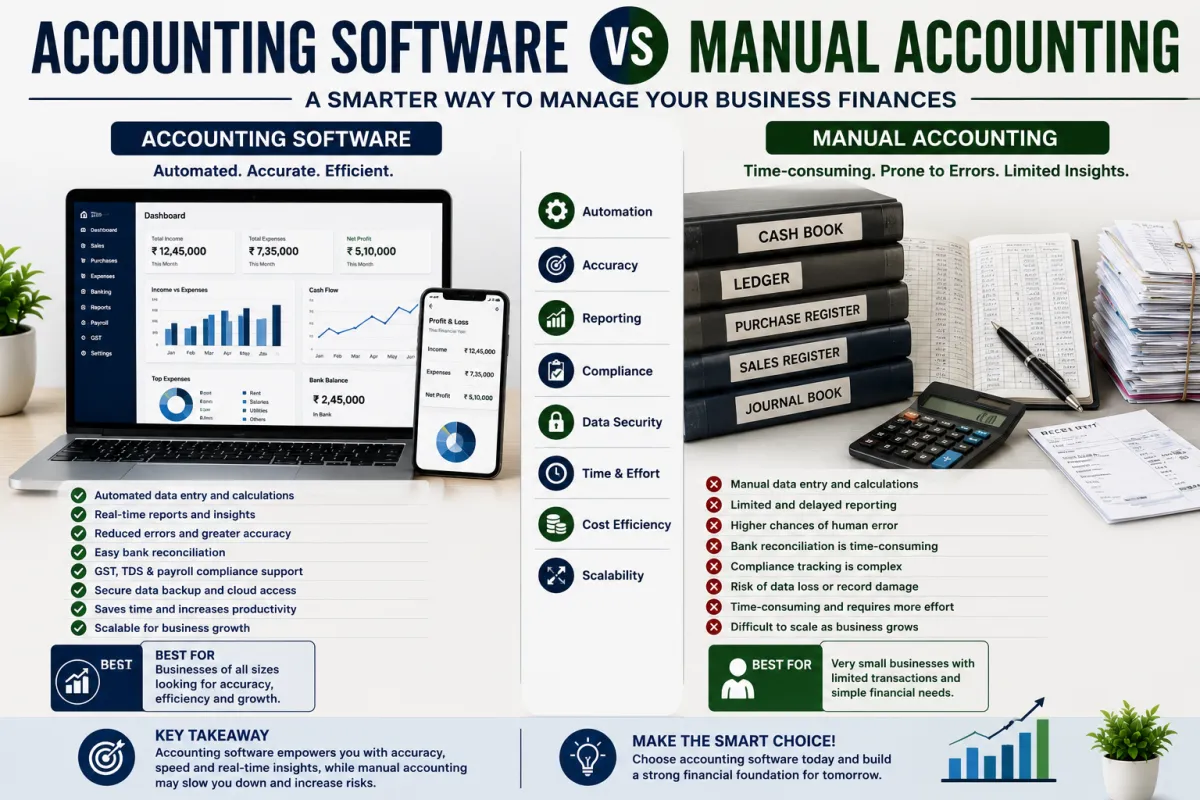
Accounting Software vs Manual Accounting: Which is Better for Your Business?

Accounting software and manual accounting are two different approaches to managing a business’s financial records. While manual accounting relies on handwritten records or spreadsheets, accounting software automates financial processes, improves accuracy, and simplifies compliance, making it the preferred choice for most modern businesses.

Read More →
Blog

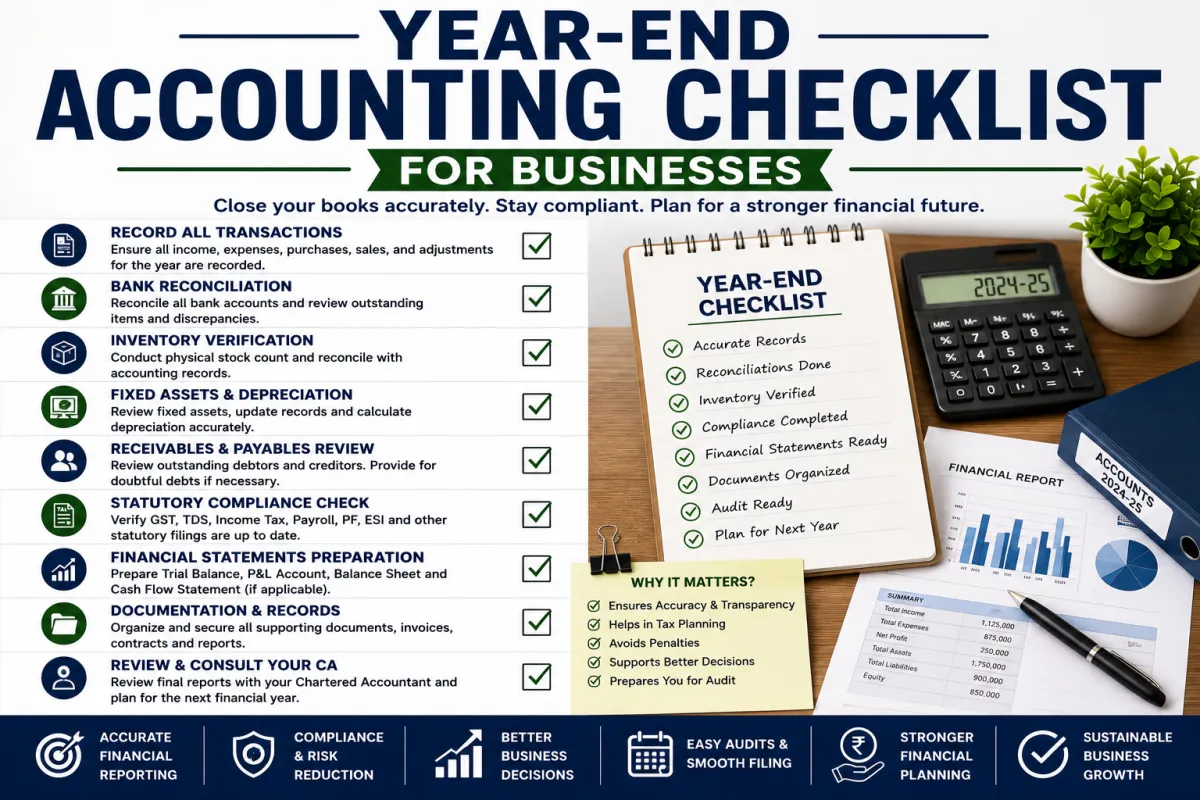
Year-End Accounting Checklist for Businesses: Essential Steps for Accurate Financial Closing

A year-end accounting checklist helps businesses close their financial records accurately, prepare reliable financial statements, and ensure compliance with tax and statutory requirements. Proper year-end accounting improves financial transparency, supports strategic planning, and minimizes the risk of errors during audits and tax filings.

Read More →
Blog

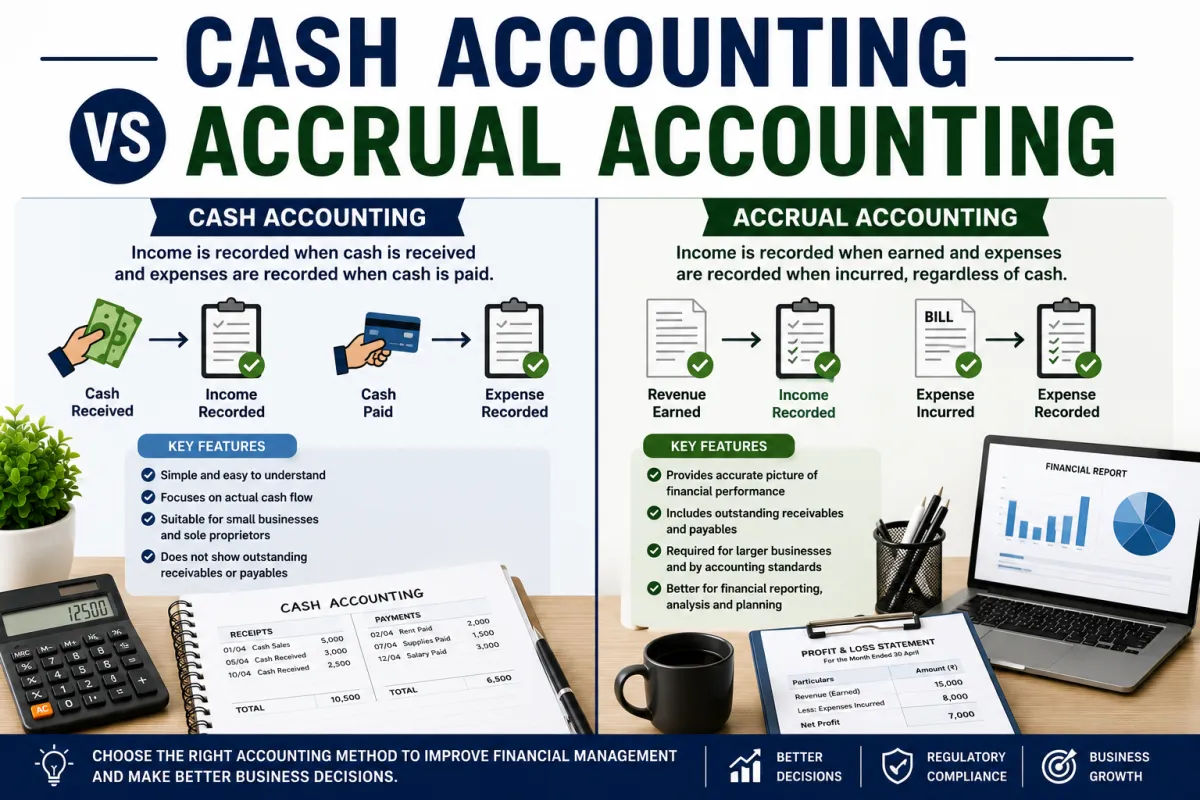
Cash Accounting vs Accrual Accounting: Understanding the Key Differences for Businesses

Cash accounting and accrual accounting are two widely used accounting methods for recording financial transactions. While cash accounting records income and expenses only when money is received or paid, accrual accounting records transactions when they are earned or incurred, providing a more accurate picture of a business’s financial performance.

Read More →
Blog

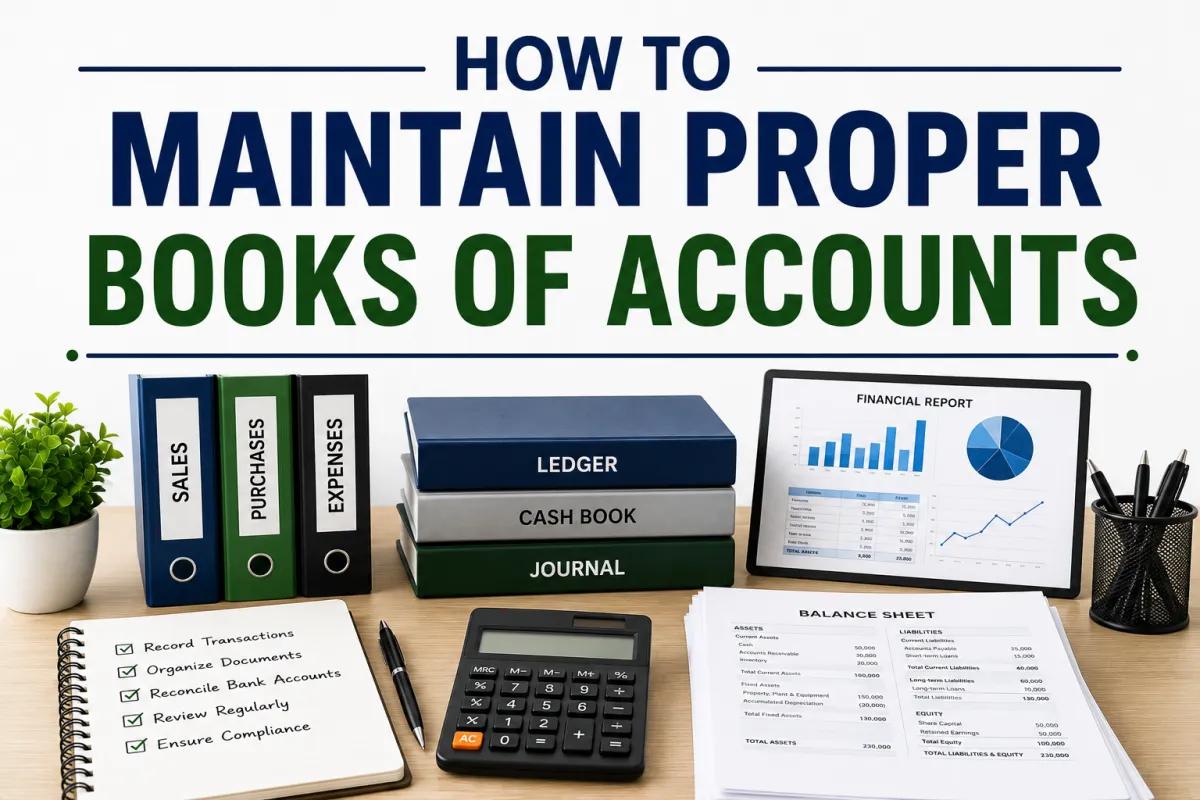
How to Maintain Proper Books of Accounts: A Complete Guide for Businesses

Maintaining proper books of accounts is essential for every business to track financial performance, ensure statutory compliance, and support informed decision-making. Accurate record-keeping helps businesses manage cash flow, prepare financial statements, and avoid compliance-related issues.

Read More →
Blog

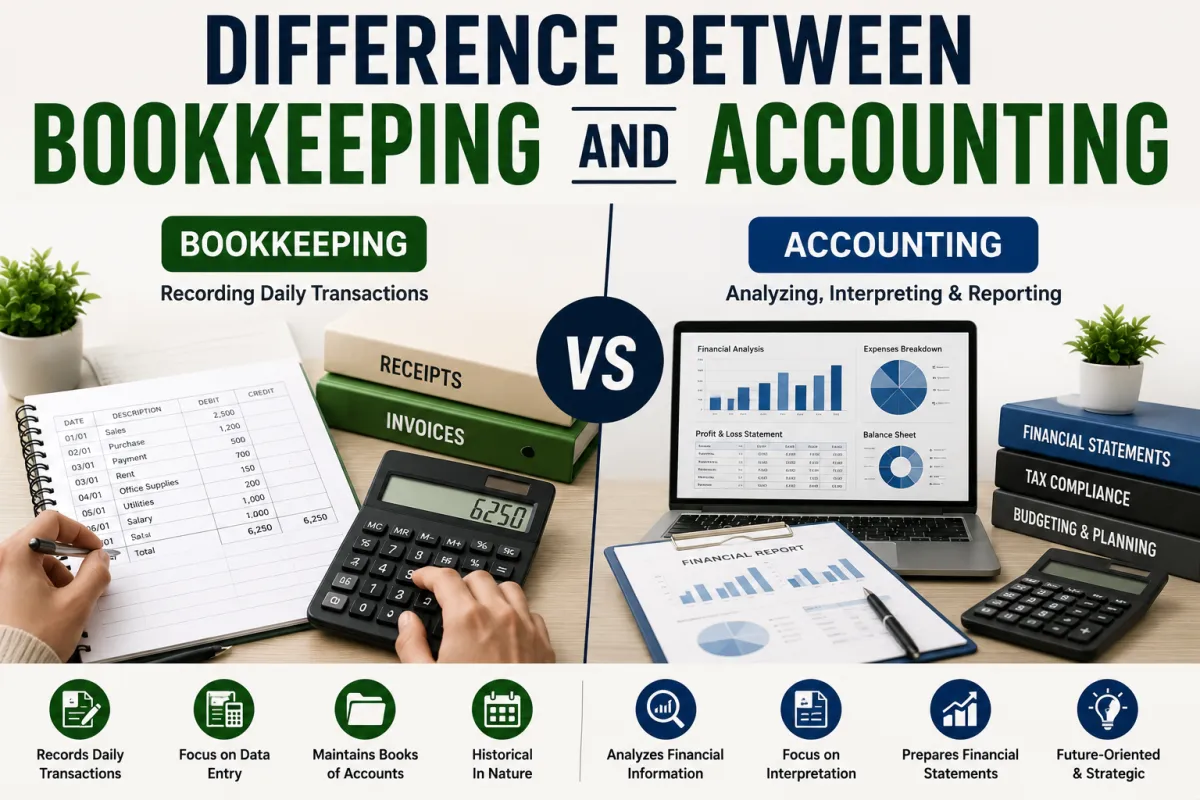
Difference Between Bookkeeping and Accounting: A Complete Guide for Business Owners

Bookkeeping and accounting are closely related but serve different purposes in financial management. Bookkeeping focuses on recording daily financial transactions, while accounting involves analyzing, interpreting, and reporting financial information to support business decisions and ensure regulatory compliance.

Read More →
Blog

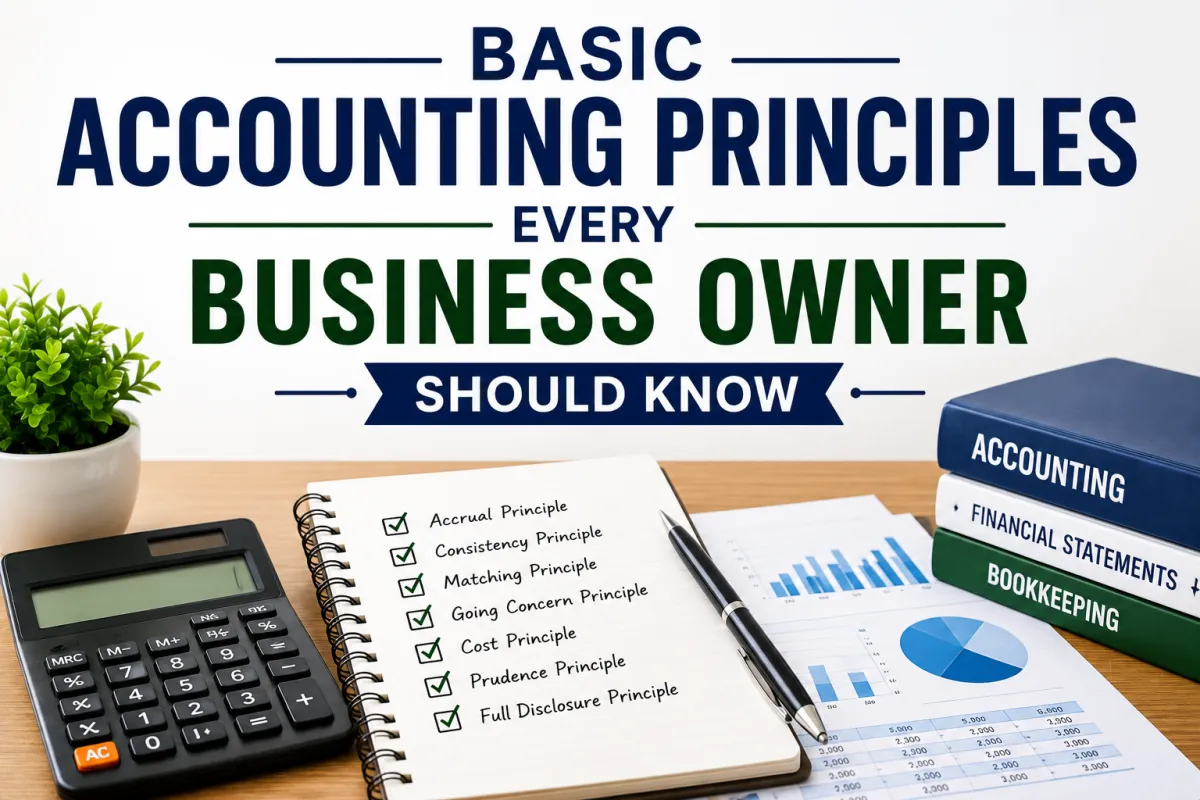
Basic Accounting Principles Every Business Owner Should Know: A Complete Beginner’s Guide

Understanding basic accounting principles helps business owners maintain accurate financial records, make informed decisions, comply with tax regulations, and ensure long-term financial stability. A strong accounting foundation is essential for every business, regardless of its size or industry.

Read More →
Blog

Accounting Checklist for New Startups: Essential Financial Steps for Business Success

A strong accounting system is essential for every startup from day one. Following a proper accounting checklist helps new businesses maintain accurate financial records, comply with tax laws, manage cash flow effectively, and make informed business decisions as they grow.

Read More →
Blog

Legal Checklist Before Starting a Business: Essential Compliance Steps Every Entrepreneur Should Know

Starting a business involves more than just a great idea—it also requires compliance with various legal and regulatory requirements. Completing the necessary registrations, licenses, and tax compliances at the beginning helps businesses operate legally, build credibility, and avoid future penalties.

Read More →
Blog

GST on Freelancers in India: A Complete Guide to Registration, Compliance, and Tax Filing

Freelancers in India may be required to register for GST depending on the nature of their services and applicable legal provisions. Understanding GST obligations helps freelancers remain compliant, issue proper invoices, and avoid penalties while managing their business professionally.

Read More →
Blog

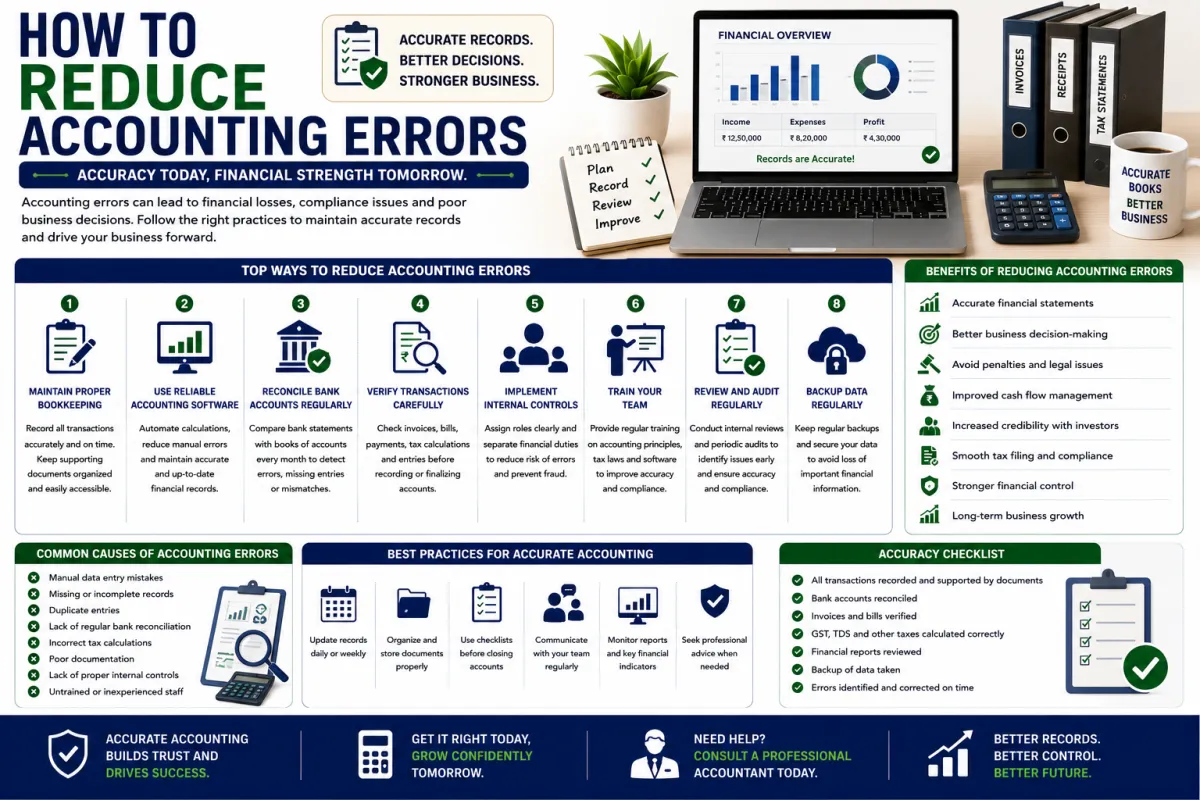
How to Reduce Accounting Errors: Best Practices for Accurate Financial Management

Accounting errors can lead to financial losses, compliance issues, and poor business decisions. By following proper accounting practices and maintaining accurate financial records, businesses can significantly reduce errors and improve overall financial management.

Read More →
Blog

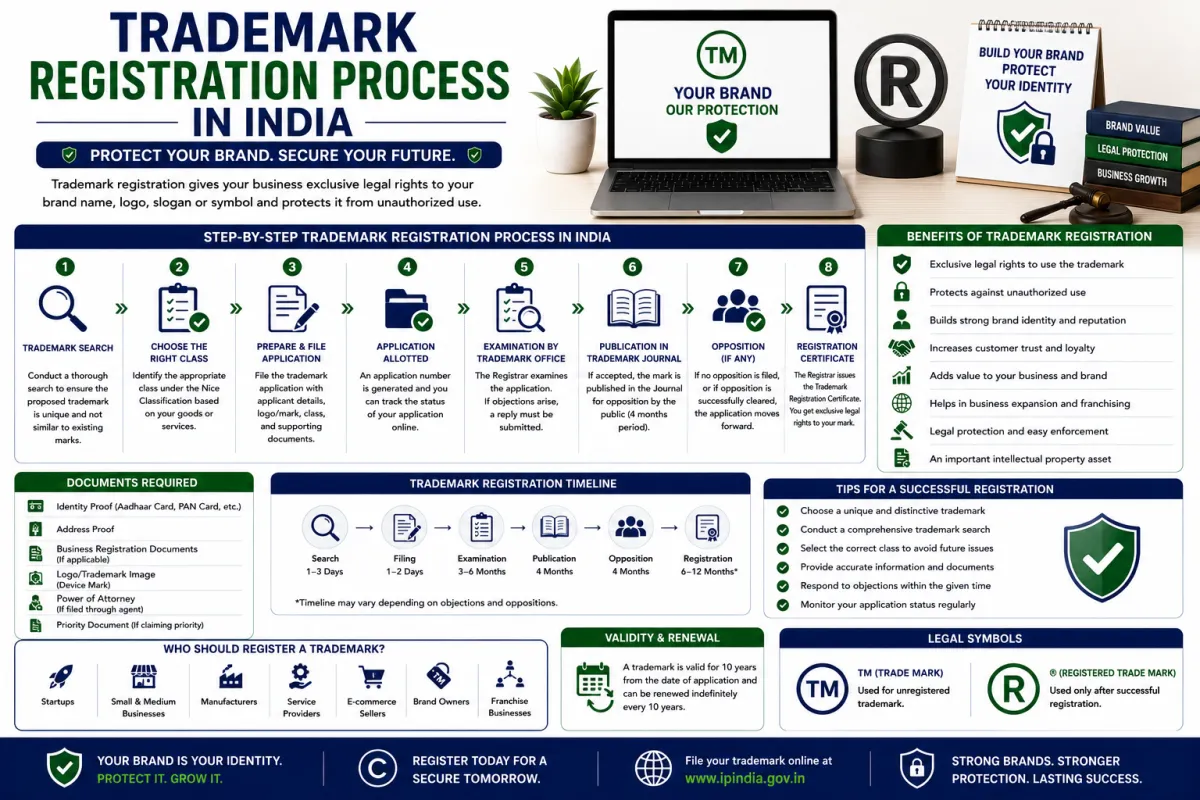
Trademark Registration Process in India A Complete Guide to Protecting Your Brand

Trademark registration helps protect your brand name, logo, slogan, or symbol from unauthorized use. Registering a trademark gives your business exclusive legal rights and strengthens your brand identity in the marketplace.

Read More →
Blog

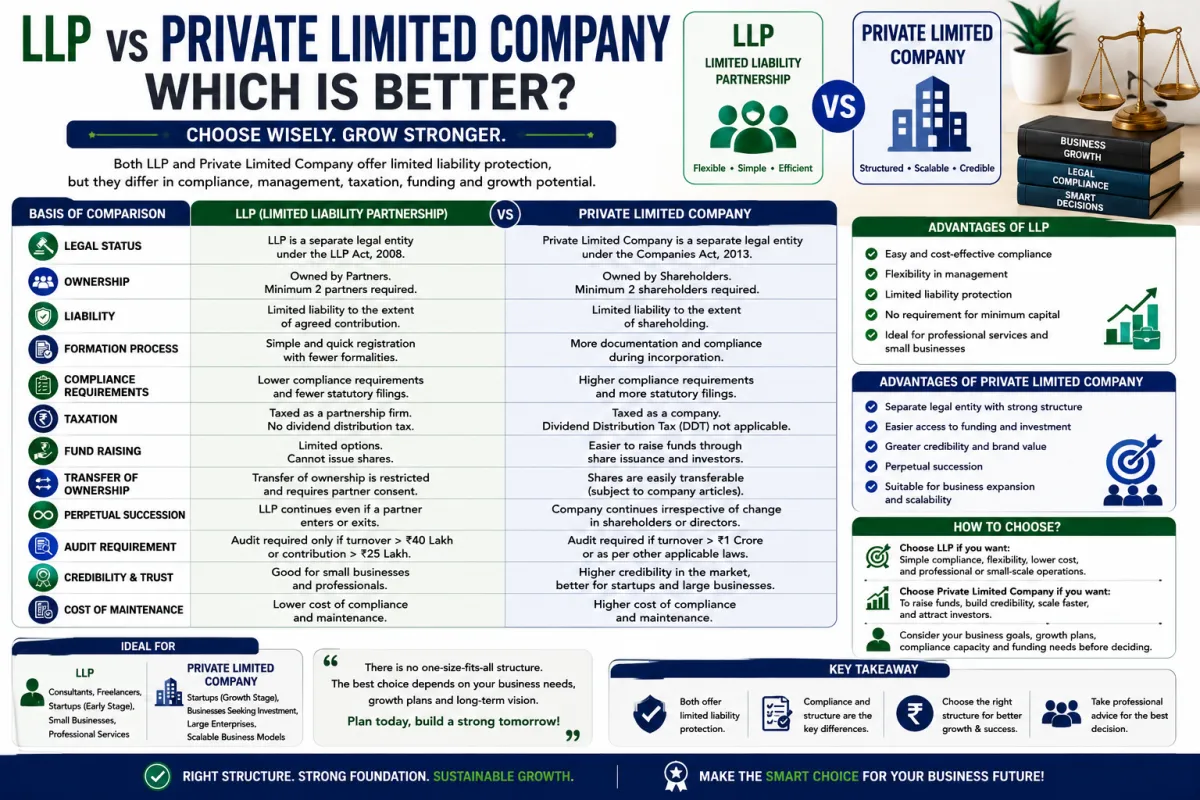
LLP vs Private Limited Company – Which is Better?

Choosing between a Limited Liability Partnership (LLP) and a Private Limited Company is an important decision for entrepreneurs. Both business structures offer limited liability, but they differ in ownership, compliance, taxation, fundraising opportunities, and long-term growth potential.

Read More →
Blog

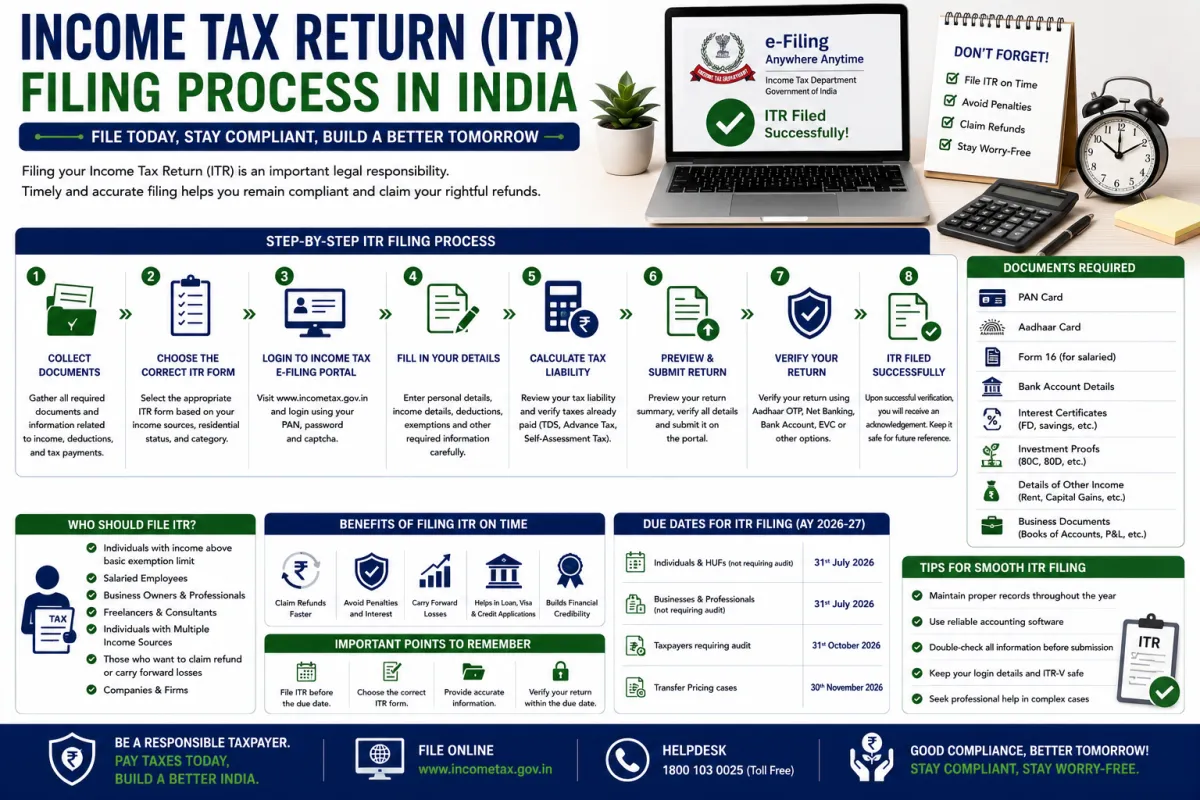
Income Tax Return (ITR) Filing Process in India

Filing an Income Tax Return (ITR) is an important legal responsibility for eligible individuals and businesses in India. Timely and accurate ITR filing helps taxpayers remain compliant, claim refunds, and avoid penalties.

Read More →

Blog

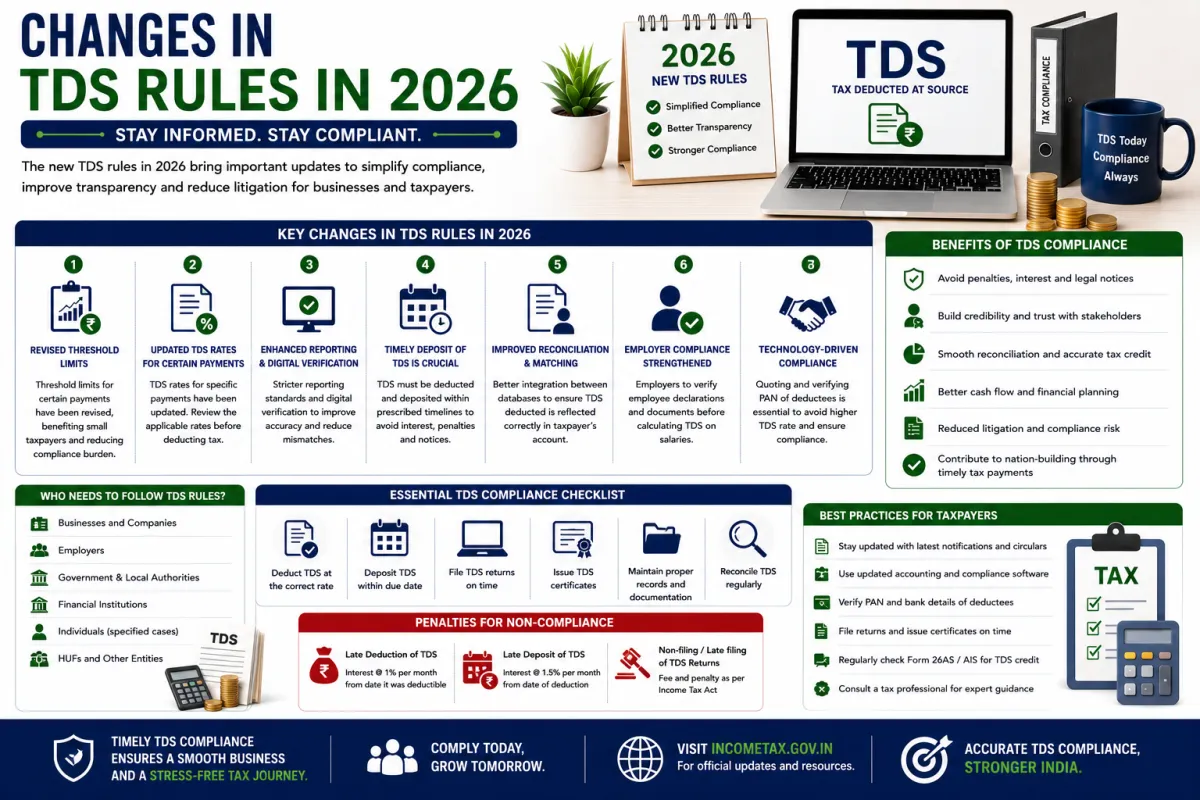
Changes in TDS Rules in 2026 Everything Businesses and Taxpayers Need to Know

The TDS (Tax Deducted at Source) rules in 2026 include important updates that may affect individuals, businesses, employers, and taxpayers. Staying informed about these changes helps ensure timely compliance, accurate tax deductions, and avoidance of penalties.

Read More →

Blog

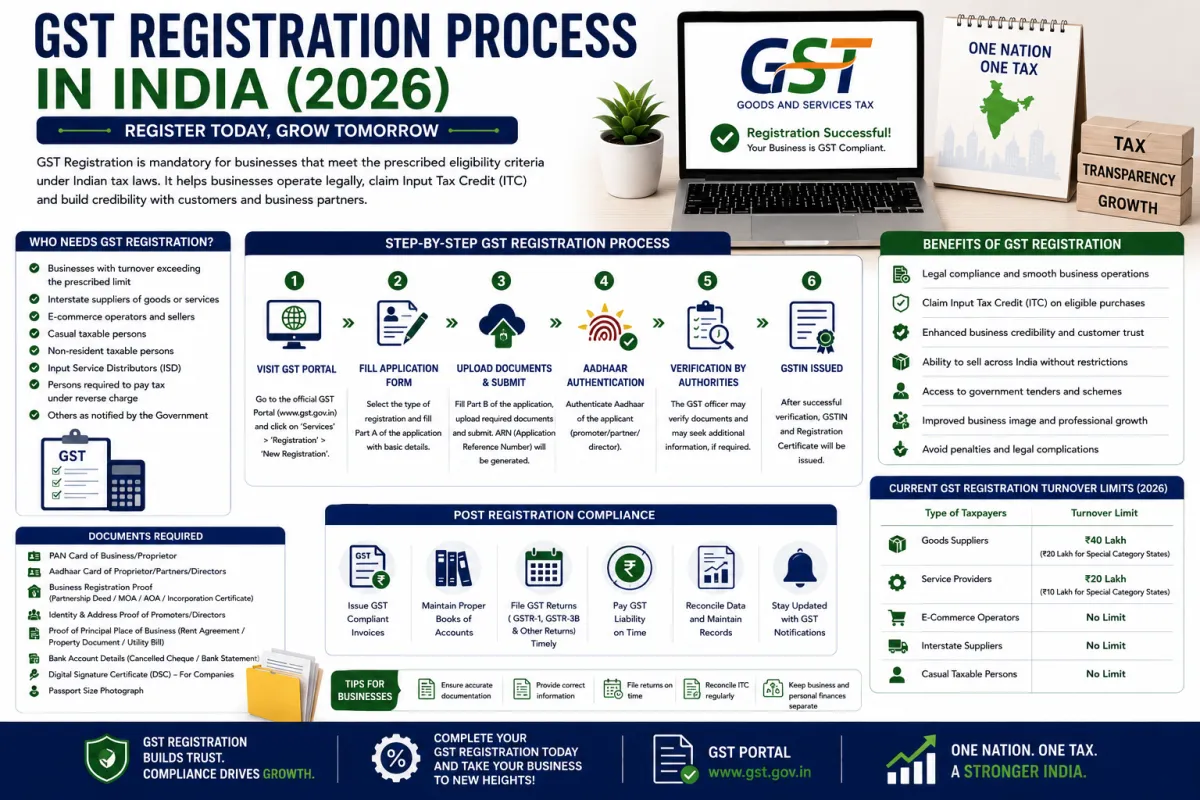
GST Registration Process in India (2026)

GST Registration is mandatory for businesses that meet the prescribed eligibility criteria under Indian tax laws. Registering under GST helps businesses operate legally, claim Input Tax Credit (ITC), and build credibility with customers and business partners.

Read More →
Blog

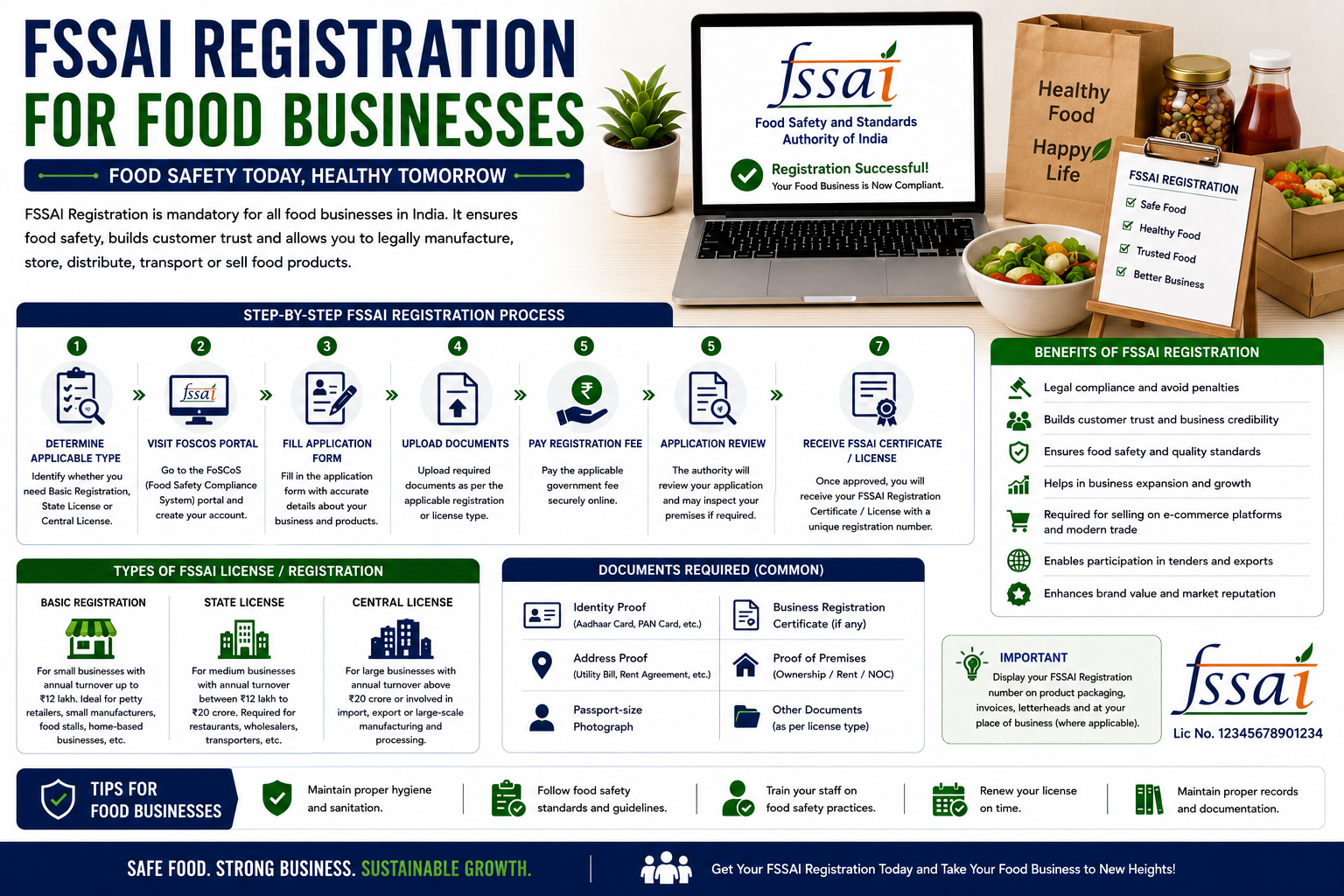
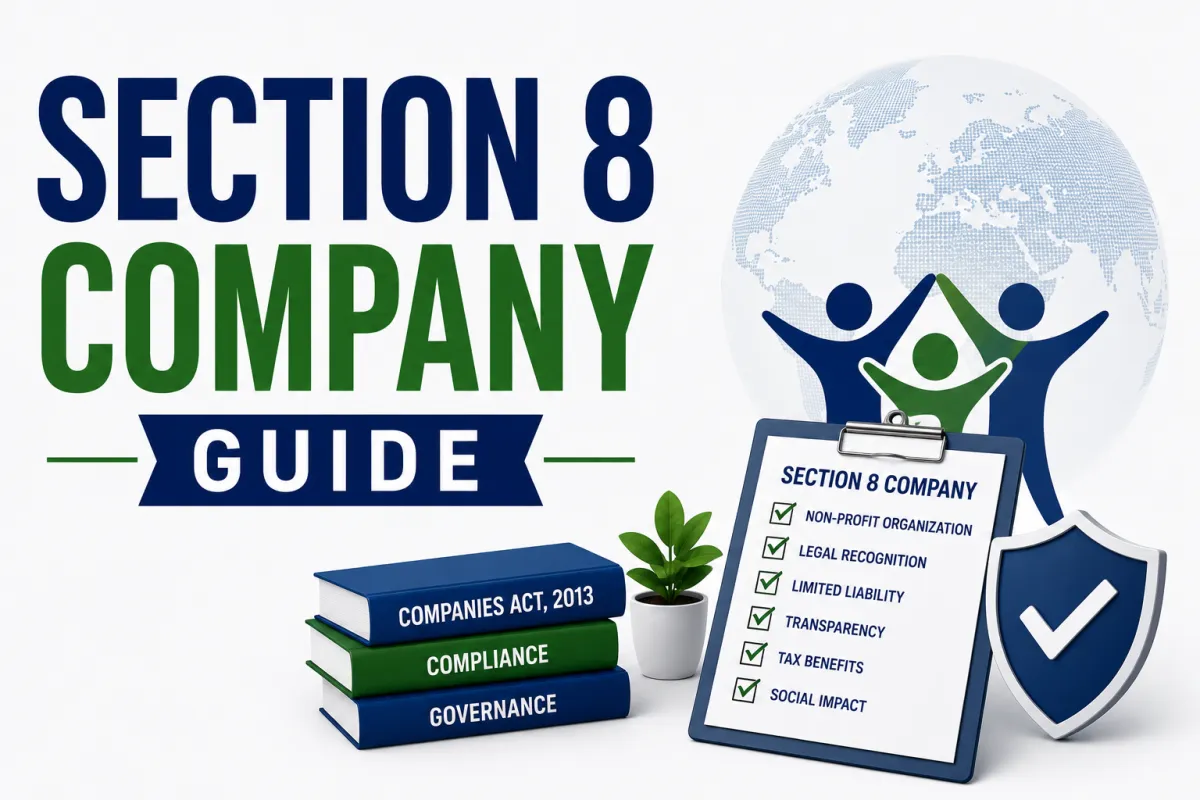
FSSAI Registration for Food Businesses

FSSAI Registration is a mandatory requirement for food businesses operating in India. It helps ensure food safety, builds customer trust, and allows businesses to legally manufacture, store, distribute, transport, or sell food products.

Read More →

Blog

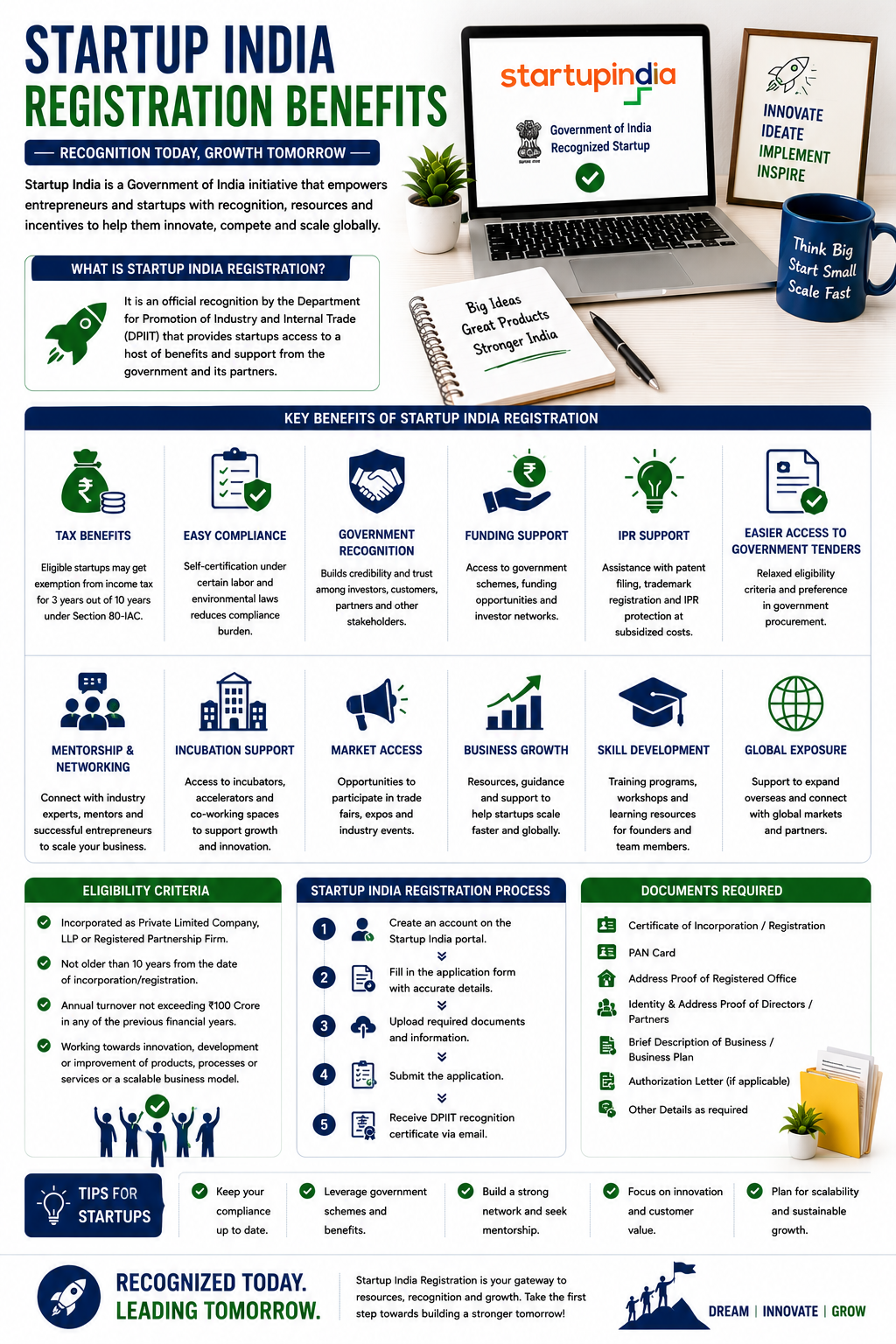
Startup India Registration Benefits

Startup India Registration offers numerous advantages to eligible businesses, including tax benefits, easier compliance, funding support, and government recognition. It helps startups build credibility and accelerate growth in a competitive business environment.

Read More →

Blog

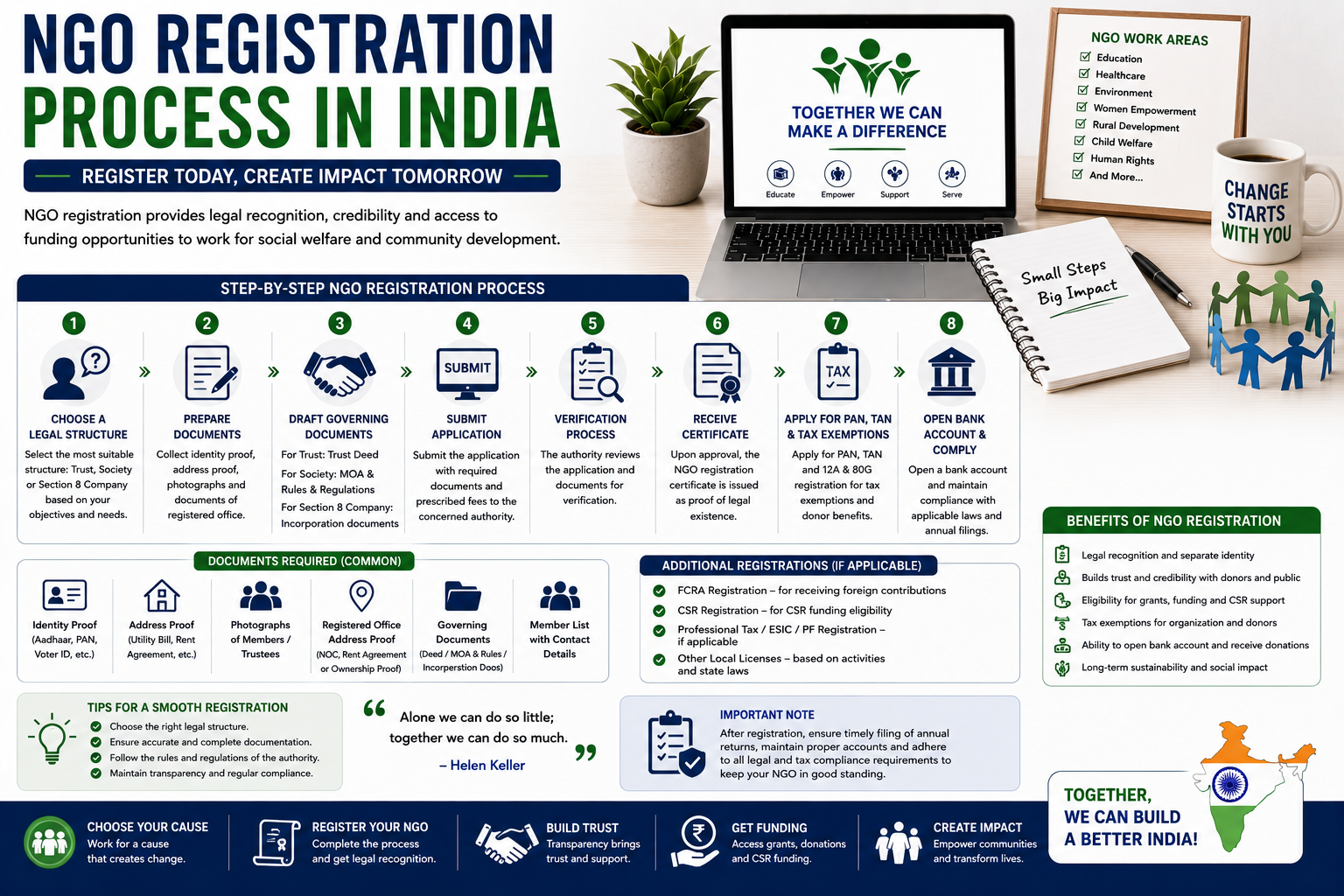
NGO Registration Process in India

Registering an NGO in India is an important step for individuals and groups looking to work for social welfare, education, healthcare, environmental protection, or other charitable causes. Proper registration provides legal recognition, credibility, and access to funding opportunities.

Read More →
Blog

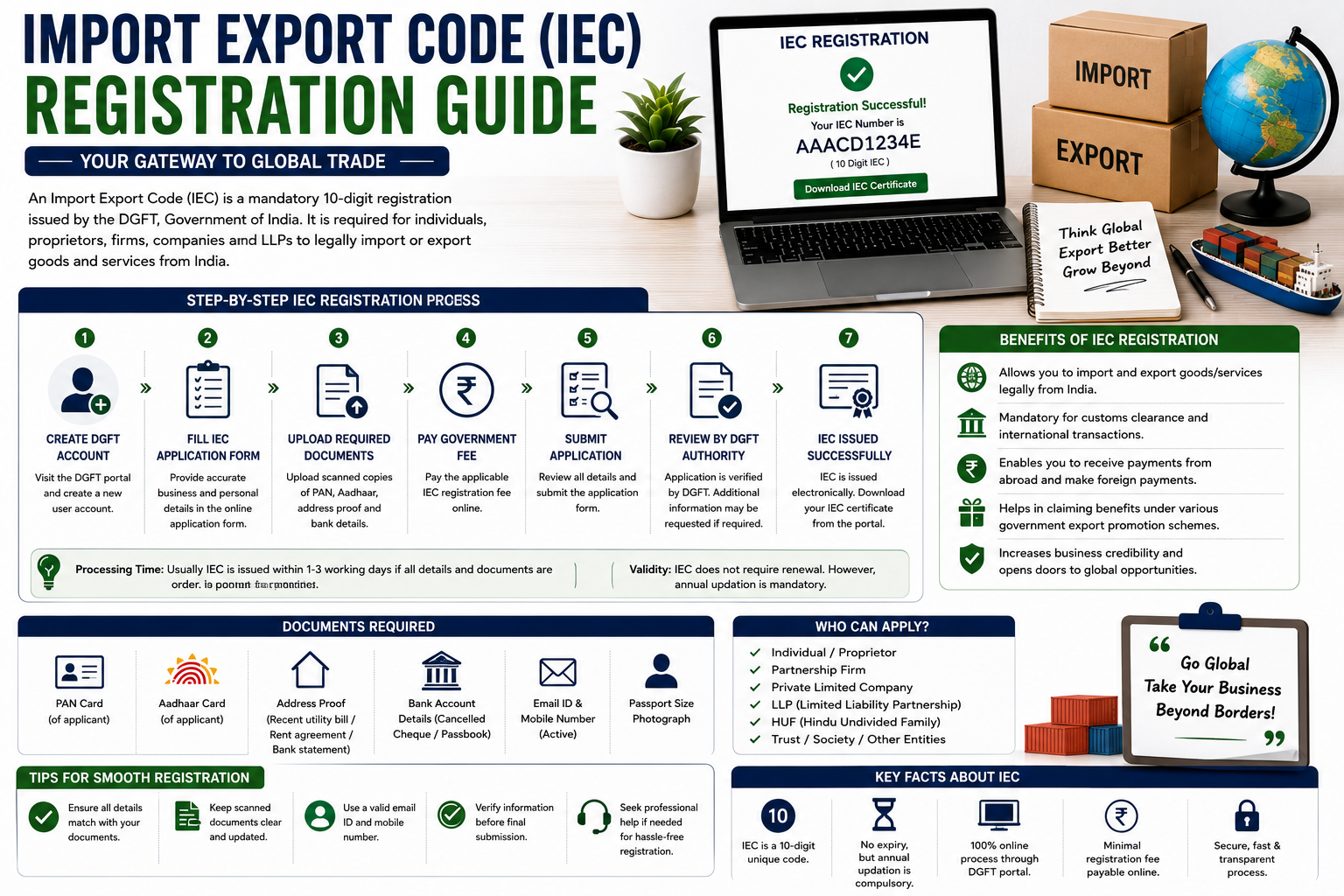
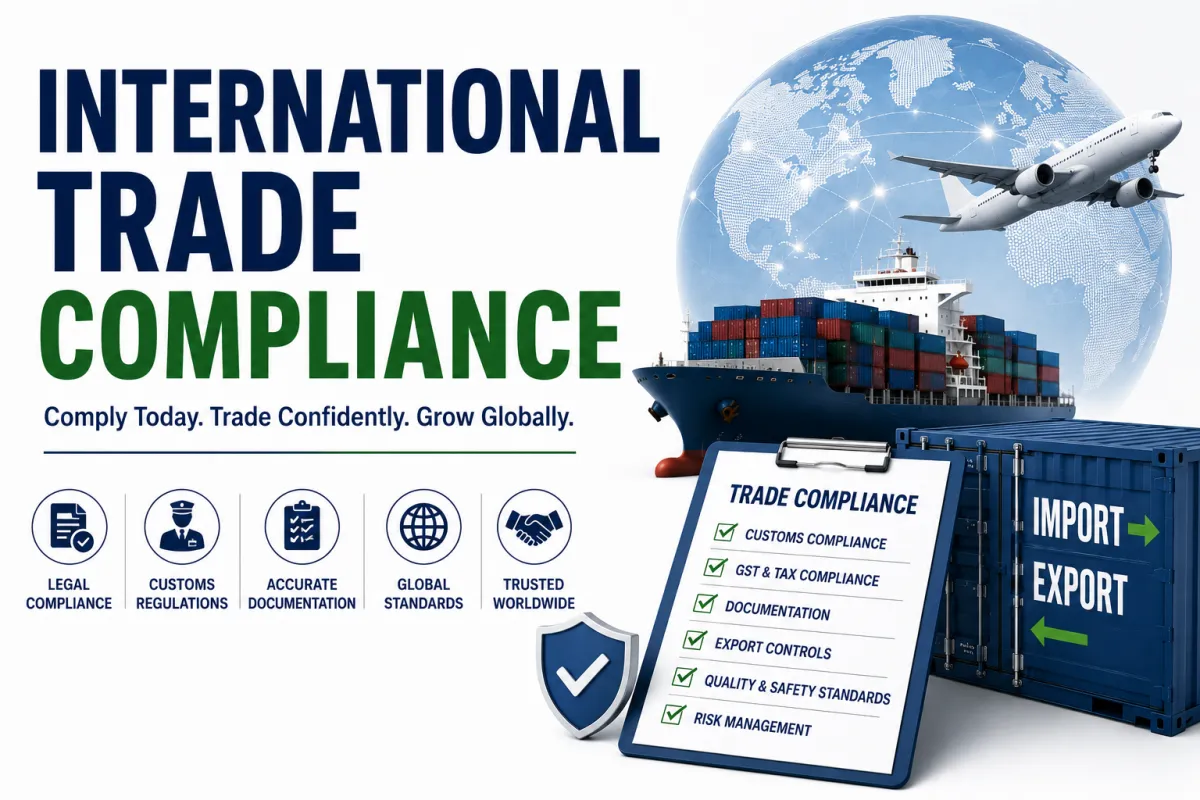
Import Export Code (IEC) Registration Guide

An Import Export Code (IEC) is a mandatory registration for businesses and individuals involved in international trade. Issued by the Directorate General of Foreign Trade (DGFT), IEC enables businesses to legally import and export goods and services from India.

Read More →

Blog

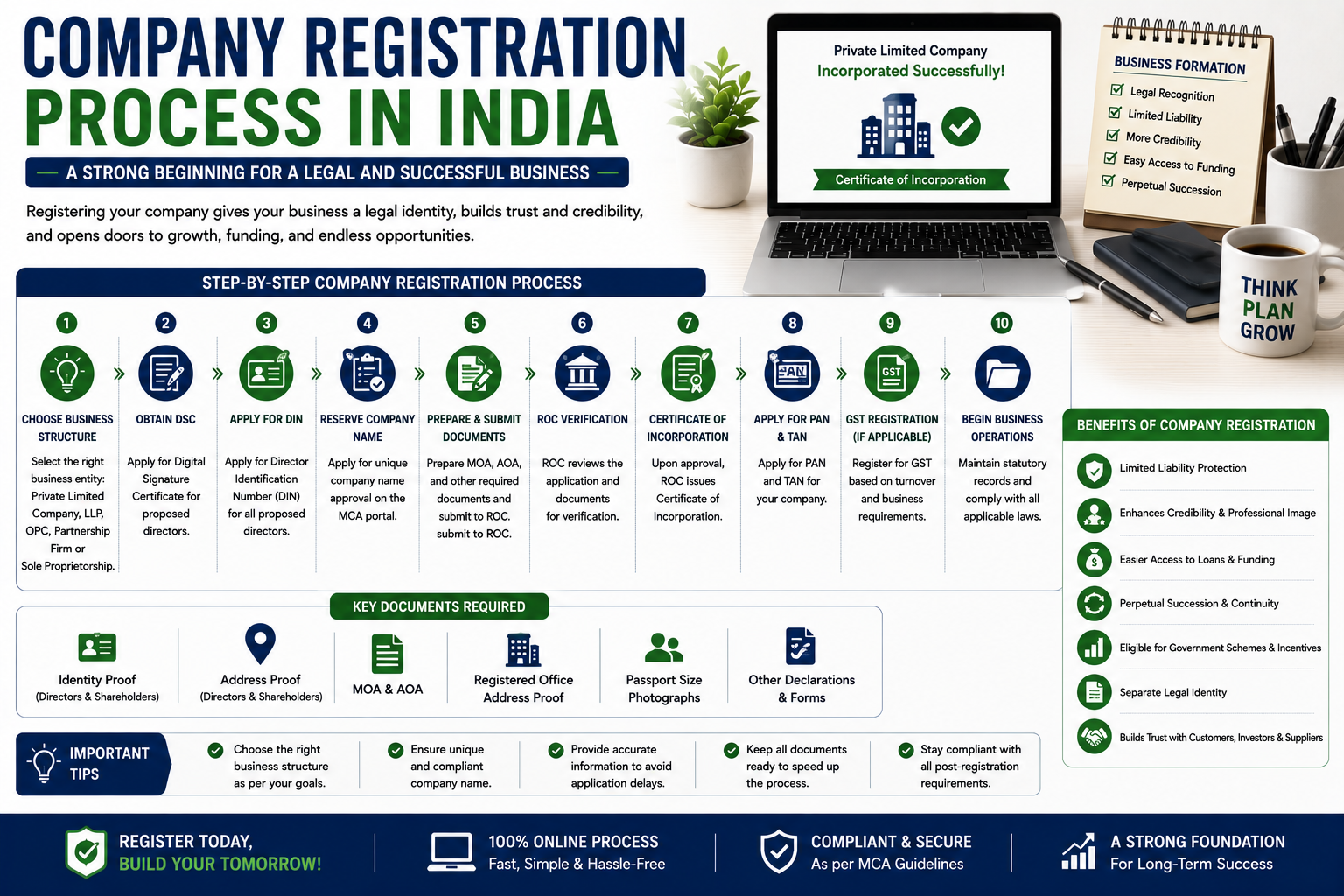
Company Registration Process in India

Registering a company in India is the first step toward establishing a legally recognized business. A proper company registration provides credibility, legal protection, and access to various business growth opportunities.

Read More →

Blog

GST Return Filing Guide for Small Businesses

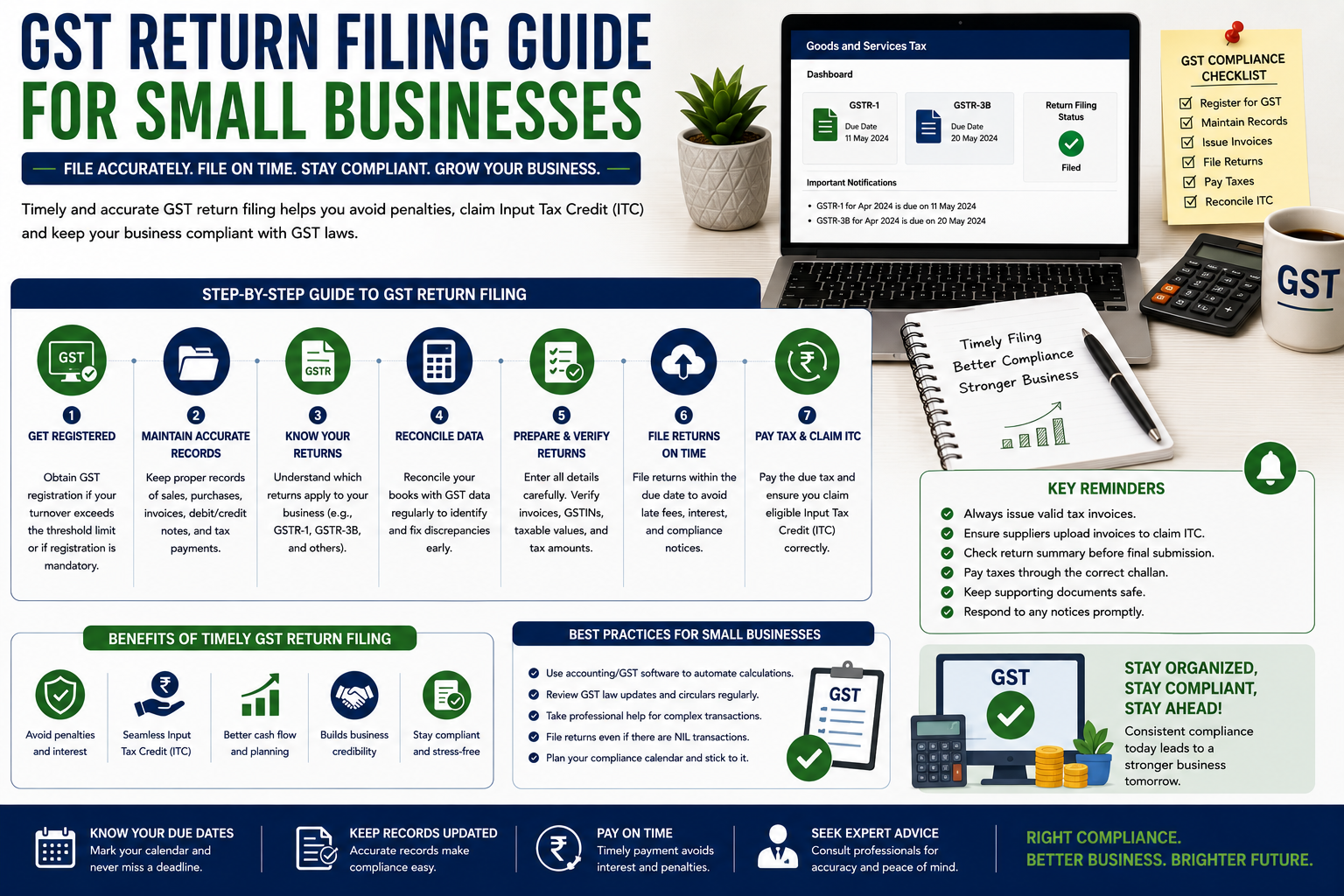
GST return filing is an essential compliance requirement for small businesses in India. Understanding the filing process, maintaining accurate records, and meeting deadlines can help businesses avoid penalties and ensure smooth tax compliance.

Read More →

Blog

Difference Between TDS and TCS

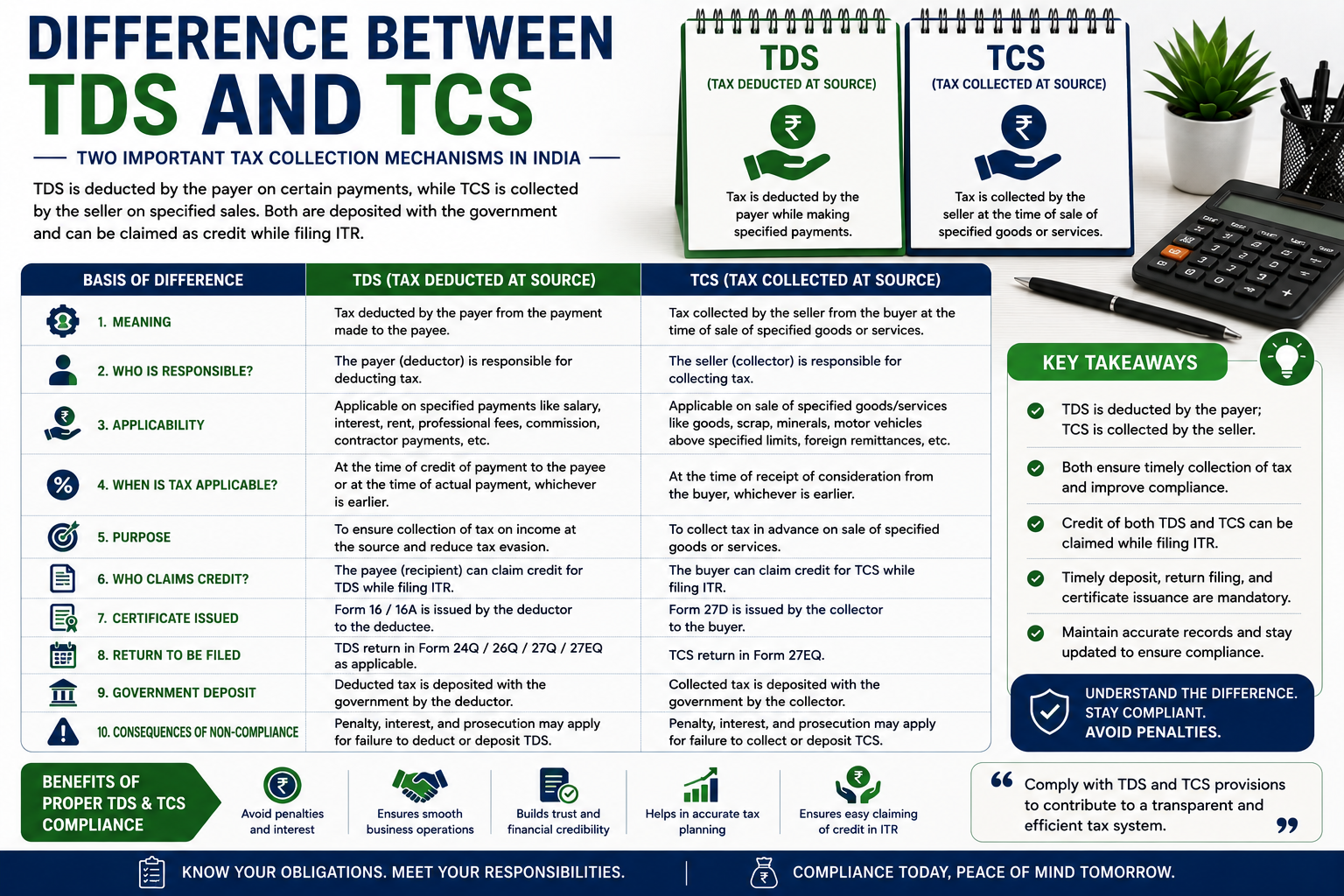
TDS (Tax Deducted at Source) and TCS (Tax Collected at Source) are important tax collection mechanisms under the Indian tax system. While TDS is deducted by the payer when making certain payments, TCS is collected by the seller at the time of sale of specified goods and services.

Read More →
Blog

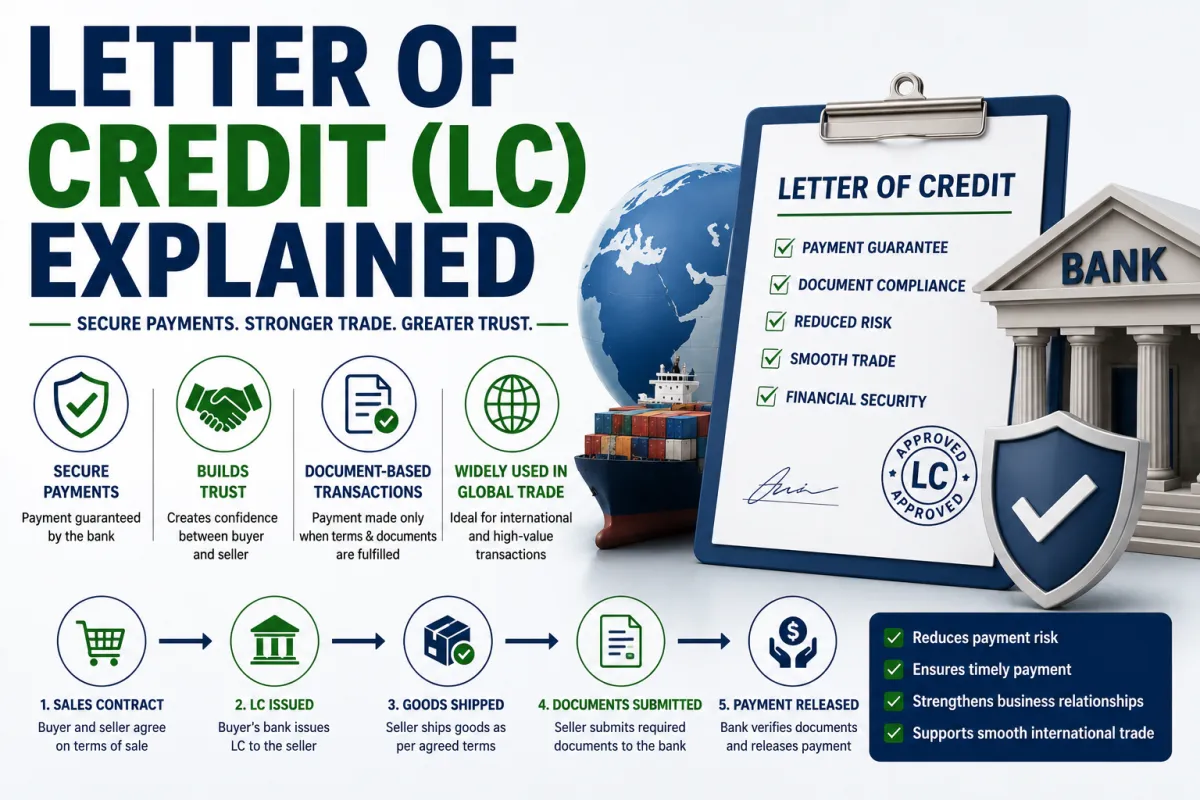
How to Save Income Tax Legally in India

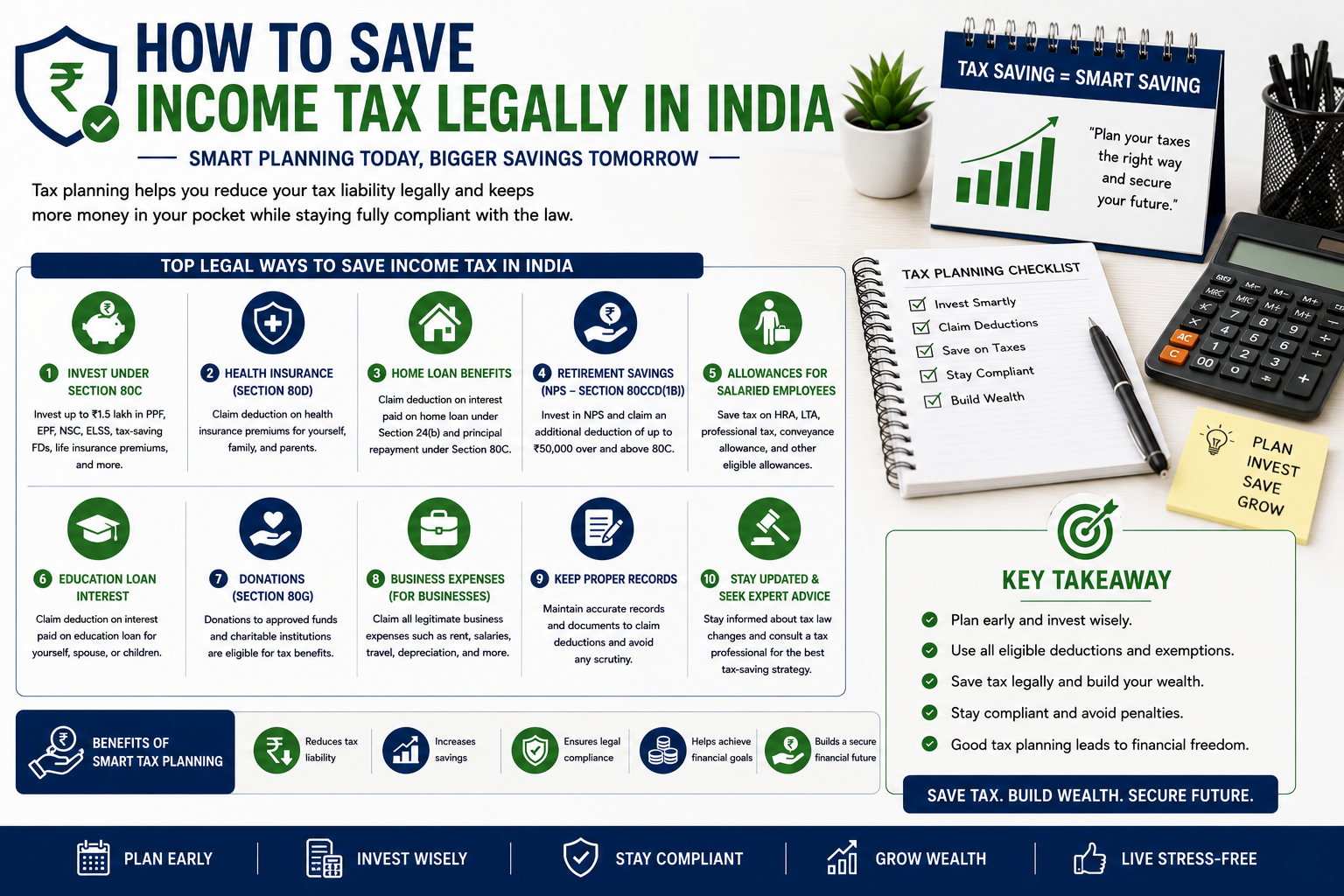
Tax planning is an important part of financial management that helps individuals and businesses reduce their tax liability while remaining fully compliant with the law. By utilizing available deductions, exemptions, and government-approved investment options, taxpayers can legally save income tax in India.

Read More →
Blog

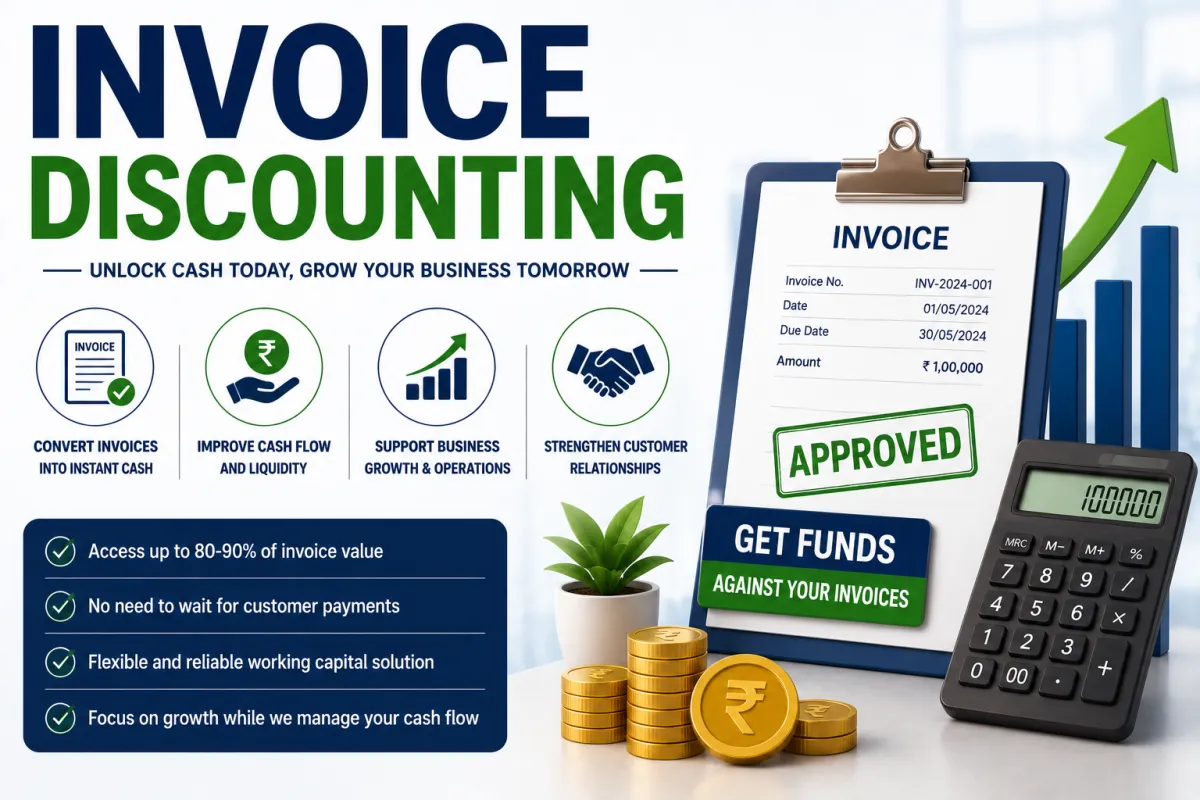
What Happens If You Miss the ITR Deadline?

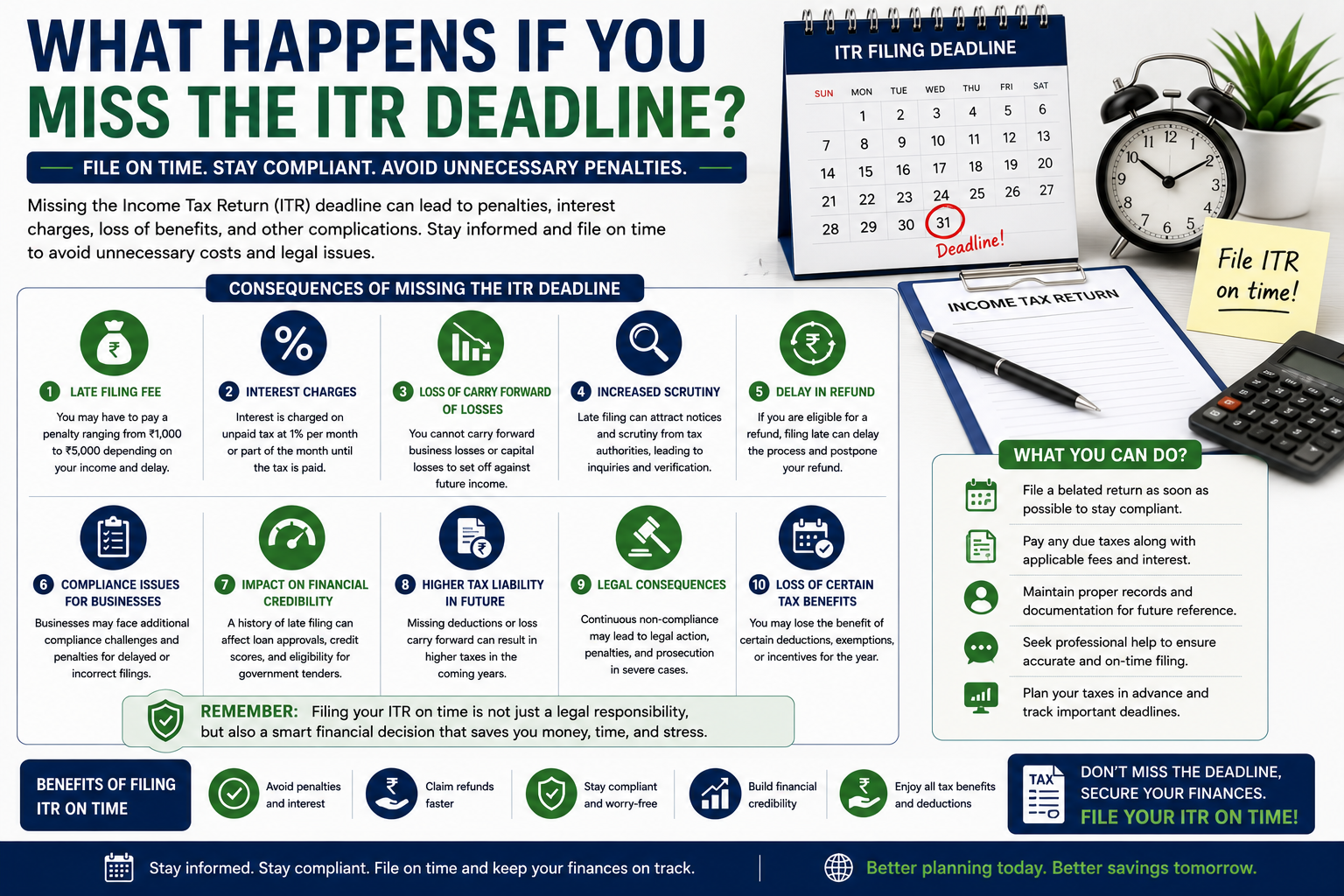
Missing the Income Tax Return (ITR) filing deadline can lead to penalties, interest charges, and the loss of certain tax benefits. Filing your return on time helps you stay compliant and avoid unnecessary financial and legal complications.

Read More →

Blog

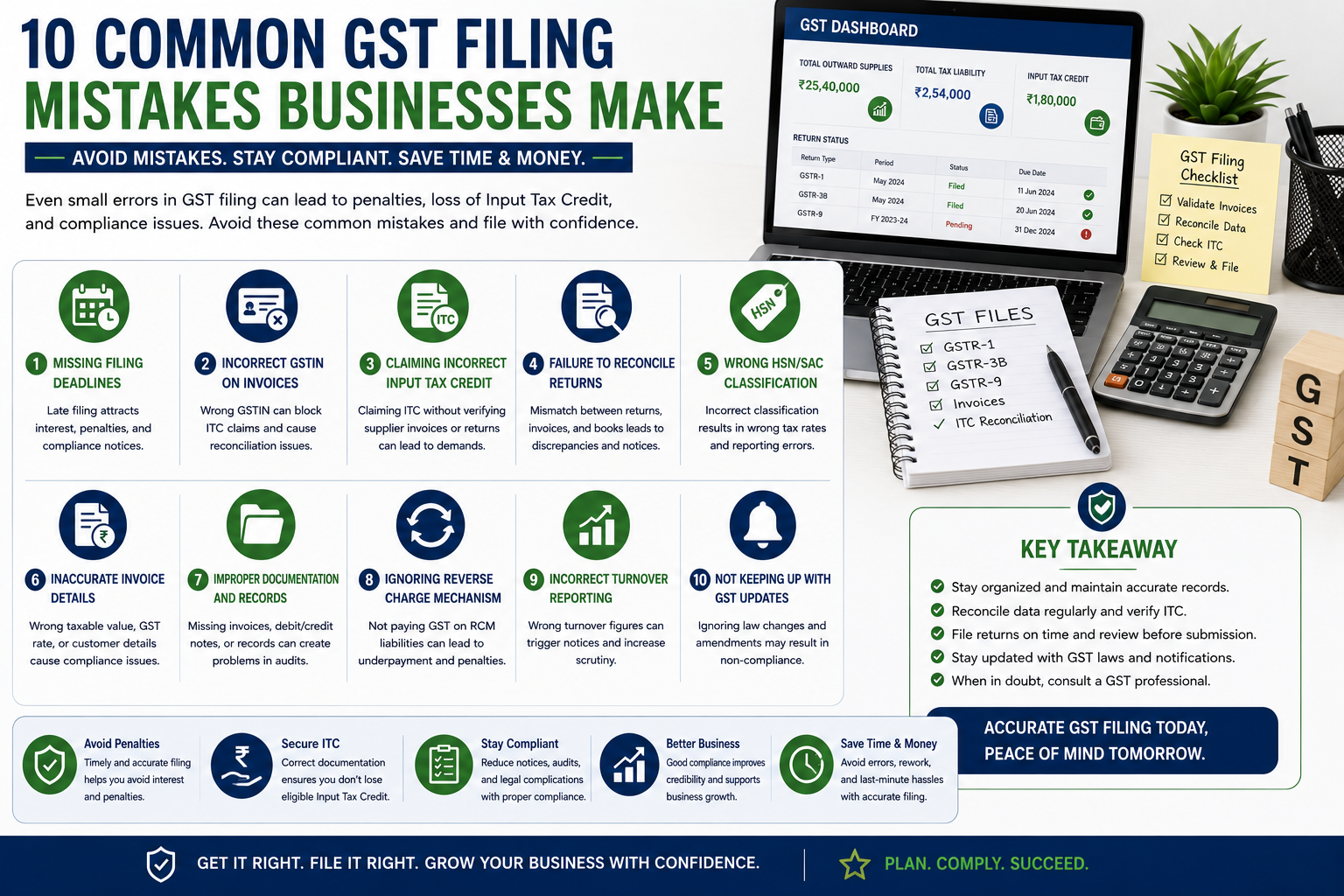
10 Common GST Filing Mistakes Businesses Make

GST compliance is essential for businesses to avoid penalties and maintain smooth operations. Understanding and avoiding common GST filing mistakes can help businesses ensure accurate tax reporting and timely compliance.

Read More →
Blog

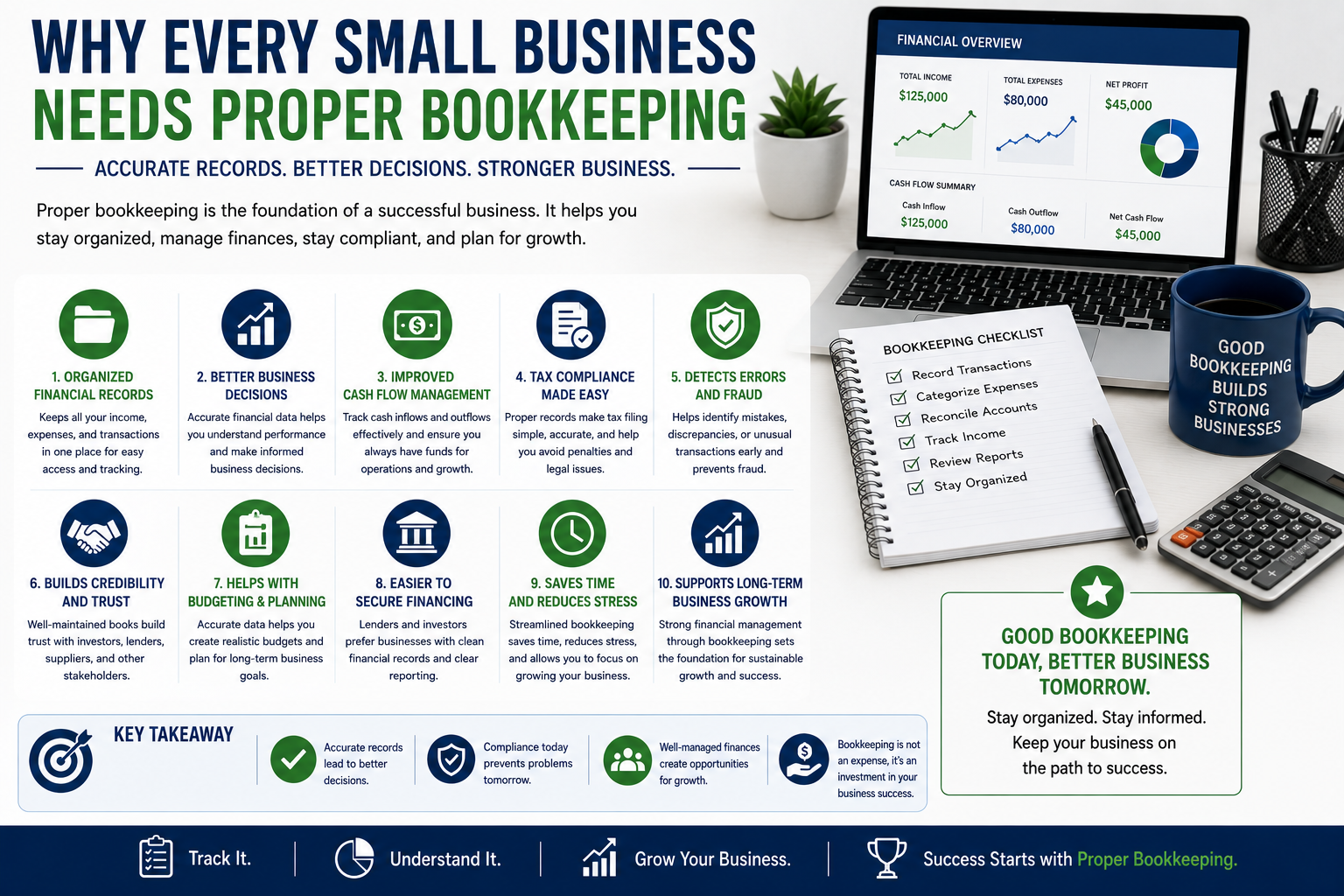
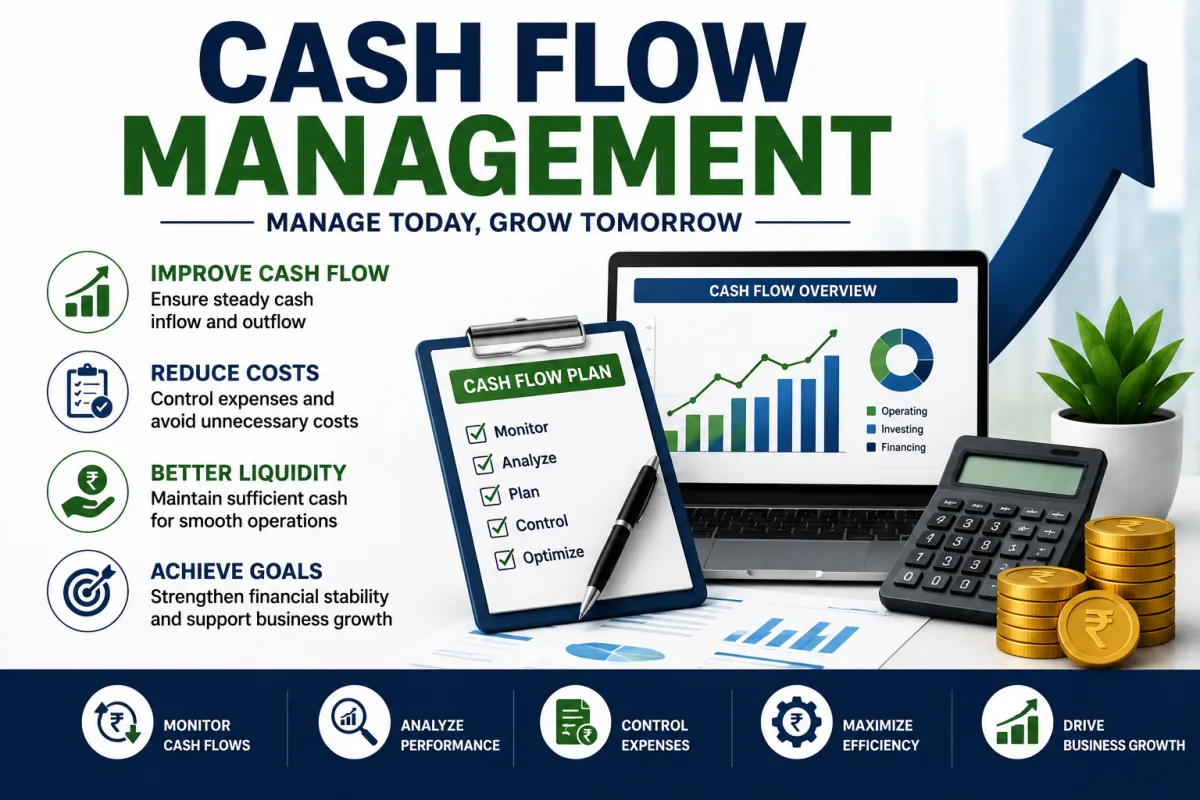
Why Every Small Business Needs Proper Bookkeeping

Proper bookkeeping is the foundation of a successful small business. It helps business owners track income and expenses, maintain accurate financial records, and make informed decisions for sustainable growth.

Read More →
Blog

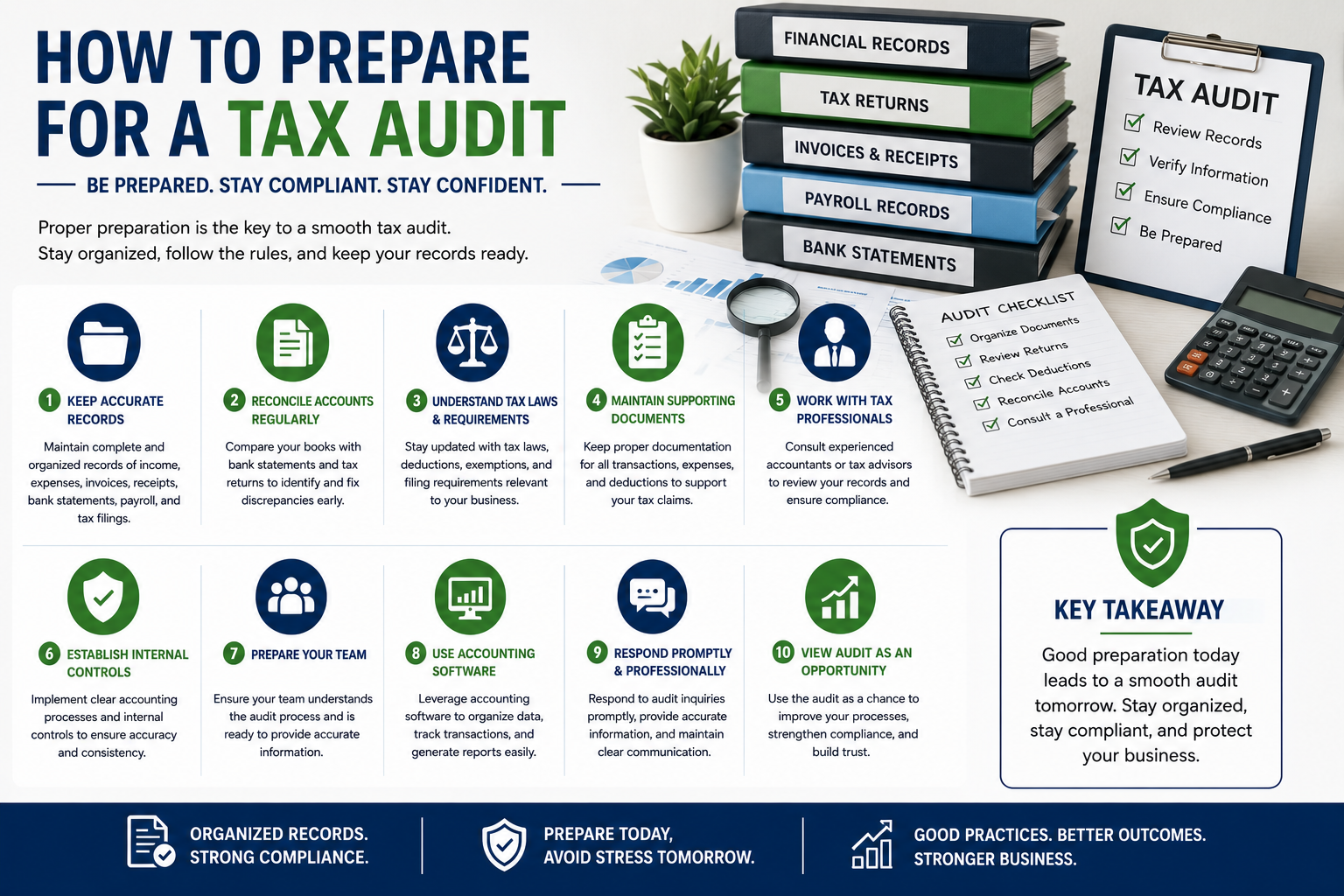
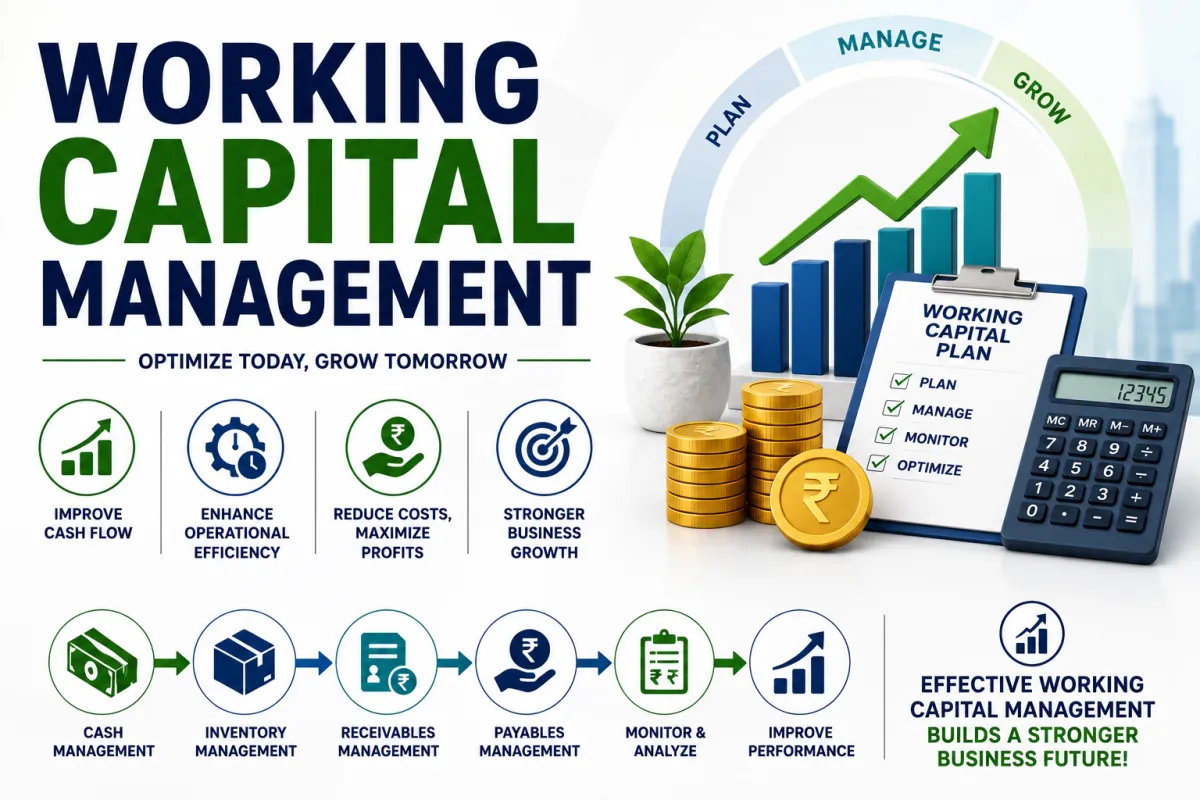
How to Prepare for a Tax Audit

A tax audit can be a stressful experience for any business, but proper preparation can make the process smooth and manageable. Maintaining accurate records and staying compliant with tax regulations are key to successfully handling a tax audit.

Read More →
Blog

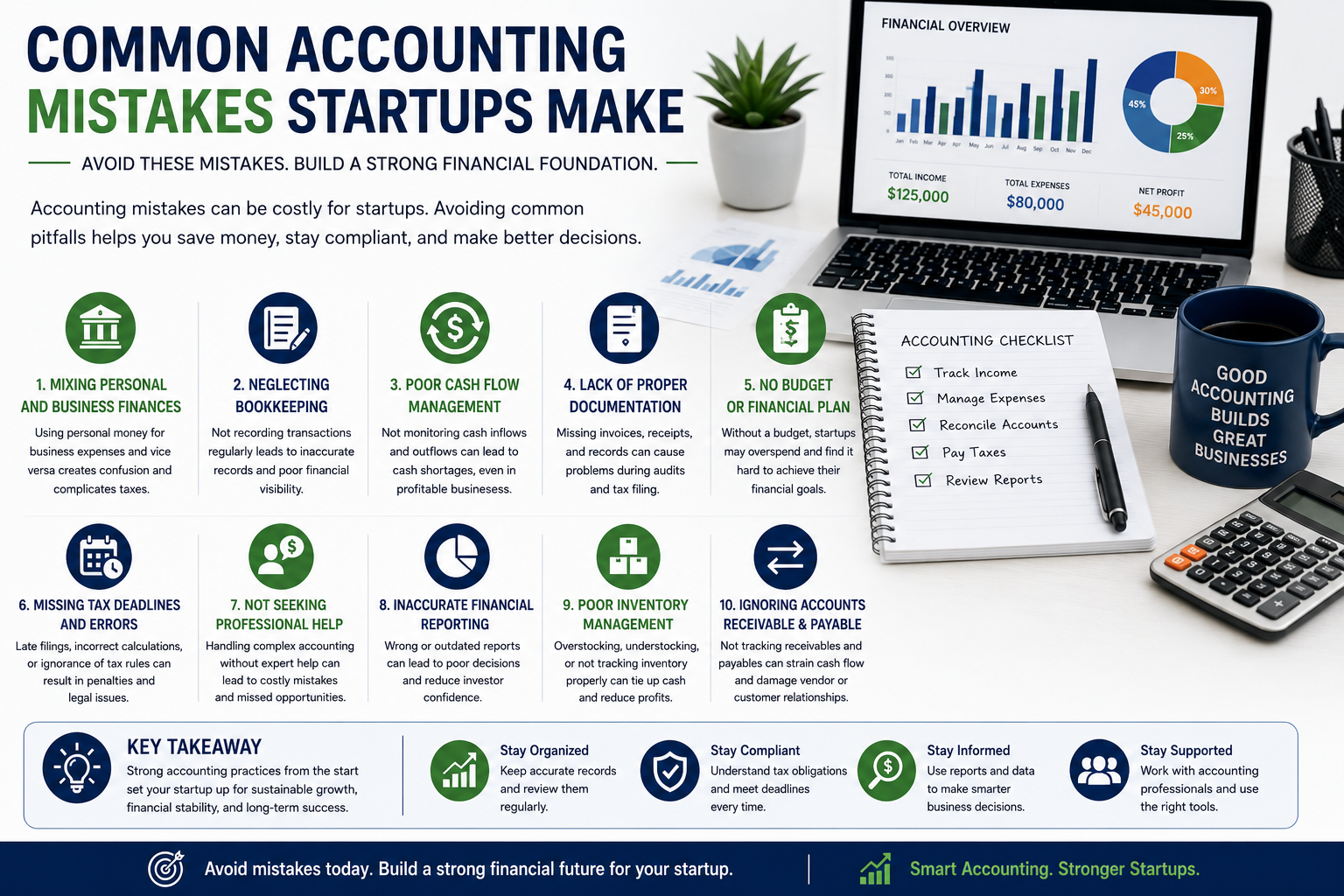
Common Accounting Mistakes Startups Make

Many startups focus heavily on growth and operations but often overlook proper accounting practices. Avoiding common accounting mistakes can help startups maintain financial stability, ensure compliance, and make better business decisions.

Read More →
Blog

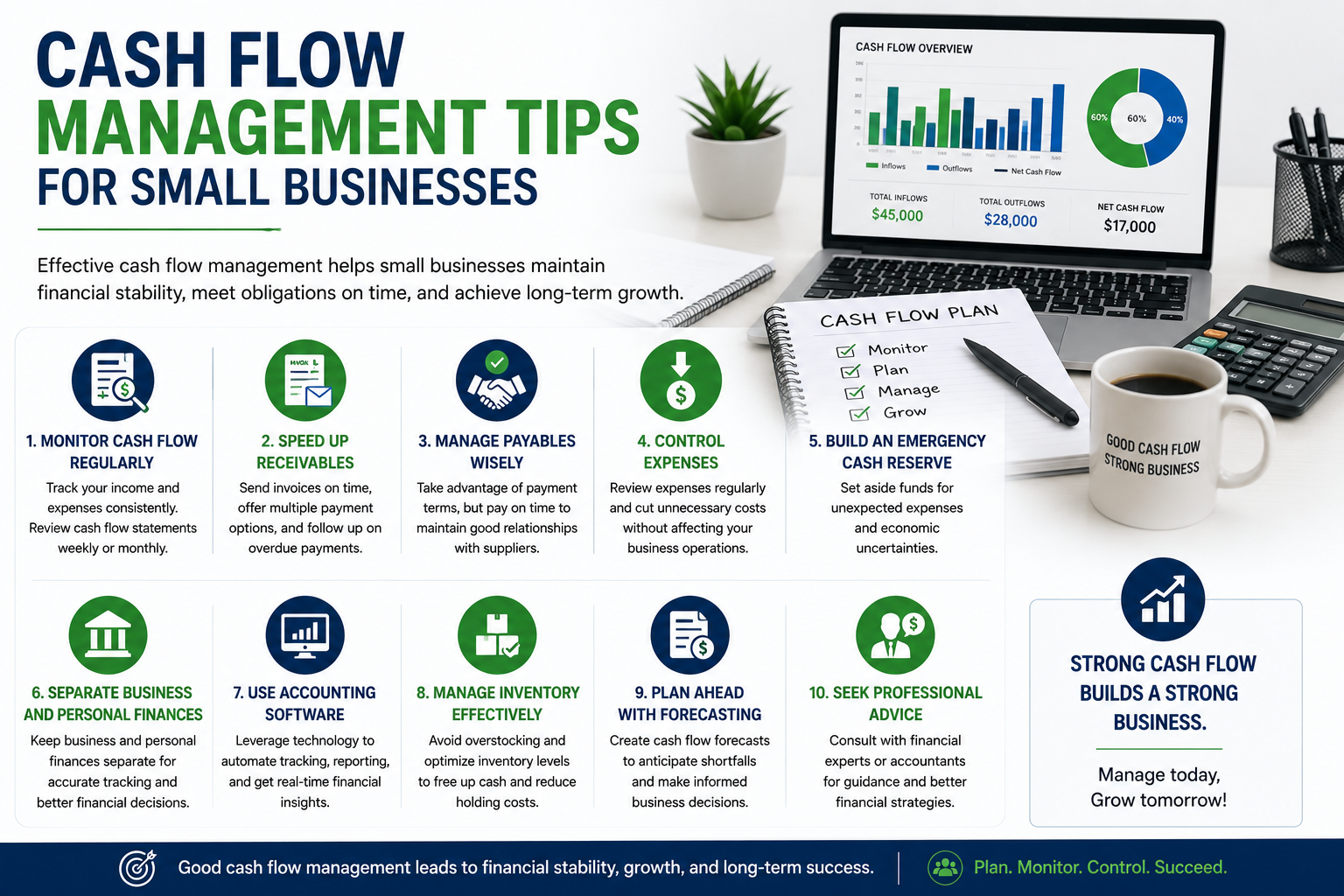
Cash Flow Management Tips for Small Businesses

Effective cash flow management is essential for the success of any small business. By monitoring income and expenses carefully, businesses can maintain financial stability, meet obligations on time, and support long-term growth.

Read More →
Blog

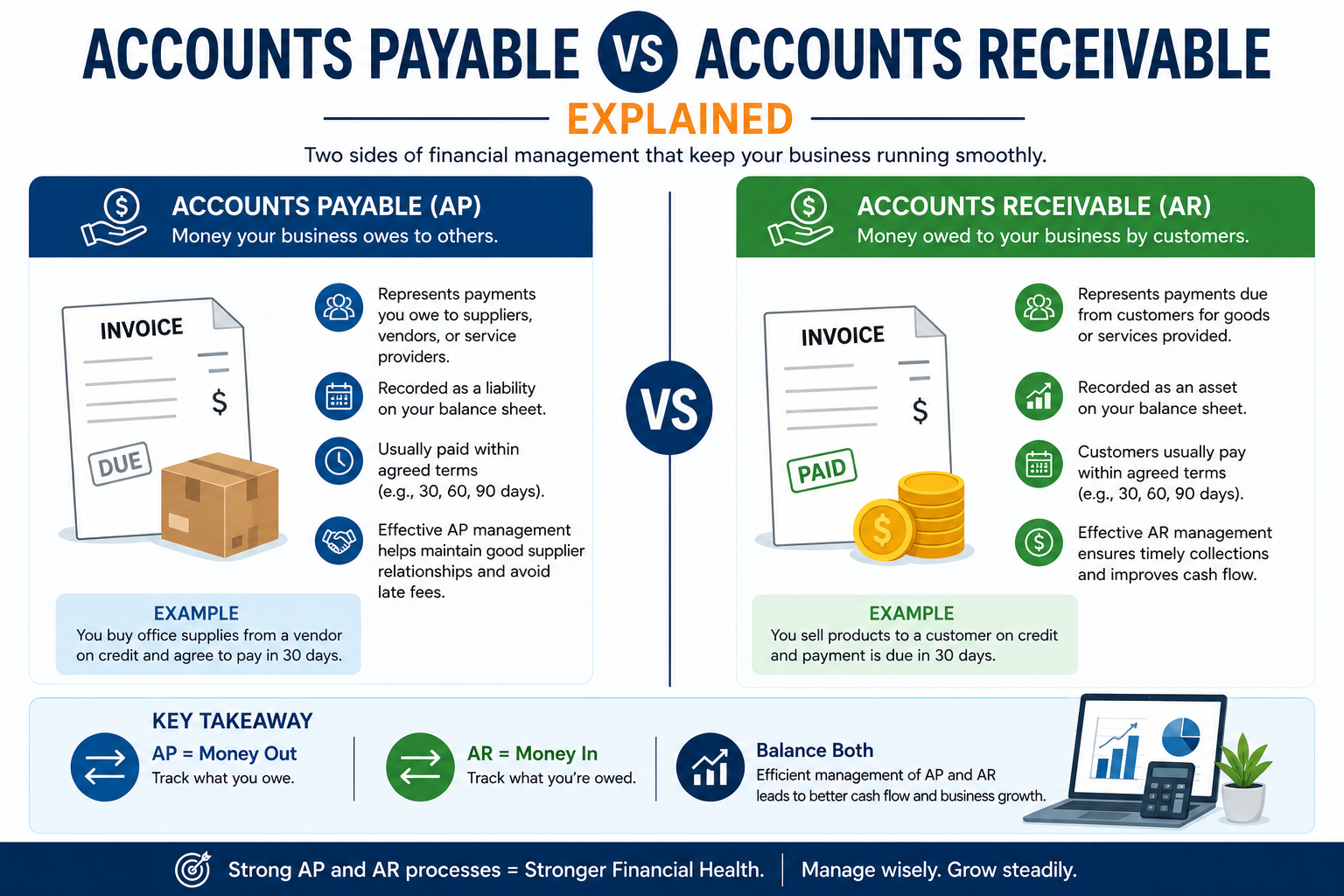
Accounts Payable vs Accounts Receivable Explained

Accounts Payable (AP) and Accounts Receivable (AR) are two essential components of business finance. While Accounts Payable refers to money a business owes to suppliers, Accounts Receivable represents money owed to the business by customers.

Read More →
Blog

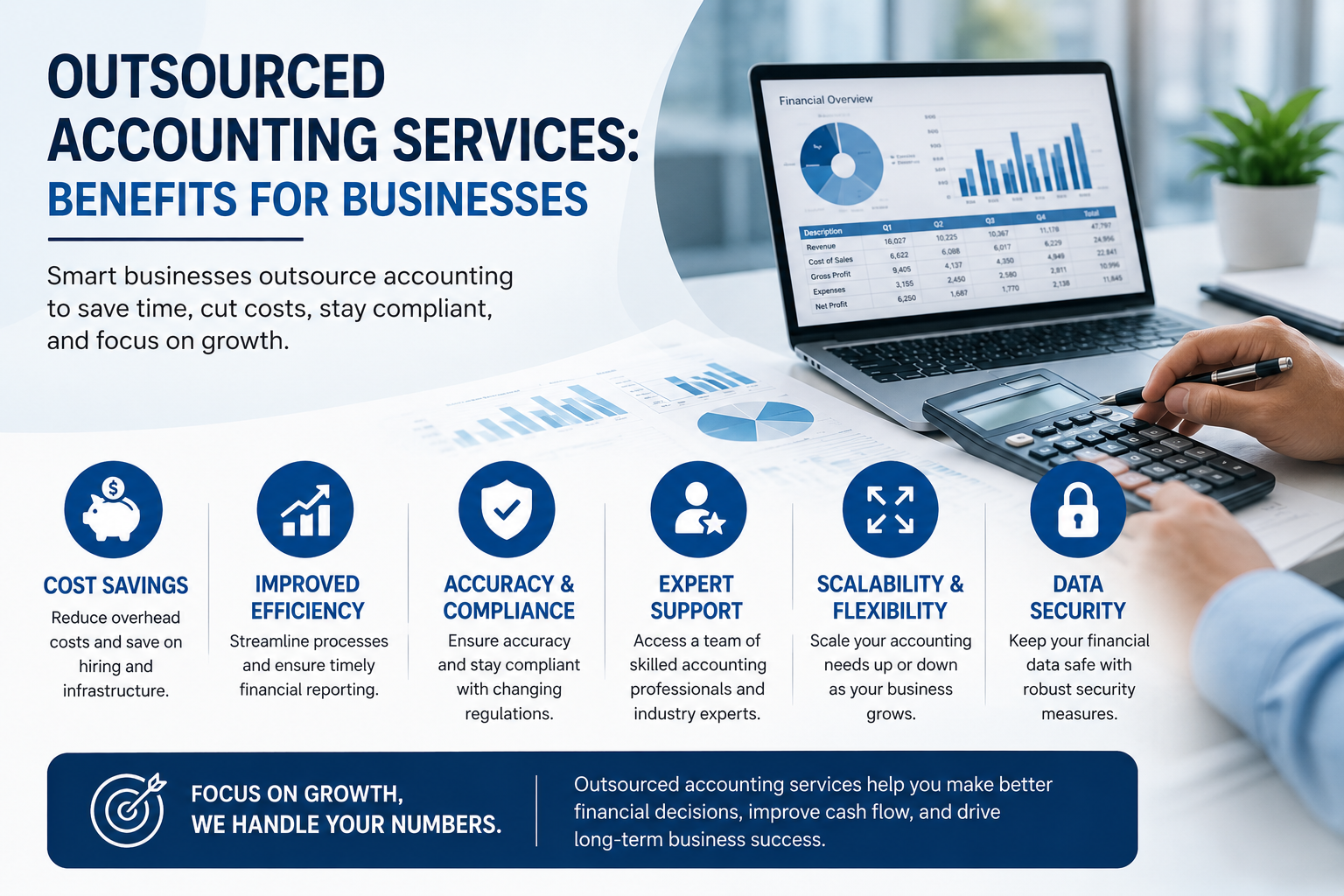
Outsourced Accounting Services: Benefits for Businesses

Outsourced accounting services help businesses manage their finances efficiently while reducing operational costs. By partnering with accounting experts, companies can improve accuracy, ensure compliance, and focus more on growth and core business activities.

Read More →
Blog

MSME Registration Benefits for Startups: A Complete Guide to Growth and Success

MSME registration helps startups gain access to government benefits, financial support, tax advantages, and easier business growth opportunities. It enhances business credibility and provides various schemes designed to support small and emerging enterprises.

Read More →
Blog

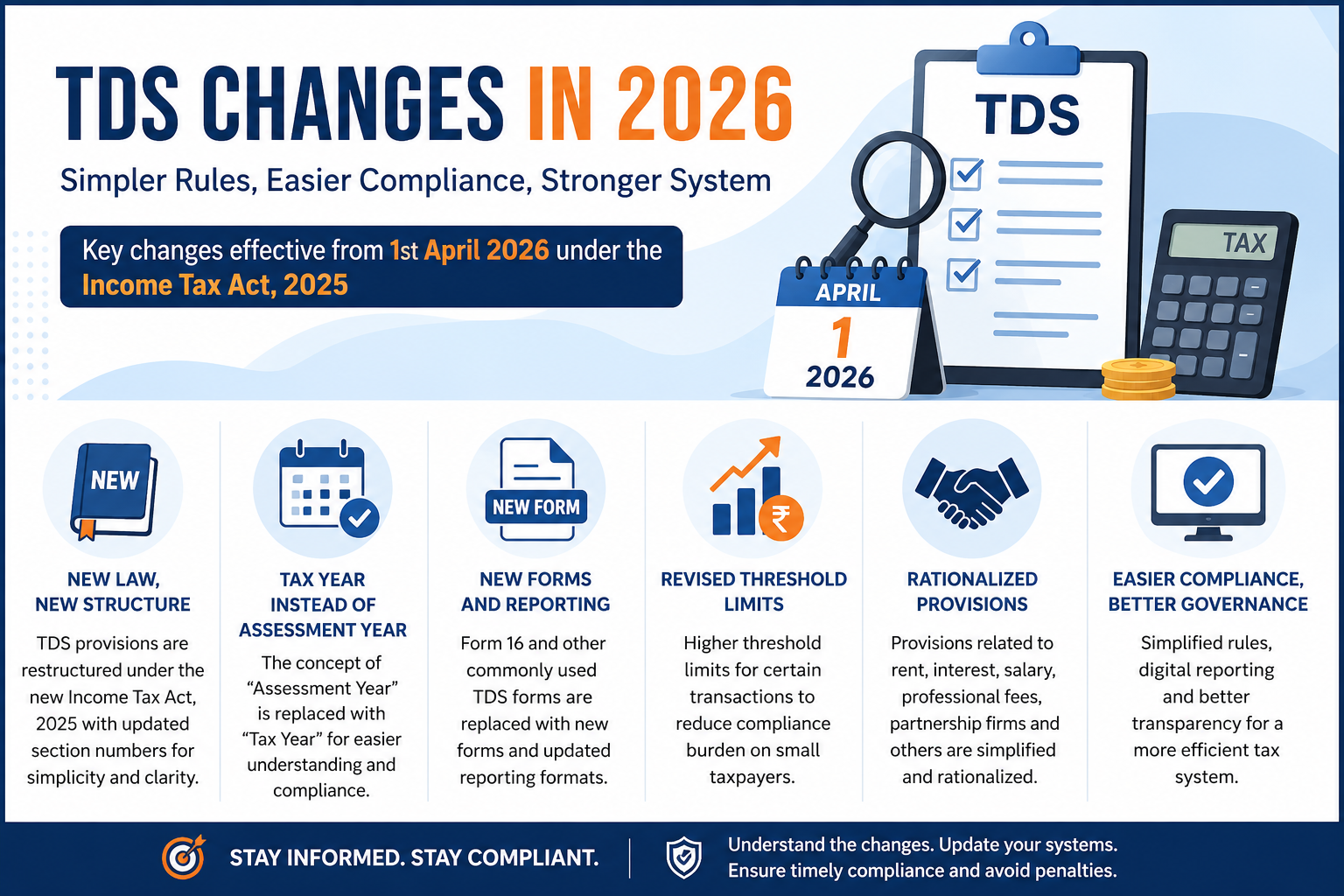
Major Changes in TDS in 2026: What Businesses and Taxpayers Need to Know

The TDS framework in India has undergone significant changes from April 1, 2026, under the new Income Tax Act, 2025. Key updates include the introduction of new TDS section numbers, revised compliance procedures, updated forms, and simplified tax reporting requirements for businesses and taxpayers.

Read More →