Selecting the right business structure is one of the first and most important decisions for any entrepreneur. In India, two of the most popular options are a Limited Liability Partnership (LLP) and a Private Limited Company. While both provide limited liability protection to their owners, each structure has its own advantages and is suitable for different types of businesses. Understanding the differences can help business owners choose the option that best aligns with their goals and future plans.
A Limited Liability Partnership (LLP) combines the flexibility of a partnership with the benefit of limited liability. In an LLP, partners are responsible only to the extent of their agreed contribution, protecting their personal assets from business liabilities. LLPs generally have fewer compliance requirements, making them an attractive option for small businesses, professional firms, consultants, freelancers, and family-owned enterprises. They also offer greater operational flexibility and lower administrative costs compared to companies.
A Private Limited Company, on the other hand, is a separate legal entity incorporated under the Companies Act. It offers limited liability protection to shareholders and is widely preferred by startups and businesses aiming for rapid growth. One of the biggest advantages of a Private Limited Company is its ability to raise capital from investors, venture capital firms, and private equity funds. Shares can be issued to attract investment, making this structure ideal for businesses planning expansion. It also enhances business credibility among customers, suppliers, banks, and investors.
There are also differences in compliance obligations. LLPs are generally subject to fewer statutory filings and regulatory requirements, resulting in lower compliance costs. Private Limited Companies, however, must comply with more detailed reporting requirements, including board meetings, annual filings, statutory audits (where applicable), and corporate governance provisions. While compliance is more extensive, it also increases transparency and investor confidence.
Ownership and management also differ between the two structures. LLPs are managed by designated partners who participate directly in daily operations, whereas Private Limited Companies are managed by directors appointed by shareholders. This structured management system makes companies more suitable for businesses with multiple investors or long-term expansion plans.
When deciding between an LLP and a Private Limited Company, entrepreneurs should consider factors such as the nature of the business, expected turnover, funding requirements, number of owners, compliance capacity, and future growth objectives. Businesses focused on professional services or small-scale operations often find LLPs more practical, while startups seeking investment and scalability generally benefit from a Private Limited Company structure.
There is no single option that is better for every business. The right choice depends on your business goals, financial plans, and operational requirements. Seeking professional guidance before registration can help entrepreneurs select the most suitable structure, ensuring legal compliance and creating a strong foundation for long-term business success.
LLP vs Private Limited Company – Which is Better?

Akshita tyagi
@ tyagiakshita78@gmail.com
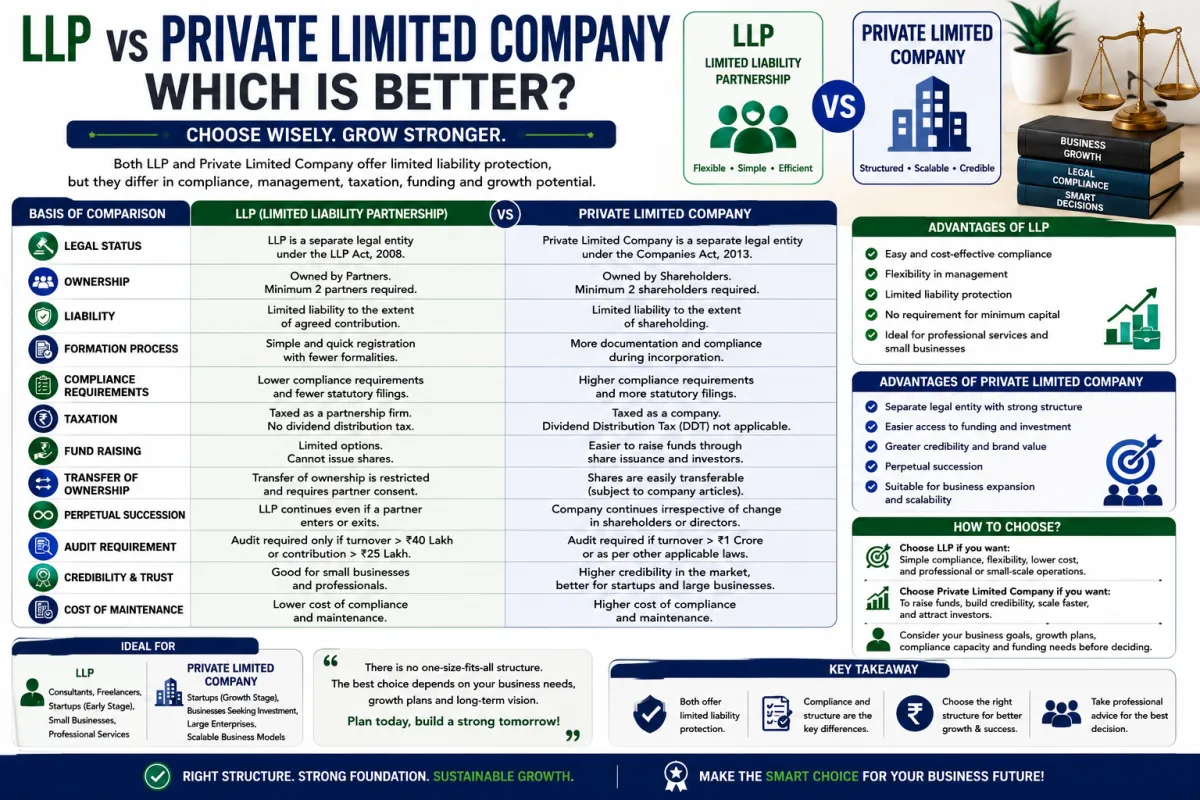
Choosing between a Limited Liability Partnership (LLP) and a Private Limited Company is an important decision for entrepreneurs. Both business structures offer limited liability, but they differ in ownership, compliance, taxation, fundraising opportunities, and long-term growth potential.



Comments (0)
Please login to comment.