What Happens If You Miss the ITR Deadline?

Akshita tyagi
@ tyagiakshita78@gmail.com
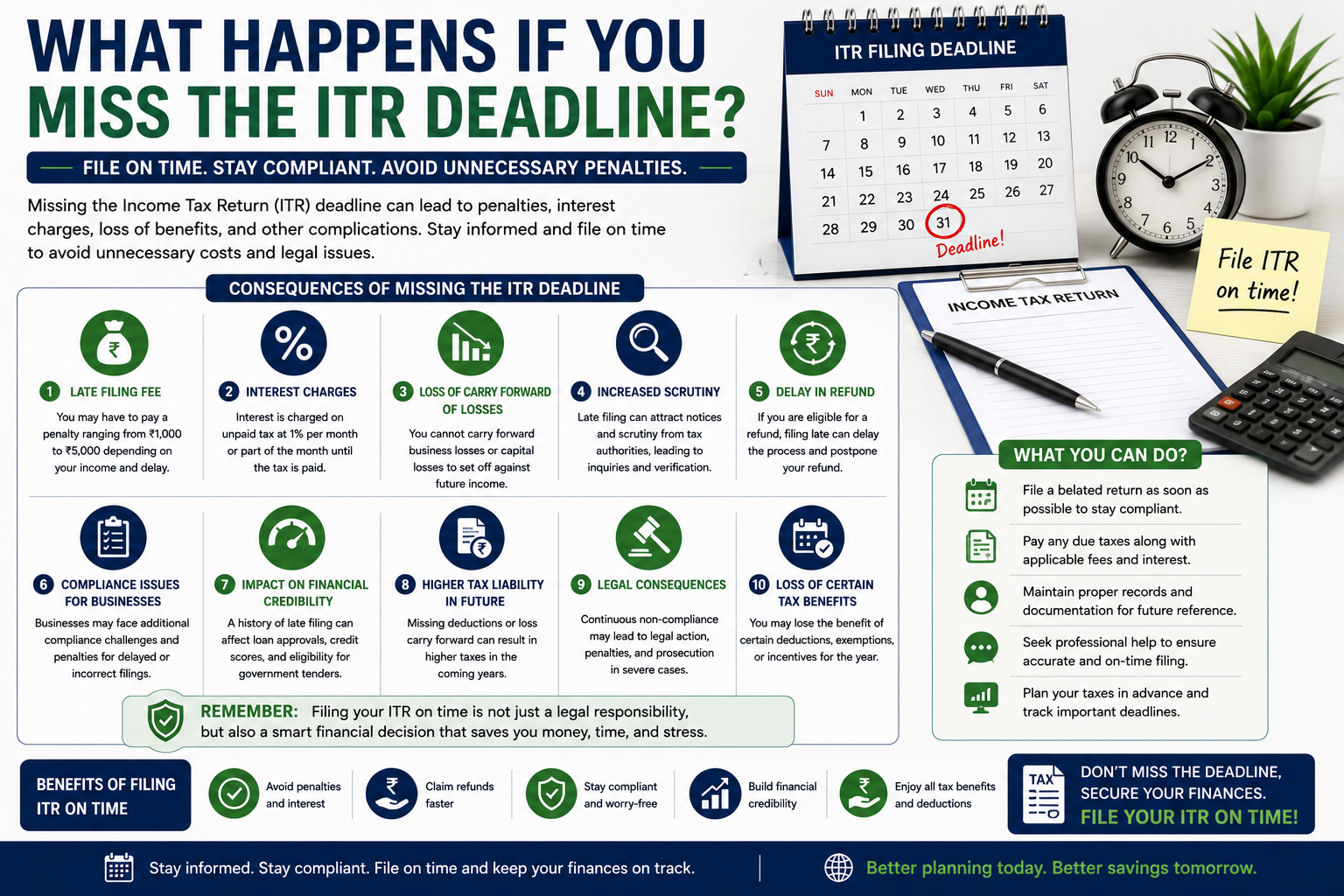
Missing the Income Tax Return (ITR) filing deadline can lead to penalties, interest charges, and the loss of certain tax benefits. Filing your return on time helps you stay compliant and avoid unnecessary financial and legal complications.
Filing an Income Tax Return (ITR) is an important responsibility for individuals and businesses. However, many taxpayers miss the filing deadline due to oversight, lack of preparation, or misunderstanding of tax requirements. Missing the ITR deadline can have several consequences that may affect your finances and tax compliance status. One of the most common consequences is the late filing fee imposed under the Income Tax Act. Depending on your income level and the delay in filing, taxpayers may be required to pay a penalty for submitting their returns after the due date. In addition to penalties, interest may also be charged on any unpaid tax liability. This interest continues to accumulate until the outstanding tax amount is paid, increasing the overall financial burden. Another significant impact of missing the ITR deadline is the inability to carry forward certain losses, such as business losses or capital losses, to future financial years. This can result in missed tax-saving opportunities and higher tax liabilities in the future. Delayed filing may also lead to increased scrutiny from tax authorities and can trigger notices requesting clarification or additional documentation. For taxpayers expecting a refund, late filing may delay the refund process and postpone access to funds that may be rightfully due. Businesses may face additional compliance challenges, especially if financial records and tax filings are not maintained properly. Furthermore, having a history of delayed tax filings can negatively affect financial credibility when applying for loans, credit facilities, or government tenders. The good news is that taxpayers can still file a belated return after the original due date, subject to applicable rules and penalties. Filing a belated return is generally better than not filing at all, as it helps maintain compliance and reduces the risk of further legal complications. To avoid missing the ITR deadline, taxpayers should maintain organized financial records, track important tax dates, calculate tax liabilities in advance, and seek professional assistance when needed. Using accounting software and setting reminders can also help ensure timely compliance. Proper tax planning throughout the year reduces last-minute stress and makes the filing process much smoother. Ultimately, filing your ITR on time is not only a legal requirement but also a crucial step in maintaining financial discipline and avoiding unnecessary penalties. By understanding the consequences of missing the ITR deadline and taking proactive measures, individuals and businesses can stay compliant, protect their financial interests, and ensure a hassle-free tax filing experience.


Comments (0)
Please login to comment.