Accurate accounting is the foundation of every successful business. Financial records are used to monitor business performance, prepare tax returns, make strategic decisions, and comply with legal requirements. Even small accounting mistakes can result in incorrect financial statements, tax penalties, cash flow problems, and loss of business credibility. Fortunately, most accounting errors can be prevented by implementing effective financial controls and adopting disciplined accounting practices. Whether you are a startup, small business, or growing enterprise, reducing accounting errors should be a top priority.
One of the most effective ways to minimize accounting errors is to maintain proper bookkeeping from the beginning. Every business transaction should be recorded accurately and supported with invoices, receipts, bank statements, and other relevant documents. Delaying entries or relying on memory often increases the chances of mistakes. Regularly updating financial records helps ensure that accounts remain accurate and up to date.
Using reliable accounting software is another important step toward reducing manual errors. Modern accounting systems automate calculations, generate invoices, reconcile bank transactions, prepare financial reports, and reduce the risk of duplicate or incorrect entries. Automation also saves time and improves efficiency, especially for businesses handling large volumes of transactions. However, software should always be used carefully, and data should be reviewed periodically for accuracy.
Bank reconciliation is another essential practice. Businesses should compare their accounting records with bank statements on a regular basis to identify missing transactions, duplicate entries, or unauthorized payments. Reconciling accounts every month helps detect errors early before they affect financial reporting. It is equally important to verify customer invoices, supplier bills, tax calculations, and payment records before finalizing financial statements.
Businesses should also establish internal controls by assigning responsibilities clearly and separating key financial duties whenever possible. For example, the person approving payments should ideally be different from the person recording transactions. This reduces the risk of both accidental errors and fraudulent activities. Regular internal reviews and periodic audits further strengthen financial accuracy and ensure compliance with accounting standards.
Employee training also plays an important role in reducing accounting mistakes. Staff responsible for bookkeeping and finance should stay updated with changes in accounting principles, GST regulations, TDS provisions, and tax laws. Continuous learning helps improve accuracy and reduces compliance-related errors. Maintaining proper document management, backing up financial data regularly, and reviewing financial reports before submission are equally important best practices.
Seeking professional guidance from qualified accountants or financial consultants can provide additional assurance, particularly for businesses with complex financial transactions. Expert review helps identify hidden issues, improve accounting processes, and ensure compliance with applicable regulations.
Reducing accounting errors is not just about avoiding penalties—it is about building a financially healthy and trustworthy business. Accurate accounting improves decision-making, strengthens cash flow management, enhances investor confidence, and supports long-term business growth. By implementing systematic accounting practices, leveraging technology, and reviewing financial records regularly, businesses can significantly reduce errors and create a strong financial foundation for future success.
How to Reduce Accounting Errors: Best Practices for Accurate Financial Management

Akshita tyagi
@ tyagiakshita78@gmail.com
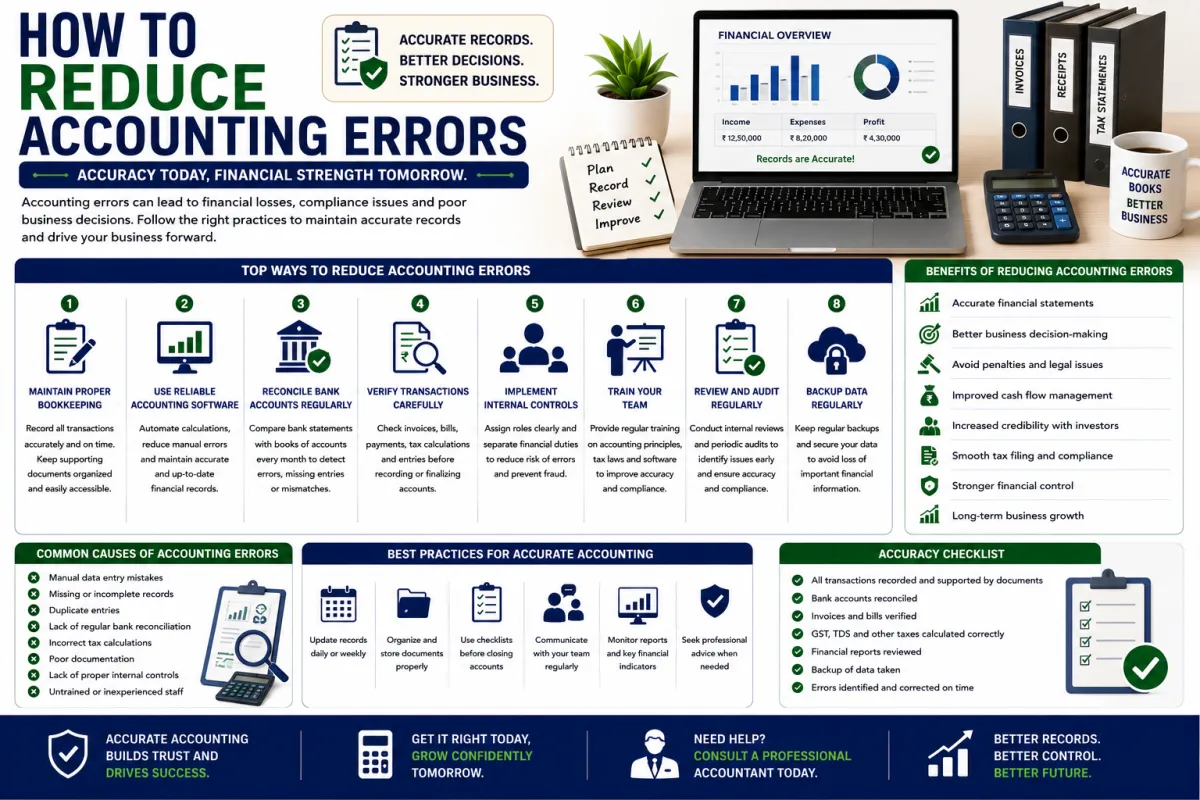
Accounting errors can lead to financial losses, compliance issues, and poor business decisions. By following proper accounting practices and maintaining accurate financial records, businesses can significantly reduce errors and improve overall financial management.



Comments (0)
Please login to comment.