Difference Between TDS and TCS

Akshita tyagi
@ tyagiakshita78@gmail.com
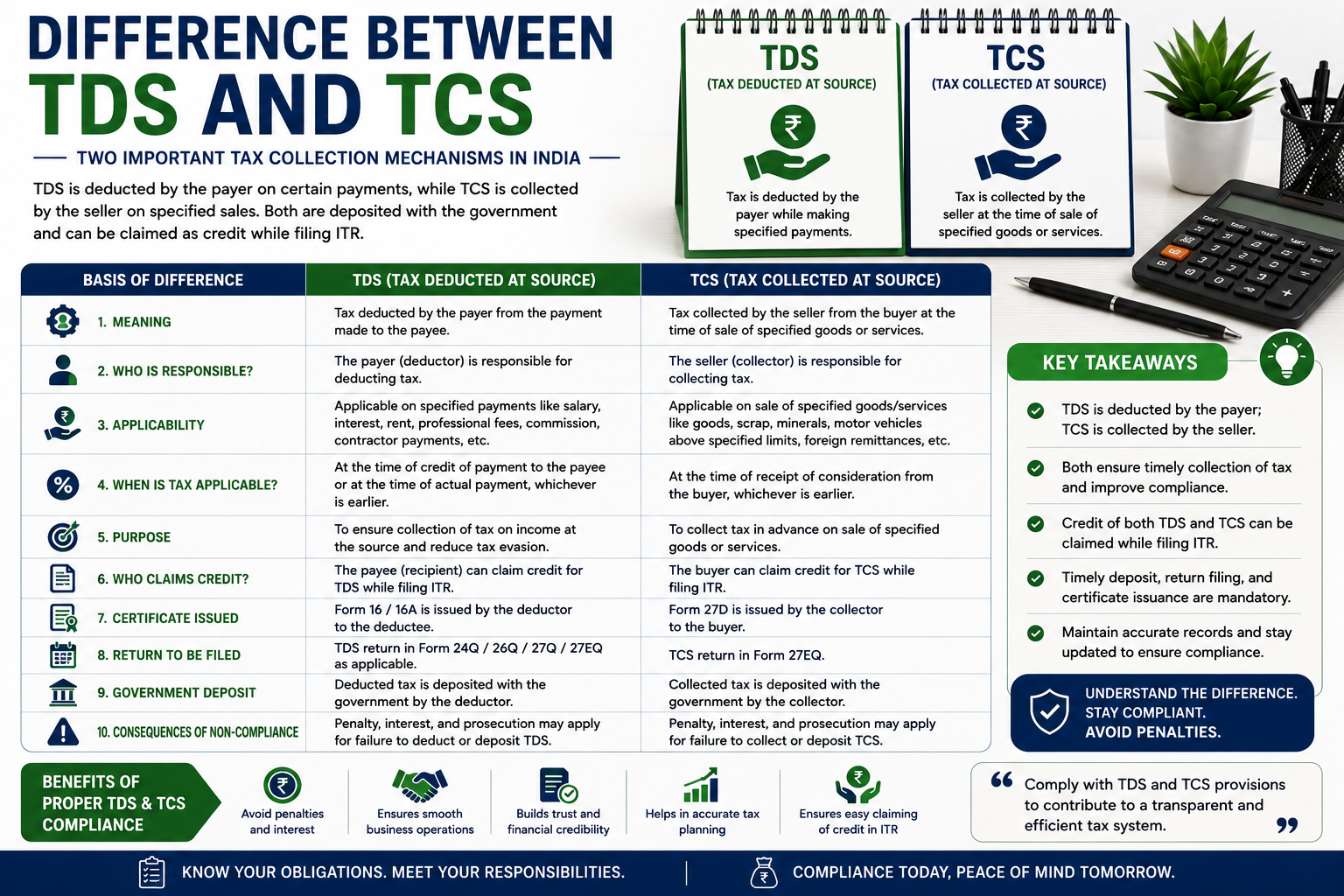
TDS (Tax Deducted at Source) and TCS (Tax Collected at Source) are important tax collection mechanisms under the Indian tax system. While TDS is deducted by the payer when making certain payments, TCS is collected by the seller at the time of sale of specified goods and services.
TDS (Tax Deducted at Source) and TCS (Tax Collected at Source) are two important provisions under the Income Tax Act designed to facilitate tax collection and improve compliance. Although both mechanisms help the government collect taxes at the source of income or transaction, they differ significantly in their application, purpose, and responsibilities. TDS is deducted by the payer when making specified payments such as salaries, professional fees, rent, interest, commissions, and contractor payments. The deducted tax is then deposited with the government on behalf of the recipient. The recipient can later claim credit for the TDS amount while filing their Income Tax Return (ITR). The primary objective of TDS is to ensure regular tax collection and reduce the chances of tax evasion by collecting tax at the time income is generated. On the other hand, TCS is collected by the seller from the buyer at the time of selling certain specified goods and services. The seller collects the tax in addition to the sale value and deposits it with the government. Examples of transactions where TCS may apply include the sale of certain goods, scrap, minerals, motor vehicles above specified limits, and certain foreign remittance transactions under applicable provisions. Like TDS, the buyer can claim credit for the TCS amount while filing their tax return. Another key difference lies in responsibility. Under TDS, the responsibility of deducting and depositing tax lies with the payer. Under TCS, the responsibility lies with the seller collecting the tax from the buyer. Both TDS and TCS require timely deposit of tax, filing of returns, and issuance of certificates to ensure compliance with tax regulations. Failure to comply with these requirements can result in penalties, interest charges, and legal consequences. Businesses must maintain accurate records and reconcile transactions regularly to avoid reporting errors. Modern accounting software and professional tax guidance can simplify the management of TDS and TCS obligations. Understanding the difference between TDS and TCS is essential for businesses, professionals, and taxpayers to ensure proper compliance and avoid unnecessary tax disputes. While both systems contribute to efficient tax collection and transparency, knowing when and how they apply can help organizations manage their financial responsibilities effectively. By maintaining accurate records, staying updated with tax regulations, and seeking professional assistance when necessary, businesses can ensure smooth compliance with both TDS and TCS requirements while strengthening their overall financial management practices.


Comments (0)
Please login to comment.