Common Accounting Mistakes Startups Make

Akshita tyagi
@ tyagiakshita78@gmail.com
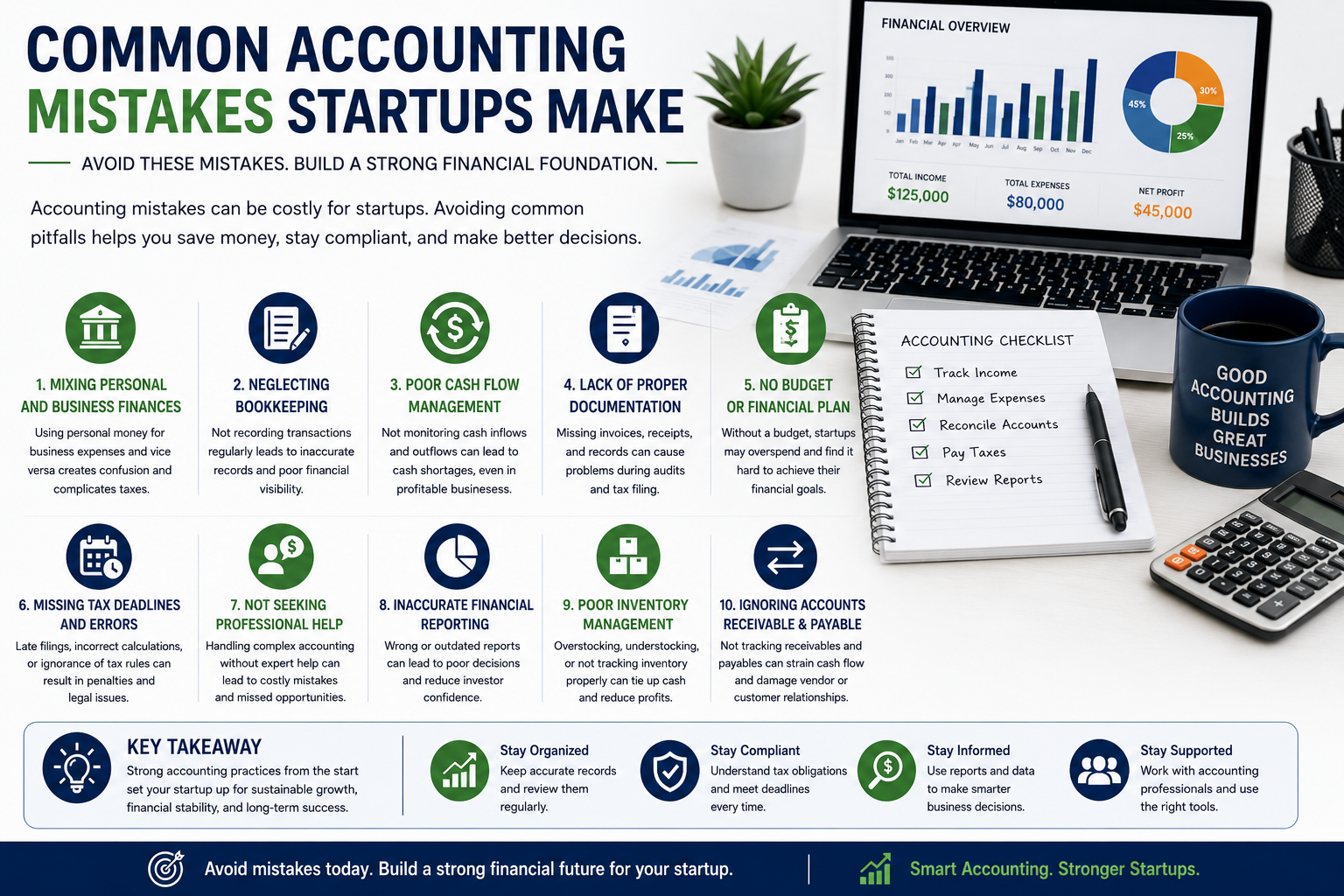
Many startups focus heavily on growth and operations but often overlook proper accounting practices. Avoiding common accounting mistakes can help startups maintain financial stability, ensure compliance, and make better business decisions.
Starting a new business comes with excitement, ambition, and countless responsibilities. However, many startups make accounting mistakes that can lead to cash flow problems, compliance issues, and financial setbacks. Proper accounting is essential for tracking business performance, managing expenses, and ensuring long-term success. One of the most common mistakes startups make is failing to separate personal and business finances. Mixing personal and company transactions creates confusion, complicates bookkeeping, and makes tax filing more difficult. Another frequent error is neglecting regular bookkeeping. Many startup owners delay recording transactions, leading to inaccurate financial records and making it harder to understand the true financial position of the business. Poor cash flow management is another major challenge. Startups often focus on revenue growth while overlooking the importance of monitoring cash inflows and outflows. Even profitable businesses can face financial difficulties if they run out of cash to cover operating expenses. Additionally, many startups fail to maintain proper documentation for invoices, receipts, and business expenses, which can create issues during audits or tax filing periods. Another common mistake is not budgeting effectively. Without a realistic budget, startups may overspend on unnecessary expenses and struggle to allocate resources efficiently. Tax compliance errors are also widespread among new businesses. Missing tax deadlines, miscalculating tax liabilities, or failing to understand applicable tax regulations can result in penalties and legal complications. Some startups also underestimate the value of professional accounting support and attempt to manage complex financial tasks without expert guidance. This can increase the risk of errors and missed opportunities for tax savings or financial planning. Inaccurate financial reporting is another issue that can affect investor confidence and business decision-making. Startup owners should regularly review financial statements, including profit and loss reports, balance sheets, and cash flow statements to gain a clear understanding of business performance. Inventory mismanagement, incorrect expense categorization, and failure to track accounts receivable and accounts payable can further impact financial health. Implementing accounting software and establishing organized financial processes from the beginning can significantly reduce these risks. By avoiding these common accounting mistakes, startups can improve financial control, maintain compliance, attract investors, and build a strong foundation for sustainable growth. Effective accounting practices not only support day-to-day operations but also provide valuable insights that help entrepreneurs make informed strategic decisions and achieve long-term business success.



Comments (0)
Please login to comment.