Practical guides and expert insights on GST,
Income Tax, MSME, TDS, Accounting &
Business Compliance in India
Latest Articles
Financial Solutions
•
1
Views
Cash Accounting vs Accrual Accounting: Understanding the Key Differences for Businesses
Cash accounting and accrual accounting are two widely used accounting methods for recording financial transactions. While cash accounting records income and expenses only when money is received or paid, accrual accounting records transactions when they are earned or incurred, providing a more accurate picture of a business’s financial performance.
How to Maintain Proper Books of Accounts: A Complete Guide for Businesses
Maintaining proper books of accounts is essential for every business to track financial performance, ensure statutory compliance, and support informed decision-making. Accurate record-keeping helps businesses manage cash flow, prepare financial statements, and avoid compliance-related issues.
Difference Between Bookkeeping and Accounting: A Complete Guide for Business Owners
Bookkeeping and accounting are closely related but serve different purposes in financial management. Bookkeeping focuses on recording daily financial transactions, while accounting involves analyzing, interpreting, and reporting financial information to support business decisions and ensure regulatory compliance.
The accounting landscape is evolving rapidly, and one of the biggest drivers of this transformation is the combination of Goods and Services Tax (GST) and Digital Accounting. Governments are embracing digital tax systems, while businesses are shifting from traditional bookkeeping to cloud-based accounting platforms that offer automation, real-time reporting, and seamless compliance.
In 2026, digital accounting is no longer just an option—it is becoming the standard for businesses of all sizes. Modern accounting software, AI-powered automation, e-invoicing, and cloud technology are helping organizations reduce errors, improve financial transparency, and stay compliant with changing GST regulations. This article explores how GST and digital accounting are shaping the future of finance, the latest trends, key benefits, challenges, and why businesses must adopt digital solutions to remain competitive.
Basic Accounting Principles Every Business Owner Should Know: A Complete Beginner’s Guide
Understanding basic accounting principles helps business owners maintain accurate financial records, make informed decisions, comply with tax regulations, and ensure long-term financial stability. A strong accounting foundation is essential for every business, regardless of its size or industry.
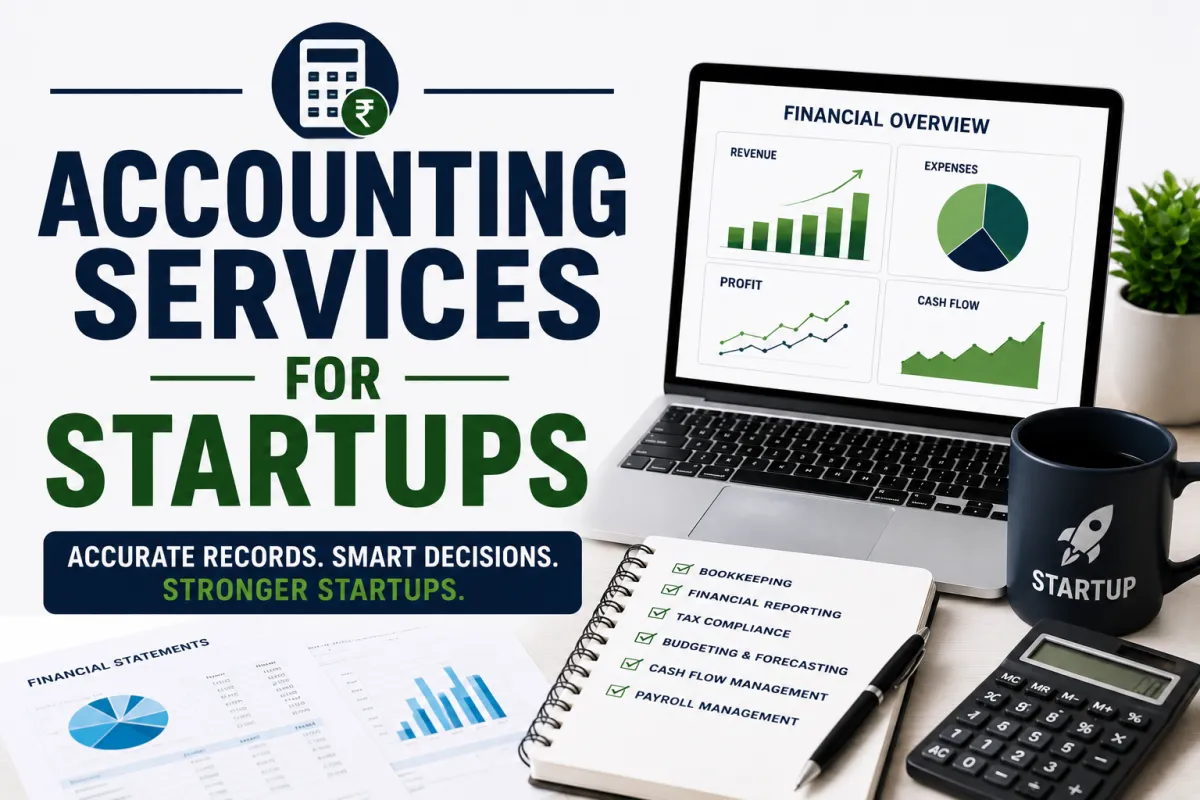
Accounting Checklist for New Startups: Essential Financial Steps for Business Success
A strong accounting system is essential for every startup from day one. Following a proper accounting checklist helps new businesses maintain accurate financial records, comply with tax laws, manage cash flow effectively, and make informed business decisions as they grow.
Numbers Se Beyond: Kyun Aaj Ka Modern Accountant Ek Tech-Guru Aur Business Partner Ban Chuka Hai?
Kya aapko lagta hai ki accounting ka matlab sirf boring data entry aur tax files banana hai? Agar haan, toh aap galat hain. Aaj ke daur mein AI, Cloud aur Automation ne accounting ko ek naya roop de diya hai. Ab accountants sirf purane records nahi dekhte, balki business ko aage badhane ki strategy banate hain. Is detailed blog mein hum bilkul aasan aur aam bhasha mein samjhenge ki aaj kal accounting mein kya naye trends chal rahe hain aur yeh kaise businesses ko badal rahe hain.
AI in Accounting 2026: The Future of Finance Has Already Begun
Short Summary
Artificial Intelligence (AI) is no longer a futuristic concept—it has become the driving force behind the evolution of the accounting profession. From automating repetitive bookkeeping tasks to delivering real-time financial insights, AI is transforming how businesses manage their finances. Organizations of every size are adopting intelligent accounting solutions to improve accuracy, reduce operational costs, strengthen compliance, and make faster, data-driven decisions.
This comprehensive guide explores how AI is revolutionizing accounting in 2026, the technologies behind this transformation, the benefits and challenges businesses face, and how accountants can adapt to remain valuable in an AI-powered world. Whether you are a finance professional, business owner, student, or entrepreneur, this article will help you understand why AI is becoming an indispensable part of modern accounting.
Tallying figures isn't all that's involved in accounting anymore. This blog delves into the exciting transformation that technology is bringing to the accounting field, making it more strategic, data-driven, and indispensable to business growth. We'll explore the shift from reactive to proactive accounting and highlight the critical skills that modern accountants need to succeed.
Legal Checklist Before Starting a Business: Essential Compliance Steps Every Entrepreneur Should Know
Starting a business involves more than just a great idea—it also requires compliance with various legal and regulatory requirements. Completing the necessary registrations, licenses, and tax compliances at the beginning helps businesses operate legally, build credibility, and avoid future penalties.
Accounting automation is helping businesses save time, reduce manual errors, and improve financial accuracy. Learn how automated accounting tools are transforming bookkeeping, payroll, invoicing, and financial reporting.
Cloud accounting is transforming how businesses manage their finances by providing real-time access to financial data, improved security, automated bookkeeping, and seamless collaboration. Discover why more businesses are switching to cloud-based accounting solutions.
AI in Accounting: How Artificial Intelligence Is Transforming Financial Management
Artificial Intelligence (AI) is reshaping the accounting industry by automating repetitive tasks, improving financial accuracy, detecting fraud, and enabling faster business decisions. This article explores how AI is transforming modern accounting and what businesses should know.
Benefits of Regular Financial Audits: Why Every Business Should Conduct Them
Regular financial audits help businesses verify the accuracy of their financial records, strengthen internal controls, and ensure compliance with applicable laws. They improve transparency, build stakeholder confidence, and support better financial decision-making for long-term business growth.
Tax Audit Explained: A Complete Guide to Tax Audit Requirements and Compliance in India
A tax audit is an examination of a taxpayer’s financial records conducted to verify whether income, expenses, and tax-related information have been maintained accurately and comply with the applicable provisions of the Income Tax Act. It helps businesses ensure transparency, improve tax compliance, and minimize the risk of penalties.
Internal Audit vs External Audit: Understanding the Key Differences for Businesses
Internal and external audits both play important roles in strengthening a business’s financial management and governance. While an internal audit focuses on improving internal processes and risk management, an external audit independently verifies the accuracy of financial statements and compliance with applicable laws.
What is a Statutory Audit? A Complete Guide for Businesses in India
A statutory audit is a legally required examination of a company’s financial records conducted by an independent auditor to verify their accuracy and compliance with applicable laws and accounting standards. It promotes transparency, strengthens financial credibility, and helps businesses meet regulatory requirements.
What is TDS? A Complete Beginner’s Guide to Tax Deducted at Source in India
Tax Deducted at Source (TDS) is a system under the Income Tax Act where tax is deducted at the time certain payments are made instead of being collected later. It helps the government collect taxes regularly while ensuring better tax compliance among taxpayers and businesses.
TDS Return Filing Process: A Complete Step-by-Step Guide for Businesses
TDS return filing is a mandatory compliance requirement for deductors who deduct tax at source under the Income Tax Act. Filing accurate TDS returns on time helps businesses avoid penalties, ensures proper tax credit to deductees, and maintains smooth tax compliance.